What's up in
Abstractions blog
Latest Articles
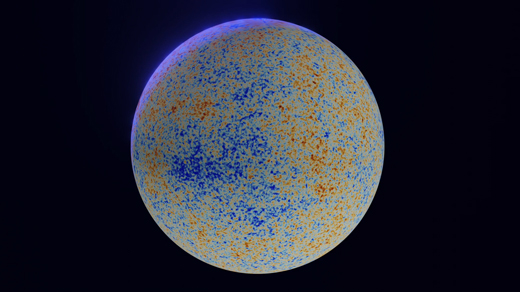
How Ancient Light Reveals the Universe’s Contents
A photograph of the infant cosmos reveals the precise amounts of dark matter and dark energy in the universe, leaving precious little room for argument.
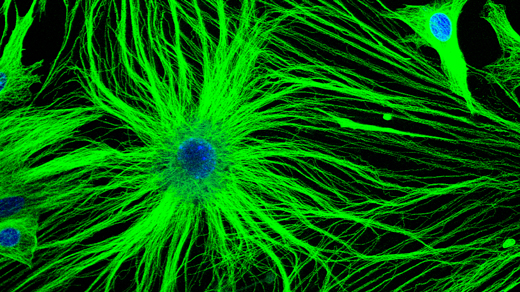
Glial Brain Cells, Long in Neurons’ Shadow, Reveal Hidden Powers
The glial cells of the nervous system have been eclipsed in importance by neurons for decades. But glia are turning out to be central to many neurological functions, including pain perception.
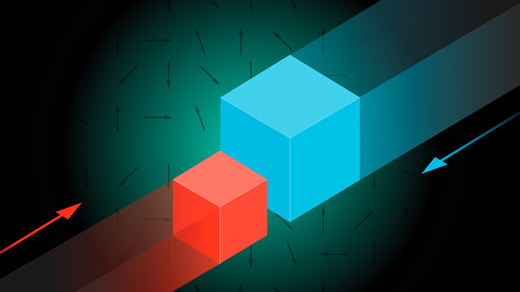
How Pi Connects Colliding Blocks to a Quantum Search Algorithm
A curious physicist has discovered an unexpected link between theoretical block collisions and a famed quantum search algorithm.

For Fluid Equations, a Steady Flow of Progress
A startling experimental discovery about how fluids behave started a wave of important mathematical proofs.
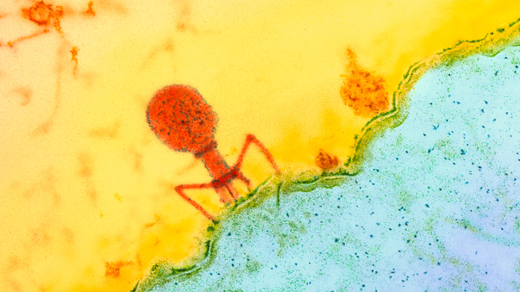
Biodiversity Alters Strategies of Bacterial Evolution
In evolution, context is everything: Bacteria with neighbors evolve to rebuff viruses in a different way.
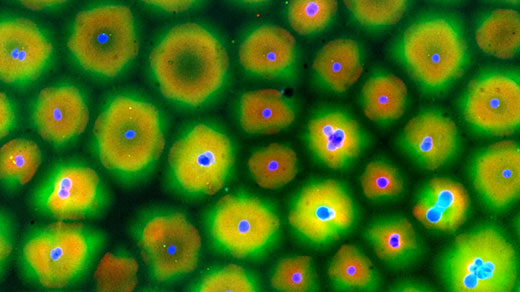
Unscrambled Eggs: Self-Organization Restores Cells’ Order
To scientists’ surprise, blended mixtures of cytoplasm can reorganize themselves into cell-like compartments with working structural components.
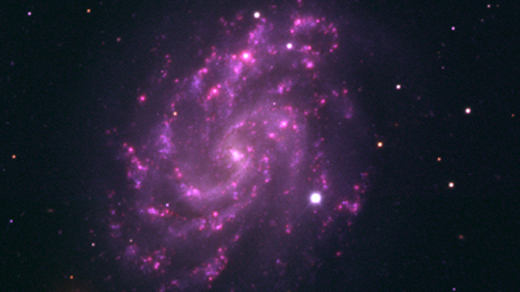
No Dark Energy? No Chance, Cosmologists Contend
A study challenged the evidence for the mysterious antigravitational force known as dark energy. Then cosmologists shot back.
Sleeping Brain Waves Draw a Healthy Bath for Neurons
An organized tide of brain waves, blood and spinal fluid pulsing through a sleeping brain may flush away neural toxins that cause Alzheimer’s and other diseases.

Why the Laws of Physics Are Inevitable
By considering simple symmetries, physicists working on the “bootstrap” can rediscover the basic form of the known forces that shape the universe.