What's up in
Dark matter
Latest Articles
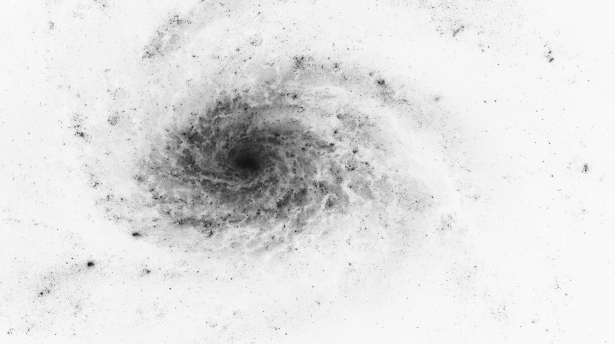
Strange Dark Galaxy Puzzles Astrophysicists
The surprising discovery of a massive, Milky Way–size galaxy that is made of 99.99 percent dark matter has astronomers dreaming up new ideas about how galaxies form.

A Seeker of Dark Matter’s Hidden Light
The astrophysicist Tracy Slatyer is searching for faint wisps of dark matter annihilating in the early universe — and perhaps in hiding places closer to home.

Mining Black Hole Collisions for New Physics
The physicist Asimina Arvanitaki is thinking up ways to search gravitational wave data for evidence of dark matter particles orbiting black holes.
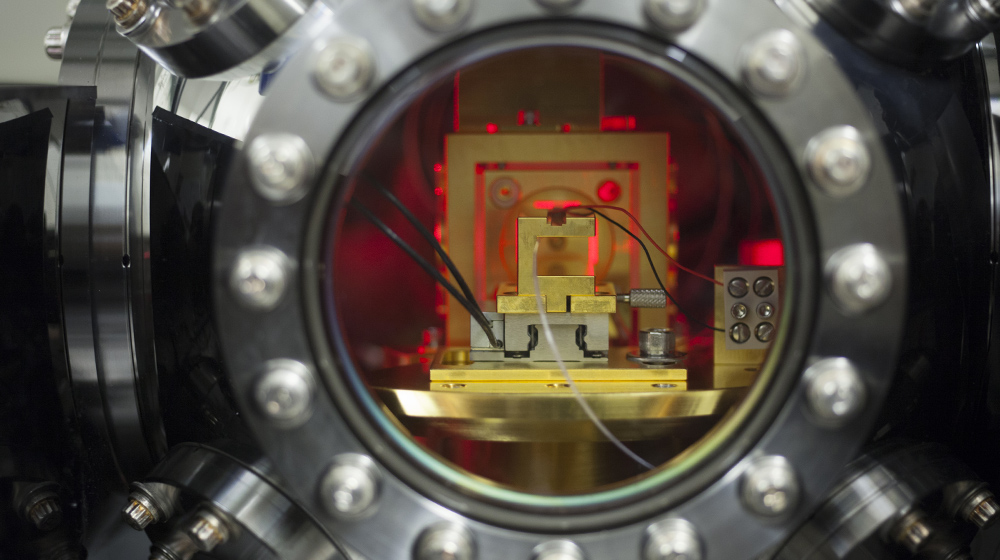
Tiny Tests Seek the Universe’s Big Mysteries
The search for exotic new physical phenomena is being led by huge experiments like the Large Hadron Collider. But at the other end of the spectrum lie tabletop experiments — small-scale probes of hidden dimensions, dark matter and dark energy.
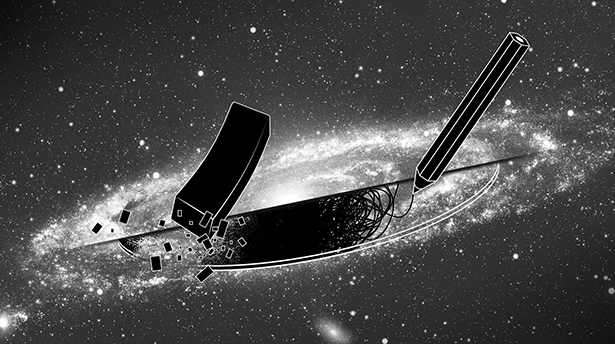
Debate Intensifies Over Dark Disk Theory
In the new, free-for-all era of dark matter research, the controversial idea that dark matter is concentrated in thin disks is being rescued from scientific oblivion.

Time’s (Almost) Reversible Arrow
The irreversibility of time may be a clue as to what makes up the universe’s dark matter.

The Case for Complex Dark Matter
The physicist James Bullock explains how a complicated “dark sector” of interacting particles may illuminate some puzzling observations of the centers of galaxies.
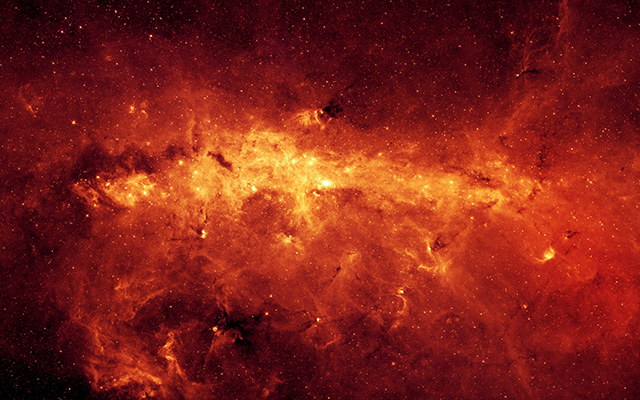
Dwarf Galaxies Dim Hopes of Dark Matter
For five years physicists have been tantalized by possible evidence of dark matter in the Milky Way’s center. But new results from small satellite galaxies have complicated the story.

In Search of Dark Stars
Katherine Freese, a physicist who will soon lead the Nordic Institute for Theoretical Physics, reflects on the hunt for dark matter and how dark matter heating may have produced the first stars.