What's up in
Q&A
Latest Articles
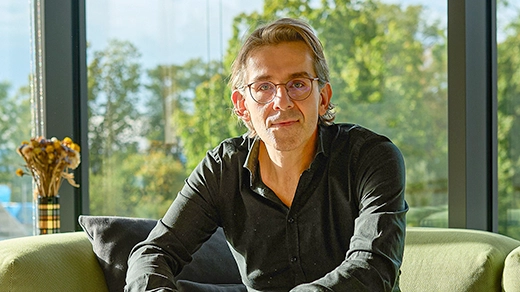
He Wants AI Benchmarking To Be a Science, Not a Dark Art
Moritz Hardt, author of a new book on benchmarks, believes these “standardized tests” for artificial intelligence are fundamentally broken — but not unfixable.
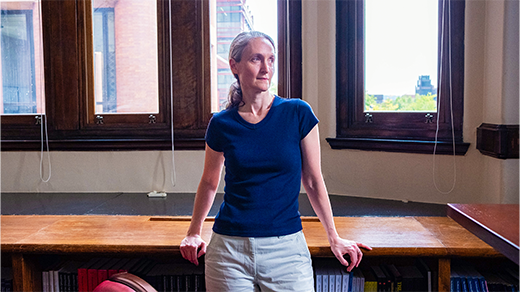
In an Age of AI, a Physicist Seeks What Endures
Sarah Demers, chair of the physics department at Yale University, sees the potential for large language models to both help and harm her field.

Why Aging May Be a Program, Not a Breakdown
By deciphering the molecular signatures of millions of mouse cells, Junyue Cao has found that aging is not haphazard wear and tear but rather a “remodeling of the cell society.”
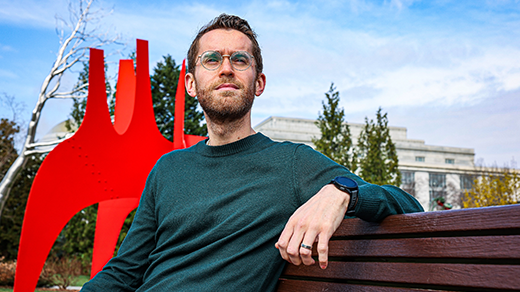
How Writing Changes Mathematical Thought
David E. Dunning explores how mathematical notation is a social, world-building technology.
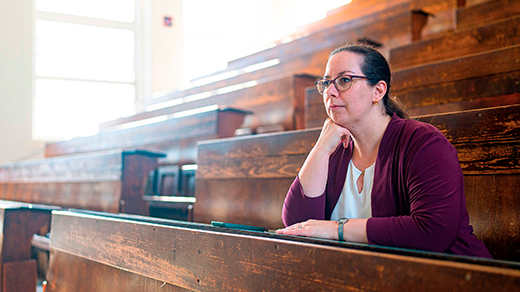
Where Some See Strings, She Sees a Space-Time Made of Fractals
Pushed down to a certain scale, the laws of physics seem to fall apart. Astrid Eichhorn, a leader in an area of study called asymptotic safety, thinks we just need to push a little further.

A New Complexity Theory for the Quantum Age
Henry Yuen is developing a new mathematical language to describe problems whose inputs and outputs aren’t ordinary numbers.
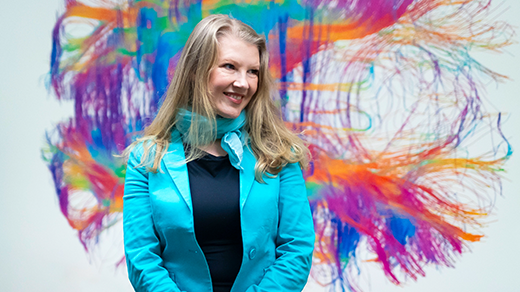
The Polyglot Neuroscientist Resolving How the Brain Parses Language
Is language core to thought, or a separate process? For 15 years, the neuroscientist Ev Fedorenko has gathered evidence of a language network in the human brain — and has found some parallels to LLMs.
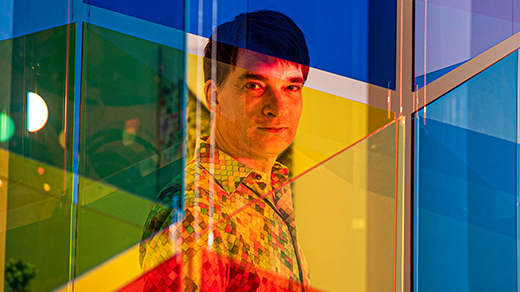
To Have Machines Make Math Proofs, Turn Them Into a Puzzle
Marijn Heule turns mathematical statements into something like Sudoku puzzles, then has computers go to work on them. His proofs have been called “disgusting,” but they go beyond what any human can do.

Carlo Rovelli’s Radical Perspective on Reality
The theoretical physicist and best-selling author finds inspiration in politics and philosophy for rethinking space and time.