Experiments Ring the ‘Death Knell’ for Sterile Neutrinos
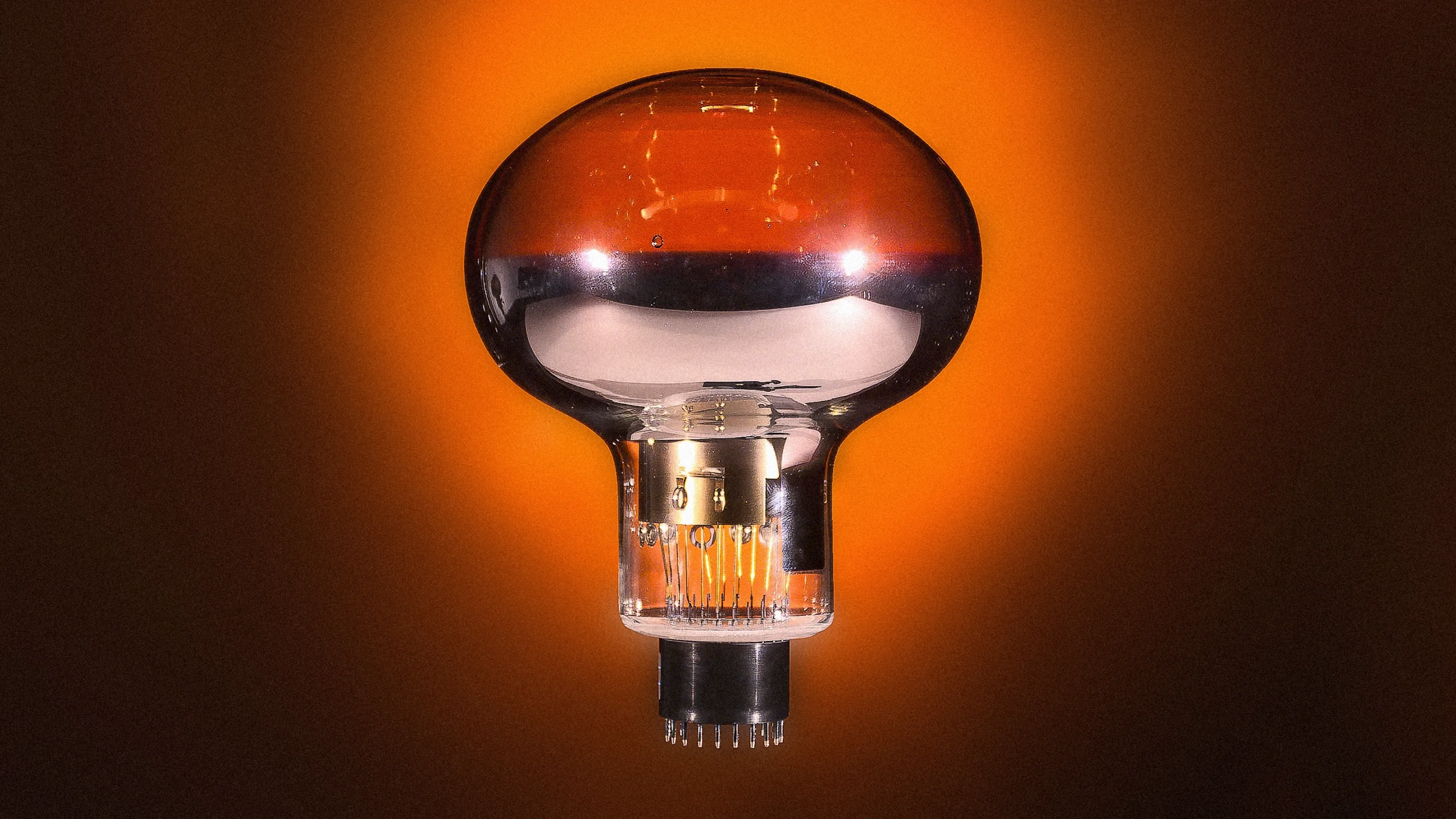
Neutrino detectors rely on photomultiplier tubes such as this one from the Miniboone experiment.
Fermilab
Introduction
Neutrinos have about as little influence as a particle can have. They have essentially no heft, no electric charge, and no “color” charge. As a result, the neutrino has no connection with most of nature’s forces; it can slip through whole planets and stars without striking a single atom.
But neutrinos have proven more than capable of bending the life path of a scientist.
In the late 1990s, when physicists unexpectedly discovered that neutrinos have mass, Thierry Lasserre abandoned cosmology to go all in on the particles. “It was so exciting I just couldn’t resist,” said Lasserre, now a physicist at the Max Planck Institute for Nuclear Physics in Heidelberg, Germany. And Mark Ross-Lonergan was planning to be a meteorologist until a chance encounter with particle physics in 2010 inspired him to switch fields. Lassere and Ross-Lonergan, along with thousands of others, have devoted their careers to investigating this tiny and almost perfectly inert speck.
For more than a decade, their investigations seemed to be closing in on a breakthrough. Experiments reported strange acts of neutrinos appearing and disappearing. These results, along with neutrinos’ mysterious mass, all pointed to a single potential explanation: A particular “sterile” type of neutrino, of a particular mass, seemed to lurk undiscovered behind the scenes.
Researchers spent years running increasingly sophisticated experiments to pin down the interloper. However, in the face of an increasing number of null results, most notably in studies published in late 2025, most physicists now agree that this sterile neutrino doesn’t exist. “This is, in my opinion, the death knell for sterile neutrinos,” said Ross-Lonergan, a physicist at Columbia University and co-author of one of the latest studies.
These developments have only deepened the mysteries of neutrinos. Their apparent ability to appear in some experiments and vanish from others remains unexplained. And the fact that they have mass essentially requires them to be in contact with some undiscovered aspect of reality. For physicists, the particle’s influence continues unabated.
“It’s on us to learn how to get creative,” said Matheus Hostert, a physicist at the University of Iowa. “This is a very exciting time for the field, especially for theorists like myself who get to ask hard questions about all this data.”
Disappearing Act
Everything physicists know about neutrinos, they’ve learned through experiments that didn’t quite add up. “The whole field is built on a backbone of anomalies,” Ross-Lonergan said.
Wolfgang Pauli first inferred the presence of the neutrino in 1930 from a study of radioactive decays. In these decays, an atom of one element transforms into another while releasing its remaining energy in the form of an electron. But in certain decays, the electron doesn’t have enough zip. Pauli argued that some additional, invisible particle must be smuggling the leftover energy into the world. This particle, which he called “little neutral one,” would have no electric charge and no mass. It would interact with the atoms of our world only through the weak force, which makes radioactive decay possible by turning certain subatomic particles into others.
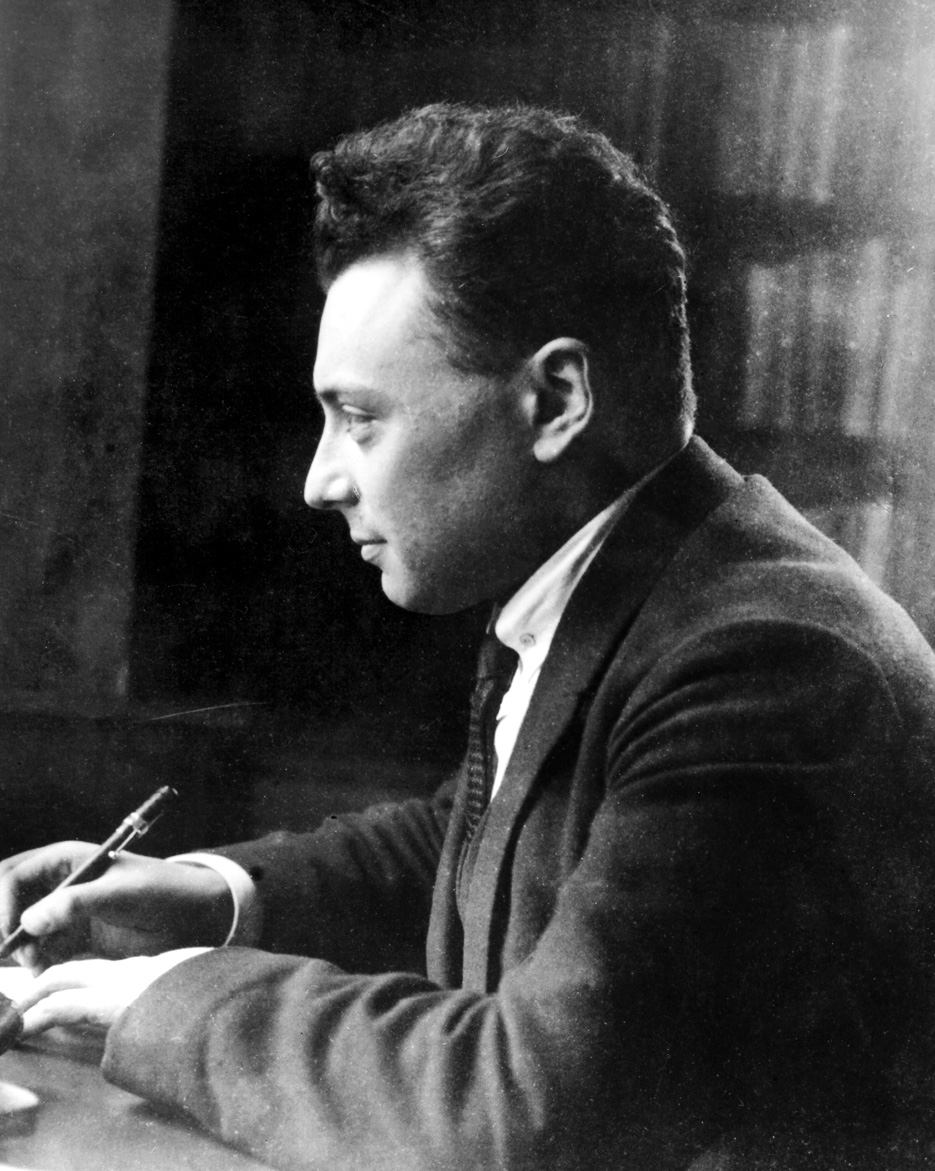
Wolfgang Pauli first intuited the presence of the neutrino from the missing energy in radioactive decays.
CERN
The weak force is so weak, however, that a neutrino could travel through light-years of lead without altering a single atom. Pauli bet a case of champagne that no one would ever detect one. But some 20 years later, ingenious experimentalists caught unmistakable signs of neutrinos at the Savannah River Site nuclear power plant in South Carolina.
Soon after, physicists started brainstorming about what they could learn from these nigh-invisible heralds of weak force transformations. They turned their focus from artificial nuclear reactors to a natural one — the sun.
In the late 1960s, Raymond Davis Jr. oversaw the installation of a 100,000-gallon tank of dry-cleaning fluid in a mine nearly a mile underground, where he planned to study solar neutrinos. John Bahcall, the co-leader of the experiment, calculated the number of neutrinos the experiment should see. But the tank picked up just one-third of the number of neutrinos that Bahcall had predicted it should. Either the sun was underperforming expectations, or neutrinos were going missing.
The anomaly took 30 years to resolve. But when the resolution came, via the Super-Kamiokande experiment in Japan and the Sudbury Neutrino Observatory (SNO) in Canada, it delivered a bombshell.
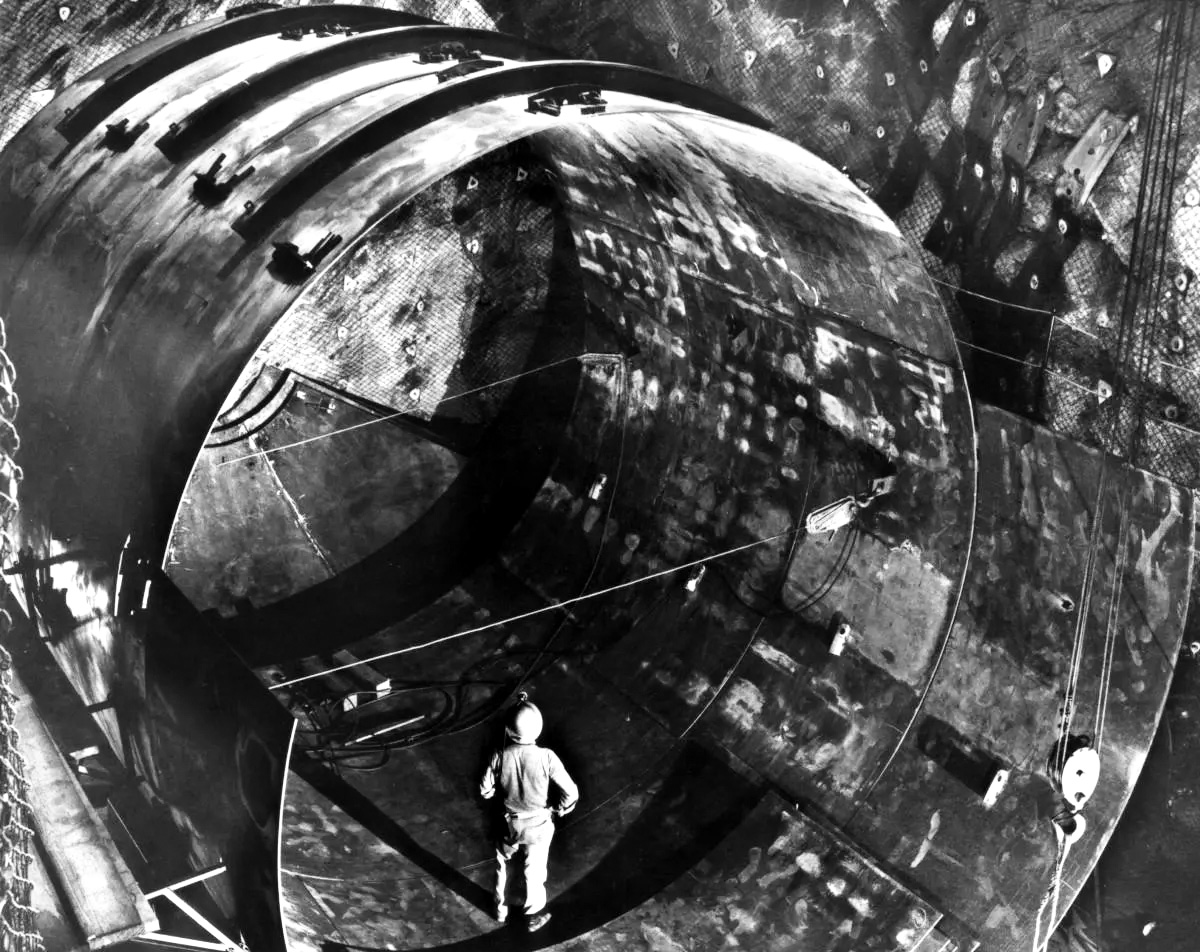
The cavernous neutrino detector placed in the Homestake Gold Mine near Lead, South Dakota, in the late 1960s picked up the first hints that neutrinos were oscillating from one form to another as they traveled.
Sanford Underground Research Facility
Neutrinos were disappearing because they were changing form. Neutrinos come in three varieties, dubbed electron, muon, and tau. And Super-Kamiokande and SNO showed that neutrinos of one type, visible in the Davis experiment, were “oscillating” into neutrinos of another, which the Davis experiment could not see. This finding was a major twist, because according to the Standard Model — the playbook that accounts for all the known behavior of all the known particles — neutrino oscillation was not allowed. Oscillation could take place only if the masses of the three types were different from one another. But all neutrinos were supposed to have exactly the same mass: none.
That’s because the Standard Model describes a particle as a ripple traveling through a quantum field in space, and a massive particle as two overlapping ripples traveling through two fields. There’s a “left-handed” field generating particles that tend to corkscrew one way, and a “right-handed” field producing particles that tend to corkscrew the other way. The electron, for instance, has mass because it is a left-handed ripple linked with a right-handed ripple. But experimentalists had seen only left-handed neutrinos, so the particle was thought to be massless — until Super-Kamiokande and SNO proved otherwise.
Thus the 20th-century anomalies culminated in a cliffhanger that remains unsolved: Why do neutrinos have mass?
Many Mysteries, One Explanation
One simple explanation is that there is a fourth type of neutrino, a ripple in a right-handed field, one almost perfectly invisible to experiments to date.
A bizarre quirk of the weak force is that it affects only left-handed fields; only left-handed neutrinos show up after nuclear decays. So right-handed neutrinos would be completely barren of anything that would let them feel the forces of the Standard Model. Scientists call them sterile.
Alternatively, the left-handed neutrinos could turn out to be slightly ambidextrous and therefore capable of giving themselves mass. But this idea cracks the Standard Model in a different way, and the simplest patch is to add another slightly ambidextrous, but mostly right-handed, sterile neutrino.
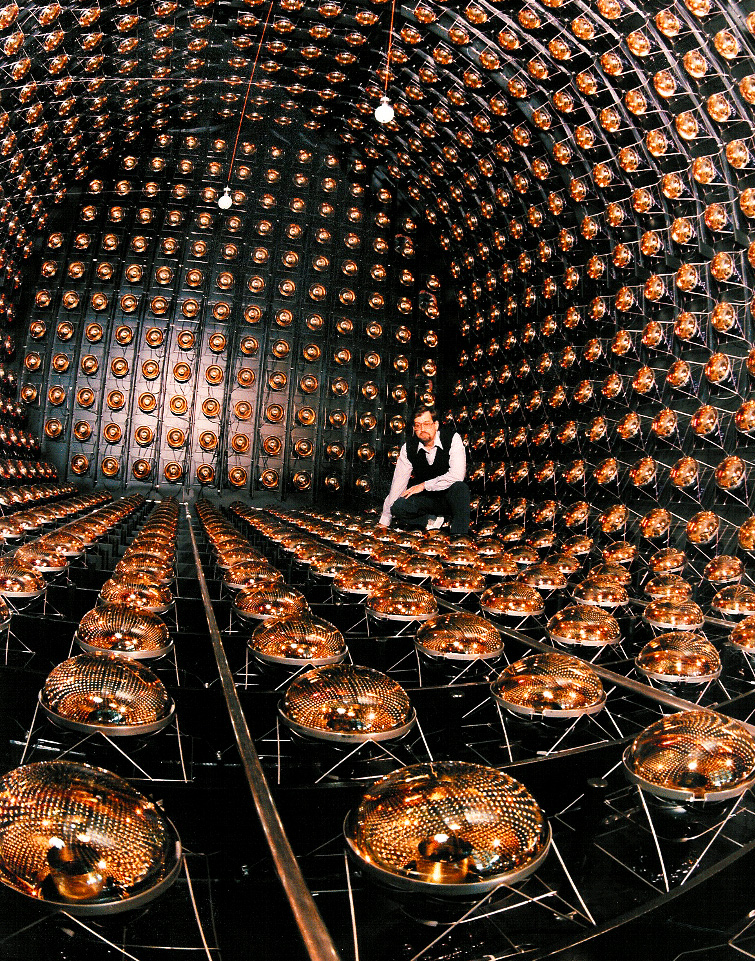
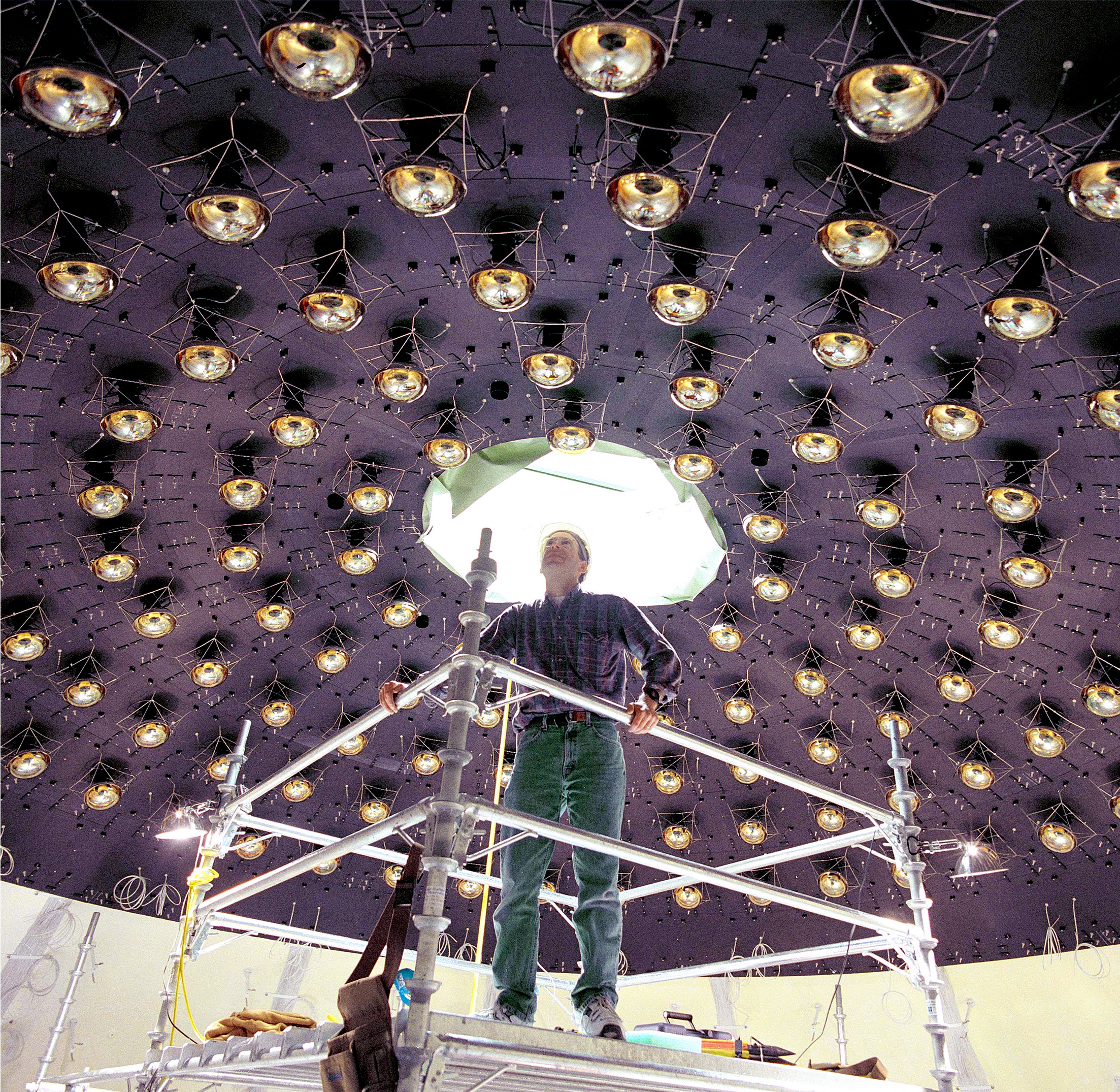
Experiments at Los Alamos National Laboratory (top) and at the Fermi National Accelerator Laboratory have amassed substantial evidence that neutrinos may be oscillating over short distances, for unknown reasons.
Los Alamos National Laboratory (top); Fermilab
Experiments at Los Alamos National Laboratory (left) and at the Fermi National Accelerator Laboratory have amassed substantial evidence that neutrinos may be oscillating over short distances, for unknown reasons.
Los Alamos National Laboratory (left); Fermilab
So the two simplest logical paths for explaining neutrino mass led to the same place. “The theorist in me says it’s a perfect storm and clearly sterile neutrinos exist somewhere,” Ross-Lonergan said.
And around of the turn of the century, a new generation of experiments uncovered a new generation of anomalies. Almost all of them could be interpreted as hints that there should be one particular type of sterile neutrino.
From 1993 to 1998, an experiment at Los Alamos National Laboratory called the Liquid Scintillator Neutrino Detector, or LSND, saw what looked like too many electron neutrinos in a beam of mostly muon neutrinos. Later, the Miniboone experiment at Fermilab saw the same thing — way too many electron neutrinos. The LSND/Miniboone anomalies were born.
Also in the 1990s, physicists in Russia and Italy had put highly radioactive sources right next to huge vats of gallium, a metallic liquid that’s especially sensitive to neutrinos, to test whether the vats were working as neutrino detectors. They were, but their counts of electron neutrinos were about 20% too low. This became known as the gallium anomaly. A more refined experiment found further evidence for the gallium anomaly in 2022.

Janet Conrad, a physicist at MIT, collects datasets from neutrino experiments around the world and analyzes them for signs of new particles.
Kayana Szymczak for Quanta Magazine
And in 2011, physicists found that they had been underestimating the number of electron neutrinos that should be produced in a nuclear reaction by a few percent. This meant that every time that physicists had plunked down any type of detector outside a nuclear reactor and counted the “right” number of neutrinos in previous decades, in reality there had not been enough. This discrepancy came to be known as the reactor antineutrino anomaly.
All three of these signs pointed toward neutrino oscillation — neutrinos were, again, appearing and disappearing. But the oscillation wasn’t happening slowly over millions of miles between the sun and the Earth. This time, the neutrinos seemed to be changing fast enough to oscillate while crossing a room.
How quickly neutrinos oscillate depends on the difference between the neutrino masses. Oscillations between the three types show up mainly over miles of travel because their masses are all almost the same — nearly zero. But oscillations occurring over meters could be explained by the existence of a fourth, beefier neutrino — one quite like the right-handed variety theorists needed to account for neutrino mass in the first place. Specifically, a sterile neutrino weighing one or two electron volts, a unit of mass and energy, seemed to tie everything together.
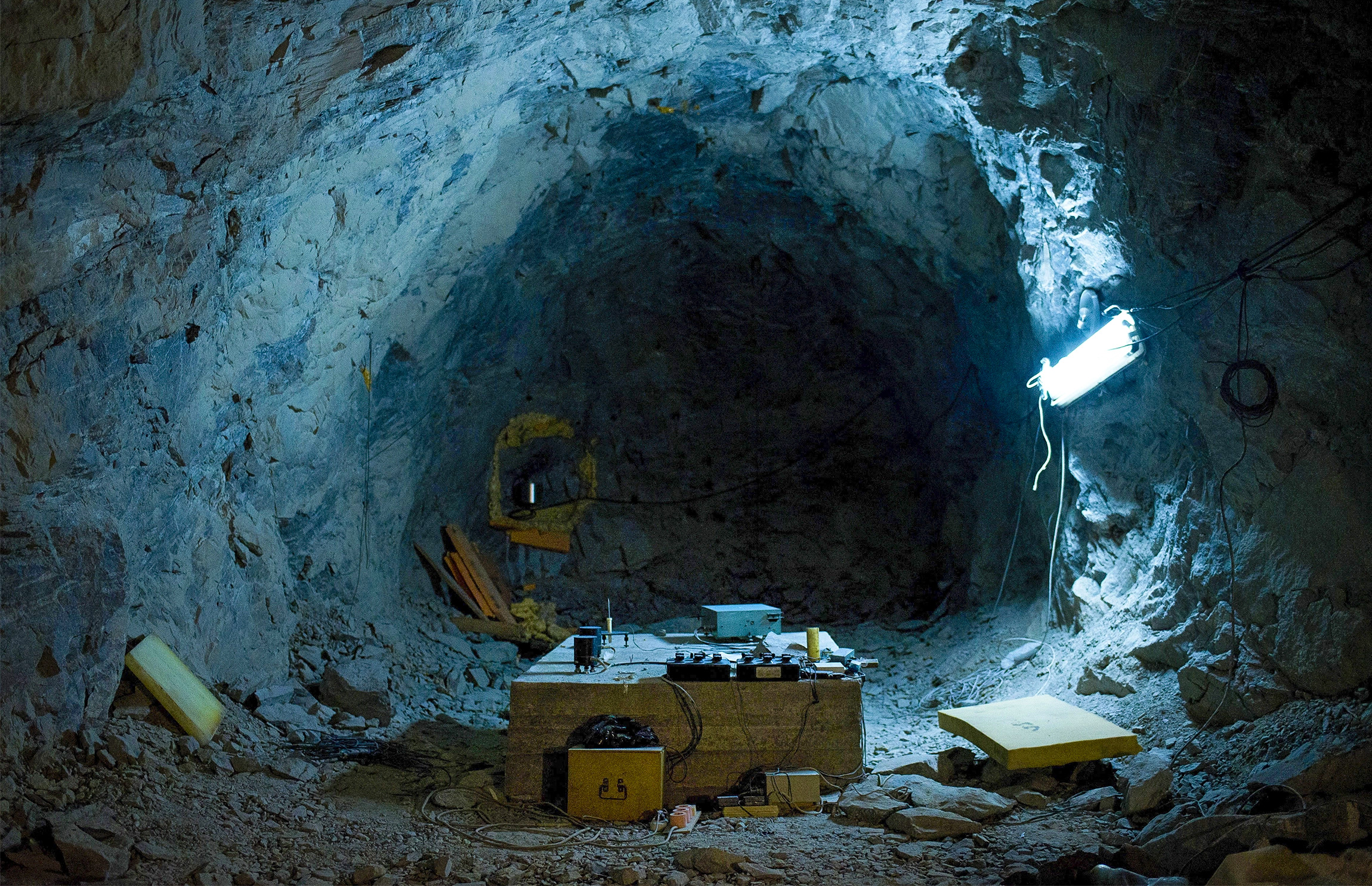
The Baksan Neutrino Observatory is housed deep under Russia’s Caucasus Mountains. It picked up unexpected neutrino counts using tanks of gallium, sparking the gallium anomaly.
Maxim Babenko/The New York Times
“These [anomalies] were very different types of evidence, but they would all be explained by the same kind of sterile neutrino,” Lasserre said.
Scientists searched the world for this neutrino. They hunted it under the ice in Antarctica, next to nuclear reactors, and down in mines. In 2007, German physicists shipped a 200-ton dirigible-shaped detector across the Mediterranean sea on a roundabout odyssey to a lab on the other side of the country — the Karlsruhe Tritium Neutrino Experiment, or Katrin. And Fermilab physicists upgraded Miniboone’s detector, launching a new experiment called Microboone.
The latest batch of results have come in. The hunt has come up short, leaving physicists puzzling over what to do next.
Death of a Neutrino
Back in 2000, when oscillations had proved that neutrinos have mass, Lassere had just completed his Ph.D. thesis in cosmology. Intrigued, he dove into the neutrino world, and in 2011, he helped discover the reactor anomaly. A few years later, he joined Katrin to hunt for sterile neutrinos.
Katrin uses its house-size detector to look for electrons released during radioactive decays of tritium atoms. Following in Pauli’s footsteps, scientists involved in the effort carefully tabulate the electrons’ energies to make stringent measurements of any excess energy that went into making the counterpart neutrinos.
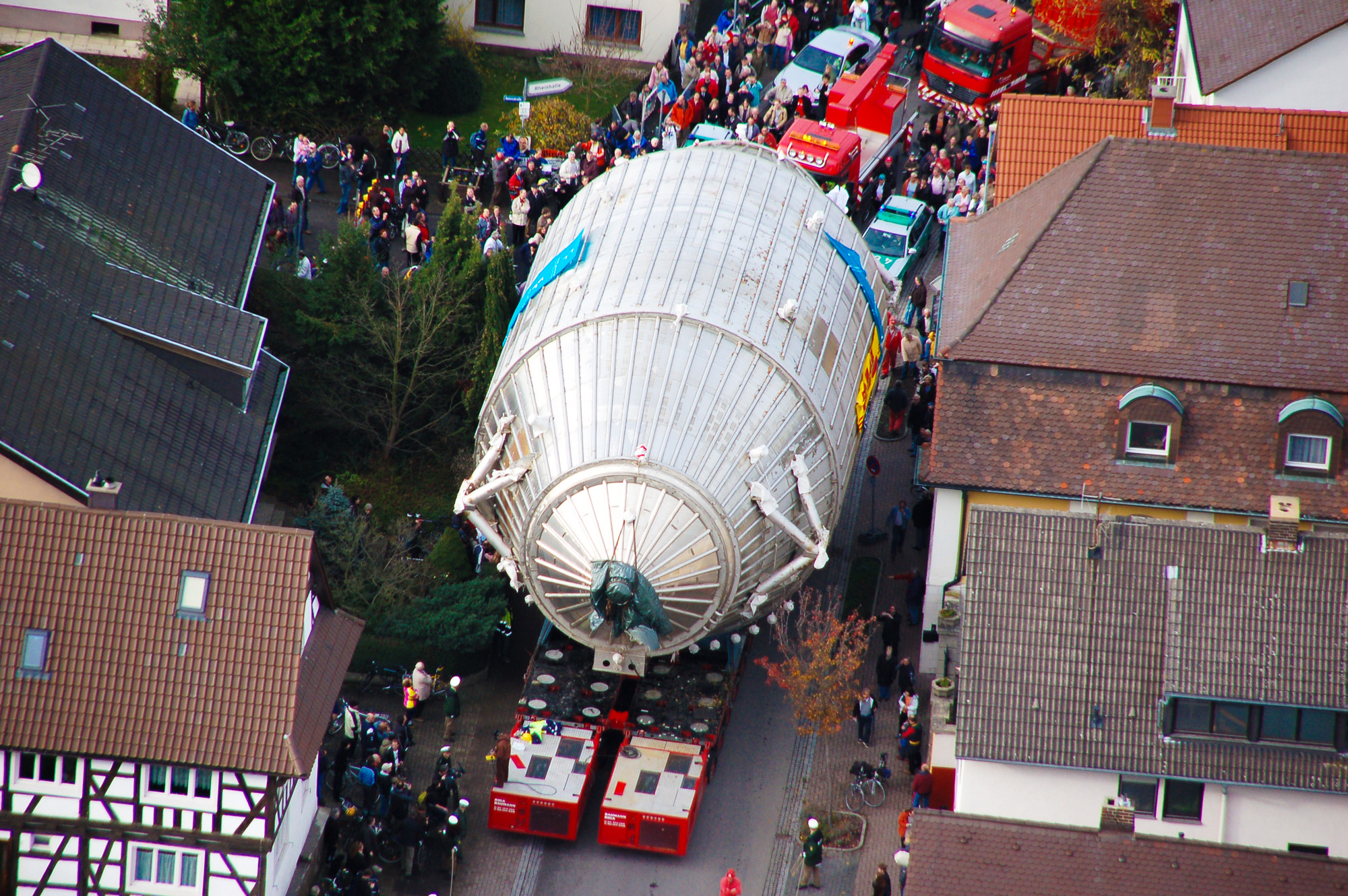
The Katrin detector arrives in Karlsruhe, Germany, in 2006. It had been built only a few hundred kilometers way, but because of its size, it had to travel by barge: down the Danube River, across the Black and Mediterranean Seas, around the Iberian Peninsula, through the English Channel, and up the Rhine.
Forschungszentrum Karlsruhe
The experiment’s main goal is to deduce the smallest amount of energy required to produce a neutrino — its resting mass. In April 2025, after scrutinizing hundreds of millions of electrons, the collaboration found that the neutrino mass can’t exceed half an electron volt. (An ordinary electron, by contrast, has a mass of around half a million electron volts.)
The experiment is also “a perfect tool” for searching for sterile neutrinos, Lasserre said. If those heavier neutrinos were to exist, they would sometimes pull additional energy away from the electrons. But in an analysis published in December 2025, Katrin scientists saw no sign of a sterile neutrino with a mass of around an electron volt. Lasserre called it “a major step that is inconsistent with this sterile neutrino idea” as an explanation for the reactor anomaly. He now suspects that the reactor anomaly arises from not knowing exactly how many neutrinos to expect, an opinion many physicists share.
While discovering a sterile neutrino would have been thrilling, Lasserre said he feels grateful to at least have a sense of closure. “I am very happy, because we don’t have some ambiguous results,” he said. “I would not want to die and have it be completely open.”
That satisfaction eludes Ross-Lonergan, who continues to puzzle over the LSND and Miniboone mysteries.
Ross-Lonergan analyzes data from Microboone, which checks Miniboone’s work by using next-generation technology capable of tracking the subatomic fireworks neutrinos can produce. “We get to take photos of individual atoms being broken apart,” Ross-Lonergan said. “I never get tired of looking at them.”
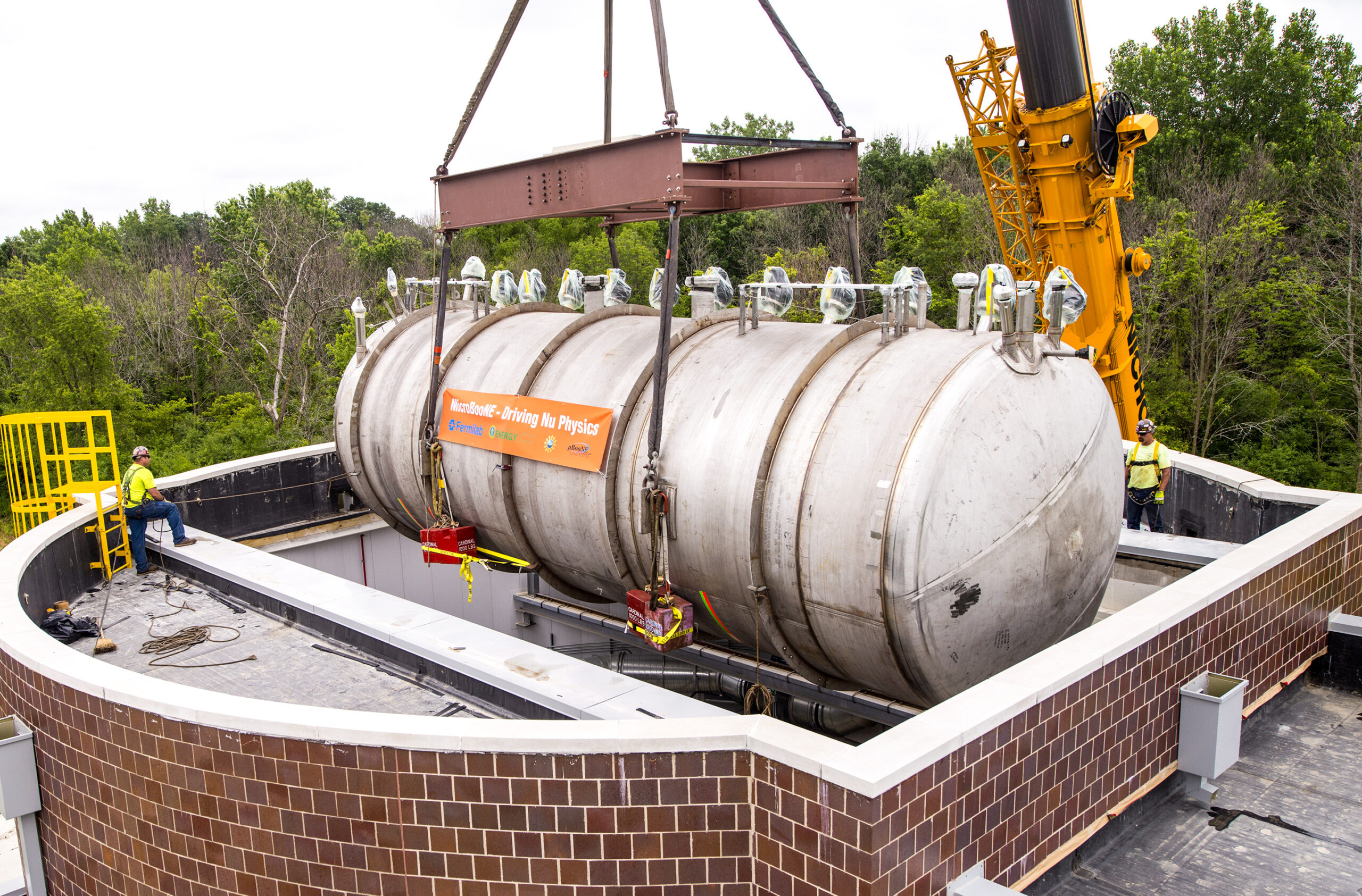
A detector filled with liquid argon represents the next-generation of neutrino-detection technology. Here, a tank to hold and cool argon is installed at Femilab’s Microboone experiment.
Fermilab
First, the Microboone collaboration counted the events where electrons (and therefore electron neutrinos) appeared, but they saw nothing out of the ordinary. Last year, they analyzed neutrinos coming from two different beams but still saw no trace of electron-volt sterile neutrinos.
The Katrin and Microboone results, along with findings from other experiments and strong hints from cosmological surveys, converge to deliver a clear message: Physicists can’t explain everything with one slick idea. The theory of the single electron-volt sterile neutrino is wrong.
So one mystery has fractured into multiple mysteries. The reactor anomaly increasingly seems unrelated to neutrinos. But the other experiments — LSND, Miniboone, and gallium — remain unexplained. “The significance of the signals, they’re all very large,” said Janet Conrad, a neutrino physicist at the Massachusetts Institute of Technology. “It’s not [the electron-volt sterile neutrino] for sure. And so the question is: What else is it?”
Bulking Up
One possibility is that LSND, Miniboone, and gallium are just an unlucky alignment of mistakes and coincidences. Anomalies in physics appear regularly, and physicists can usually trace them back to subtle systemic effects. “We tend to be very skeptical about anomalies, which I think is the healthy thing to do,” said André de Gouvêa, a theoretical physicist at Northwestern University who focuses on neutrinos.
But so far, no one has managed to cook up even a constellation of mistakes that could account for the Miniboone anomaly. “People work really, really hard to try to kill it,” Conrad said. The gallium anomaly remains similarly tough to explain away.
Another possibility is that the anomalies — either individually or collectively — do point to neutrino mischief, but not mischief of the simplest variety, caused by a single electron-volt sterile neutrino. Physicists don’t yet have the data or the computational power to say whether a more extended neutrino family containing two, three, or more electron-volt sterile neutrinos — or heavier sterile neutrinos weighing many electron volts — could help explain LSND, Miniboone, or the gallium anomaly.
Microboone has ground left to cover. And over the next decade, physicists will gain a deluge of data from new research, including a reactor experiment in China called JUNO, which is already operational, and a Fermilab-managed experiment in the United States called DUNE, which should begin taking data in the 2030s. For her part, Conrad is leading an experiment called Isodar, which will look specifically for fast neutrino oscillation caused by any number of light sterile neutrinos. She hopes to have it up and running in 2028.
With this new information, physicists expect to assemble a much clearer picture of the neutrino realm. “We usually get a little bit of good data or a lot of crappy data,” de Gouvêa said. “So lots of good data is a new world for us.”
Whatever happens with the anomalies, the fact that neutrinos have mass means that the particles have a direct line to the unknown. And sterile neutrinos, if they’re out there in some detectable form, could be just the beginning. Physicists know the Standard Model to be incomplete — it’s missing most of the universe’s mass, for instance. It’s just that detecting subtle new stuff among the blaring effects of known particles and forces is tough. Hostert, of the University of Iowa, likens it to picking out the faint hum of an air conditioner over the din of Manhattan traffic.
But the barely interacting neutrino, and the even more bashful sterile neutrino, “offer a much quieter place” to listen, Hostert says. Of course, while he hopes that current and upcoming experiments will pick up on that quiet crackle, he knows they have no guarantee of success.
In the face of this uncertainty, some physicists adopt a stance of resigned acceptance. “It can be frustrating that in your lifetime you may not make a lot of progress,” de Gouvêa said. But thinking about the possible implications of anomalies can be instructive, he said, “and somehow we’re all secretly in it just to learn new stuff.”
Conrad, meanwhile, feels energized by the challenge. She entered the field during the era of confusing anomalies that foreshadowed the discovery of neutrino mass a quarter century ago — another physicist with a life path shaped by the incorporeal particle. And she thinks the field feels just as full of possibility now as it did then. “I think the most interesting times are the hard times,” she said. “I mean, why are you in this field, if you don’t love hard?”