How Does Touch Lead To Pain Or Pleasure?
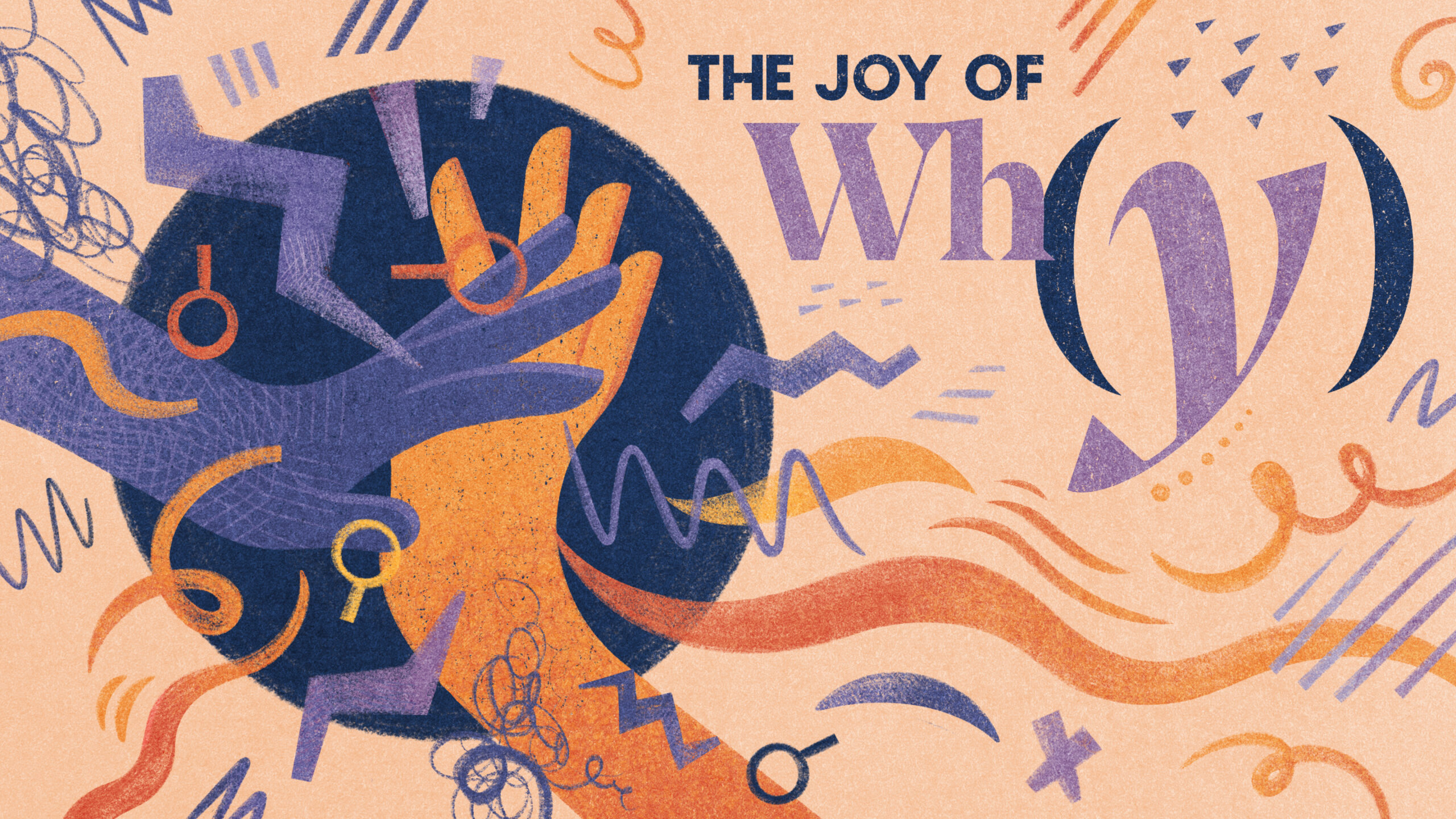
Chanelle Nibbelink for Quanta Magazine
Introduction
Pain and pleasure seem like simple facts of life, however they are anything but that. Neuroscientists still cannot say why physical pain differs from psychological pain, for instance, or why a loved one’s touch soothes while a stranger’s touch repels.
To explore the science behind these sensations, Janna Levin talked to Ishmail Abdus-Saboor, a neuroscientist at Columbia University’s Zuckerman Institute. Their conversation covers how pain serves an evolutionary purpose, how researchers measure pain and pleasure in the lab despite the absence of any objective biomarker, and how touch functions as a social and emotional signal, not just a sensory one. Abdus-Saboor also describes his work with naked mole rats — a species that barely feels pain, shows no signs of aging, and lives in colonies built almost entirely on touch — and the ethical trade-offs when studying sensations in animals that cannot describe what they feel.
Listen on Apple Podcasts, Spotify, TuneIn or your favorite podcasting app, or you can stream it from Quanta.
Transcript
[Music plays]
JANNA LEVIN: Hello. Hello out there, I’m Janna Levin.
STEVE STROGATZ: And I’m Steve Strogatz.
LEVIN: And this is The Joy of Why.
STROGATZ: A podcast from Quanta Magazine in which we explore some of the biggest unanswered questions in math and science today.
LEVIN: So Steve, we’ve been talking with Ishmail Abdus-Saboor who’s a professor here at Columbia [University], not a few blocks from me, about skin as an organ and as a vehicle for transmitting both pleasure and pain.
STROGATZ: Mm-hmm. That sounds very interesting.
LEVIN: Yeah. I think it’s interesting that very little is known about pain. I mean, if you think about your own experience, it’s kind of strange when you start to meditate on it. What is it exactly, right? It’s very unpleasant, but other than that, what is it?
STROGATZ: It’s really mysterious, especially when you have pain that doesn’t really relate to tissue damage. Like, sometimes I’ll just be washing something at the sink in the kitchen, and then suddenly I have pain, and I think, “Come on, that’s ridiculous. I didn’t do anything to my back.” And, you know, people will tell you pain is mental. You can sort of talk yourself out of certain pain, which raises the point that pain is not as simple as it might seem at first.
LEVIN: Yeah, and in particular, he studies this at the level of animals. But it’s one of these things that’s very hard for animals to tell you reliably what they’re experiencing. So, a lot of his work is really trying to interpret the animal’s interiority, the animal’s experience of different sensations.
STROGATZ: Yeah, I wondered as you were describing this work, is it touch as a means to learn about interiority, or is touch the primary object of interest here?
LEVIN: I mean, I think that that’s an interesting question. Like, with many scientific ambitions, sure, maybe the big goal is consciousness, right? But no, the big goal is always very far off. That’s not the language in which they’re operating.
The language in which they’re operating is data, observations. You know, it’s more immediate to their experiments.
STROGATZ: Well, right. They say science is the art of the solvable, and so we’re trying to restrict ourselves to things where we can make advances, make real progress.
But I have to say, I got a little bit of a queasy feeling when you mentioned pleasure and pain, especially as a person with an animal at home. My dog, Murray, that I love so much.
LEVIN: Yes, I’ve heard about Murray.
STROGATZ: I know. I’m sure everyone has.
LEVIN: I’ve seen pictures of Murray.
STROGATZ: Okay. Okay. But still, I mean, the thought of pain, you know, and I know there’s a lot of animal rights people among our listeners. So I hope in listening to this episode, I don’t know, what’s the pain part of this gonna be about?
LEVIN: We did talk about this. I mean, this is a very gentle animal lover. It’s really interesting to talk to Ishmail. His experiments, they’re gentle. Maybe, they’ll notice if a paw is retracted, so if it’s uncomfortable, but they’re not torturing these animals.
But even then, I think animal experimentation, even in the most benign sense, is called into question. And he thinks about the ethics of that.
Well, let me introduce our guest. His name is Ishmail Abdus-Saboor. He’s a neuroscientist just down the road at Columbia University Zuckerman Institute, and he studies the skin-brain axis, and in particular, our sense of touch, including gentle touch and soothing touch.
STROGATZ: Fantastic.
[Music plays]
LEVIN: Welcome to The Joy of Why, Ishmail. I’m so glad to speak to you.
ISHMAIL ABDUS-SABOOR: It’s an honor to be here with you as well.
LEVIN: It is a pleasure to get to know colleagues on the same larger campus. I’m very interested in starting with your journey. You grew up in Philadelphia. I read some of your other interviews where you discussed your love of animals, and how at one point you converted the third floor of your home into a year-long science experiment. And maybe I’m exaggerating, but tell me about your initial relationship with animals as a child.
ABDUS-SABOOR: Yeah. Yeah, it’s really joy to be here and, I think, if you were to ask me when I was a kid, what I wanted to do with my life and career, I always said I wanted to become a scientist. You know, I didn’t know any scientists directly, but if I thought about the classes in school, that kept me very excited and energized, and I would watch Animal Planet a lot as a kid and I could just watch nature shows for hours on end.
I had many pets growing up, dogs and cats, but also like lizards and turtles and snakes. You know, I remember, like, as a kid having this subscription to this, like, Turtle Digest sort of a magazine. You know, I was very fascinated about biology and biological systems and how animals communicate and cooperate. I think my science career set in motion in earnest as a freshman in high school, as you alluded to, at Central High School in Philadelphia, as a part of an honors biology class. You know, actually, we didn’t get gym class because to sign up for this honors biology, we had to take two periods of biology. And for me, even as a 14-year-old kid, like, I just jumped at that opportunity. You know, who needs gym? Got teased a little bit.
But, you know, as part of that project, we were able to do this year-long science fair project, and many of the students worked at neighboring universities in Philadelphia, Temple or Drexel, or UPenn. But we also were able to do science at home. So this is what I did. You know, basic rudimentary equipment and things. And the project was actually looking at regeneration in crayfish.
So you know, my parents were very supportive of me and let me take over, you know, the third floor of our house there in the Germantown section of Philly. And, you know, there were hundreds of crayfish and I’m sure it didn’t smell so well up there. But at the time, you know, there was this really big push on, like, supplements and ginseng. And like ginseng was supposed to be like this magical supplement that, like, improved health and memory and all sorts of wonderful things.
So my idea was if I spiked the crayfish, their water with this ginseng herbal supplement, then this could, like, speed up the rate of regeneration because they do have the ability to regenerate lost appendages. So, you know, I got to become a scientist and I, like, trim parts of their appendages and measure the rates of it growing back. And, it was a very exciting time to keep a lab notebook and have hypotheses that I could test and to make graphs and plot my data and do statistical tests to see if there was anything here.
Unfortunately, I don’t quite remember the outcome of those.
LEVIN: You weren’t as diligent with your data analysis as you are now.
ABDUS-SABOOR: Yes, exactly. That’s exactly it.
LEVIN: We actually have something in common. My daughter is obsessed with animals, and at one point we had something like 23 animals in my New York City apartment. It looked like a Petco. There were snakes, lizards, tarantulas. It was insane. Only one time did one animal kill another animal. It’s a real calling, I feel, this interest in animals.
But you ended up studying smaller-scale biology, cellular, molecular. What led you to make that transition from this sort of love of animals to the actual smaller-level biology?
ABDUS-SABOOR: When I went to college, I thought, you know, again, this love of animals, maybe I wanna become a veterinarian.
So I worked in a number of veterinary clinics and hospitals, and there my experience was, like, helping the vet with spaying and neutering and, and it was very monotonous and, and frankly, quite boring. And I kinda missed, like, this kinda fast-paced nature of biological exploration. So I did another internship my junior year in college at University of Pennsylvania in the Cell and Developmental Biology department, and there we were working on, you know, cells in the hearts of mice, uh, um, proteins in the hearts of mice that are important for cardiac development and function.
And there I got exposed to molecular biology research and working at the bench, and just the culture of science, the whole ethos of the, you know, of scientific discipline at lab meetings and people presenting results and, and just talking about all the open questions and, and being able to, to look at life at the scale of molecules, DNA, RNA, you know, the molecules of life.
I thought that was just very exciting. It wasn’t until a few years later that I moved into, like, neuroscience and sensory neuroscience.
LEVIN: Yeah. There’s this interesting history, painful history — pardon the pun — of our relationship with animals and, sort of denial of the idea that animals are conscious or that they feel pain.
ABDUS-SABOOR: Yes.
LEVIN: Uh, and so going back to Descartes in the 17th century, he infamously performed vivisections when, you know, live animals howling. How could he possibly — and I’m not actually asking you to defend this point of view — but how could he possibly have suggested that the animals were not feeling pain?
What’s your understanding of how we transition from this physical detachment, you know, as our colleague of ours at Quanta said, “They don’t think, therefore they are not.” That was his attitude to accepting that animals feel pain.
ABDUS-SABOOR: This is a wonderful question, and it’s one that I’ve thought a lot about and keeps me and everyone in the lab awake at night. I mean, it’s a part of a broader question, the question of consciousness, right? Do animals have a level of consciousness that we would have?
So if we boil this down to the idea of pain and how it works and where do we draw the line on whether or not animals feel pain? It’s a debate that has raged for many years and I think the modern idea is that you need a brain, you need some central processing unit to have full function and cognition to be able to experience pain.
If you look at lower animals, perhaps, no one denies that they can sense nociception. Nociception, it’s a fancy term for receptors, neurons, out in the peripheral nervous system that can be activated by noxious stimuli. And those signals travel to some central processing units so that the animal knows to like move away. And I think this idea, everyone appreciates. Even simple, you know, bacteria, right, single cell organisms if you put them in an environment that’s not conducive, they’ll move away. They’ll recoil, because they have sensory neurons out in their peripheral nervous system.
Now, we would consider that nociception, but not quite pain. Encapsulate the experience of pain, you have to have a central processing unit whereby you can respond appropriately to subsequent noxious stimuli. There’s some sort of learning and memory. There’s higher level cognition. You understand that this particular stimulus that I’ve received, like, causes me pain, so now I’m going to avoid it.
So then the debate is, if that’s the case, then which animals have it and which animals do not? And I think, as a neuroscience community, by and large the idea has been that many animals, especially lower animals, perhaps do not have that level of higher cognition and consciousness.
You know, a question I get all the time, right, people, especially in the New England area, they ask about lobsters, right? Should I feel bad about throwing this lobster in this hot boiling pot while it’s still alive?
LEVIN: The classic example of slow boiling the lobster.
ABDUS-SABOOR: Exactly, but then people say, “Well, they tell me they can’t feel any pain, so I shouldn’t feel bad.” And they ask me, “Is that true?” Depends on who you ask, right? And perhaps you have to do the test.
So as a field, like the classical test that we do is like this conditioned place aversion. So does an animal have enough brain real estate to understand that this thing is noxious? They should be able to understand that the environment that they received this noxious stimulus is bad. Such that if you put them in that environment later, they can remember that something I received here was not good and I want to escape or avoid it.
Animals that don’t have that cognitive ability, even though they’ll recoil from something noxious. They don’t have the ability to form the memory, a conscious perception, the negative feeling that is attributed to pain, right?
So this is what people do, and if you can do this test and show that they can make these associations, then people say, “You know what? I think this animal can feel pain, and let’s add that animal to the list.”
LEVIN: This is interesting because the animals you work with specifically have to feel pain to be part of your study but also don’t. And that’s also part of your study. Why they don’t—we’ll come to the naked mole rats.
ABDUS-SABOOR: Yes. We mainly work with rodents, and I think it is accepted that rodents can experience pain or nociception. They will withdraw their paws, like we would withdraw our hands. There is some debate in our field about, again, these higher-level components of pain, the emotional negative valence that’s associated with pain. How much of that are rodents experiencing?
And this is part of, like, I think the importance of some of my work because we’ve taken really detailed behavioral mapping of animals as they experience different stimuli. And we can say actually they respond in ways that they can’t describe to us their ongoing emotional states, but if we can use behavior as a readout of their internal states, they are displaying behaviors very characteristic of negative emotional states of pain and we’re trying to, like, kind of map that in the brain.
LEVIN: It’s a very interesting question that you’re raising because while reading about your work, I was wondering about the ways in which psychological pain differs from physical pain. And beyond differing, how they’re interconnected, right? As you’re describing, if the animal doesn’t have the psychological component, we downgrade it in terms of severity.
ABDUS-SABOOR: That is very true. And you know, I think many times we downplay animal intelligence or cognition because we don’t know how to tap into it. We haven’t designed the right test.
You reminded me of some work from a colleague of mine, Professor Kay Tye at University of California San Diego and also the Salk Institute. In rodents, she’s asking this question, physical pain and emotional, psychological pain do they map or intersect anywhere in the brain? And she designed a really clever test, which she calls the FOMO task in mice, the fear of missing out, where she’ll have mice that are living together. And she puts a divider between them and the animal outside of the divider has to sit there and watch its friends get, like, this chocolate milkshake.
Okay, so the mouse is just watching its friends. The mouse is a little bit hungry, a little bit thirsty, and watching his friends take this milkshake. And her idea is that this is like a psychological form of pain. And then she’s doing recordings in the part of the brain called the insular cortex and asking the question like, does this interact with physical pain? And it appears that it does. Like it alters their threshold to respond to, like, physical pain after going through this emotional psychological pain. And maybe that there’s similar constructs in the brain, and we can even study this in a rodent.
LEVIN: Let’s discuss a little bit of the actual science that goes into this. So, your research in the somatosensory system deals with pain and touch and skin. Can you tell me about some of the brain pathways and the different receptors involved in the different types of sensations?
ABDUS-SABOOR: Sure. So right, as you mentioned, the somatosensory system is our sensory system that mediates touch, pain, itch, temperature, pressure.
LEVIN: And these are all very distinct experiences.
ABDUS-SABOOR: Yes, they are very distinct experiences. Really excitingly for us as a field, if you would look 30 years ago, for example, we didn’t have a lot of the molecular players to even have an entry point into thinking about how does this work.
We had a basic idea of the neuroanatomical pathways. So, you have these peripheral sensory neurons called, uh, they emanate from a structure called the dorsal root ganglia. And we have, like, 30 pairs of these that run alongside our spinal cord. They send one long process to the skin or other internal organs and one process to the spinal cord.
From the spinal cord, a different set of neurons kind of picks up the relay, goes to the brainstem, and then from the base of the brain to other areas throughout the brain.
So, the neuroanatomical pathways, we kind of have had this for quite some time. But as you mentioned, there’s touch, there’s hot, there’s cold, there’s itch, like these are quite distinct. So, it’s where the specificity resides that allows us to exquisitely detect these different sensations.
And you know, our field has had a really nice revolution in the last 15, 20 years where within these sensory neurons out in the peripheral nervous system, we have identified receptor proteins that confer specificity.
And two of the most famous ones I’ll just mention because they were the subject of a Nobel prize in 2021. So, one was the discovery of a receptor protein called, um, TRPV1. Transient Receptor Potential Vanilloid 1. This was discovered in the lab of David Julius, who’s set out to determine, like, how chili peppers, like why do we perceive them as hot? We had an idea of which neurons may do it, but like, how do you explain the “how” at a molecular level?
And so, he designed a really ingenious screen where he cloned receptors into a cell line and basically applied capsaicin, the active ingredient in chili peppers. And he wanted to find cells whereby once you add capsaicin, there can be like an intracellular response. They can be activated in the form of calcium entry into the cell, which is a proxy for, like, neuroactivity.
And this activity can be conferred by adding a certain receptor protein. So, he screened and basically found this channel that we now call TRPV1, that when it’s expressed on the surface of cells, confers the ability to respond to capsaicin.
We now know, and they showed in that paper, that this same receptor mediates the response to heat. So, this is why, like, capsaicin and chili peppers have this heat sensation because the heat sensing neurons that also respond to capsaicin expressed this one protein.
This paper came out like in 1999, I believe. And it really began a molecular age of pain research because now we had a receptor that we can say, okay, this is how you define a pain neuron or a heat sensing neuron if it expresses this TRPV1 receptor.
LEVIN: So, they’re actually physically specialized neurons. They’re physically different.
ABDUS-SABOOR: They’re physically different than other neurons, by their constitution of the genes and the proteins they express on their surface.
Now, this was in the late 1990s, and there was another pioneering study just a few years later by Ardem Patapoutian’s Lab, who was the co-winner with David Julius on that 2021 Nobel Prize. He did a similar sort of a screen in a different cell line looking for receptor proteins that confer mechanical sensation. Okay. And there they did a slightly different screen where they use RNAi to knock down the expression of receptor proteins in the cell line that they knew was mechanosensitive and could show that without this one protein or two proteins, then the cells no longer responded to mechanical force.
We now call those genes Piezo1 and Piezo2, and for the most part, almost every neuron that we know of that is mechanically sensitive, meaning can convert physical stimulus energy into the language of the nervous system, electrical activity. It’s conferred by this mechanical sensor Piezo. And it’s not just in neurons; it’s in non-neuronal cells.
So here’s another example. I just gave you two examples of they’re sensory neurons, but if this one has TRPV1, it’s gonna respond to heat, noxious heat. And if this one has Piezo, it’s gonna respond to pressure. And there are other sorts of receptors that confer itch or cold, et cetera.
Now as a field, if I jump ahead to 2026, there was just The Brain Prize, which is the biggest prize in neuroscience, was just awarded in our field again to David Ginty at Harvard and Professor Patrik Ernfors in Europe. They’ve done really pioneering work to show there are at least 15 different classes of these pain, touch, itch neurons that are defined by their expression of different genes, their physiological properties, their expression patterns within the skin. As a field, I think we’ve made, and are making, really great progress.
So you know, what’s left to do, and why am I still employed? You know, I think, as a field, we’ve learned a lot about detection in the periphery. One of the things that really drives me in the work we do in my lab is making a connection between the peripheral nervous system, all these mechanisms in the skin, and how does this connect to the brain where perception resides, right? Making the connection. This body, brain, physiology, and signaling. This is where I think the next wave of major discoveries we’re ripe for in this field.
LEVIN: So here the subject really has shifted from a kind of behavioral science to really hardcore molecular and genetic science. Your particular interest is very specifically skin, as you’re saying, and I know that you’ve quantified a pain scale to try to have a more quantitative way of discussing these things as opposed to just qualitative observations of behavior. Tell me about the pain scale and how that work ties in.
ABDUS-SABOOR: That’s a wonderful question. You know, it was like a side quest actually. So, I’m most at home in genetics and molecular biology. As I mentioned before, studying pain and rodents is challenging. They can’t talk to us, right? And I saw that for me to, like, have precision and understanding the genetic and molecular manipulations, I had to take a step backwards and understand the behavior. And that step backwards has been like 10 plus years of this, like plugging away of trying to make these rodent pain scales.
What we had in the field before some of our studies was just like, you poke an animal with something that you think is painful, and if they respond, they’re in pain. If they don’t, they’re not in pain.
Pain is so complex, right? Just think if someone, like, poked you and looked at whether you lifted your hand, would that be sufficient to explain your pain state? No. It’s so much richer. So, this is what we attempted to do with this rodent pain scale to put a number on their sensation.
LEVIN: Which, of course, doctors ask you to rate your pain scale, which is so fascinating. It’s not something you can measure.
ABDUS-SABOOR: Yes. That gets to another point that keeps us awake in the pain field is that we do not, to this day, you know, April 21, 2026, we do not have a biomarker for pain, alright? This drives us crazy. You cannot get a litmus test. There’s no, like, if this gene is up or if this brain area is on, that means you’re in pain. And if not, you don’t.
We don’t have that. We’re searching. We and everyone in the field is searching, but we don’t have it. In the clinic, we have to rely on self-reports. People largely telling us how they feel. There have been some advances in, like, fMRI and other brain-imaging approaches that looks promising, and maybe we will get to a day where there’s a signature that we can confidently say someone is in pain and not some other state. But we don’t have that yet.
LEVIN: Mm-hmm. As an animal lover and a person who has looked at the complex history of science in relationship to animals, how do you reckon with the ethics of continuing to work with animals?
ABDUS-SABOOR: It’s a tough question, you know. We have an institutional animal care and use committee that every single experiment we do with animals we have to justify, right? And we have to use the lowest amount of animals and do our best to induce the least amount of pain to study the biological process we’re interested in.
It’s a challenge for someone who’s studying pain because we have to like induce the pain to be able to study it, right? One of the benefits I think of our behavioral assays is that because we now get so much resolution, we can test less animals to reach our statistical observations and conclusions. So, this kind of helps with animal welfare.
We try our best to treat the animals humanely and with respect because we do understand that they are giving their lives oftentimes for human benefit. And this is just something that we have to appreciate. We need medicines, we need cures, we need treatments. And oftentimes animal research is a part of that pipeline. And I’m comfortable ethically with that understanding.
Now I know there’s some people who are not. And it’s not upon me to convince people to change their beliefs or thoughts. I respect those. And there have been people who say, “I love the research you do, but ethically this is not for me.” I understand those concerns as well.
But I think, you know, in 2026, we’re still at a point where we need animals to learn how the pain system works and how to design safe ways to relieve chronic pain. And we don’t have better models to do this, so we have to work responsibly and ethically in these animal models.
Now, will that change? Will there be a time where we can use computer models or stimulations or organoid models and learn just as much as we can in animal models? Maybe that day will come and we’ll have to revisit this. Maybe there won’t be a day where we can continue to justify using animals to study pain or in neuroscience research. But I don’t think that day has arrived and they’re still very important conduits to study.
LEVIN: Well, this opens up the question about this fundamental research that you’re doing in a laboratory in an academic setting, how does this transition to therapeutic treatments for human patients?
ABDUS-SABOOR: Yeah, I think the goal of any biomedical researcher such as myself where I’m a basic scientist, curiosity-driven scientist, and I think there is major value in this increasing knowledge for knowledge’s sake, even if it doesn’t have a direct application at the moment that we’ve made the discoveries.
However, in saying that, I do believe we have duty to the public and the taxpayers who fund our research to think about how the basic work we’re doing can translate into therapies and cures and especially for pain, right? There are millions of people who suffer with chronic pain.
The beauty of working in rodents is that many of the genes and molecules, the neuronal pathways I’ve talked about are highly conserved, right? The wiring and the neuroanatomy of the pain system is very much shared between rodents and humans, okay? We really do operate under the space that some of the things we discover can have direct application.
I’ll just mention an exciting example. Some papers in the early 2000s in humans showed that there was a family of patients who can’t feel any pain whatsoever. And there have been these rare cases throughout history of people who just don’t feel any pain. It’s actually, like, not a good thing because many of these patients don’t live long lives. They actually injure themselves. You know, pain is, from an evolutionary perspective, good for our bodies.
LEVIN: Good information.
ABDUS-SABOOR: It’s good information. And especially during development, you learn, like, to not touch that hot stove, right? To not do things that could hurt you.
Anyway, there was a family of people in Pakistan who didn’t feel any pain, so you could do genetic studies and kind of trace the pain and sensitivity. And the scientists went over there and did really heroic work where they sequenced their DNA and they found they all had mutations in a single gene. It’s called Nav1.7. It’s a voltage-gated sodium channel, okay? This channel, this protein, seems to be very specific to pain neurons in the periphery. So if people don’t have a functional version of this protein, they won’t feel pain.
And then conversely, there’s another class of patients that have the exact opposite. It’s called, like, Burning Man syndrome, where they just have spontaneous pain, mainly in their extremities throughout life. It turns out the mutation is in the same protein. This one protein, you don’t have it, no pain. Too much of it, lots of pain.
Same thing happens in rodents and many other mammals we’ve studied. This voltage gated sodium channel is very important for the activity of the neuron propagating an action potential and specifically in pain neurons. And in fact, they’re new drugs that have been improved that actually block this particular receptor and it seems to improve pain for many patients.
There’s another version of this protein called Nav1.8 that seems to have similar functions. So maybe some of the therapies in the future, we’ll kind of do a double block of both of these proteins.
And this work, a lot of it is going on in rodents, Here’s a one example of a lot of like back and forth and crosstalk between animal studies and actually direct translation.
One of the things we’re very excited about doing in my lab, I mentioned these behavioral tools. And with our behavioral tools we can delineate in rodents the sensory component of pain versus more emotional components of pain. And so there does appear to be an emotional network in the brain — areas like the amygdala, the anterior cingulate cortex, insular cortex, and some other areas that seem to confer an emotional component of pain. How that works, you know, we and others are hard at work.
But the point I wanna make, back to your question about translation. It would be very nice if we could have therapies of the future that don’t target the pain at the level of the peripheral nervous system, at the level of sensation, but alter it at the level of perception and maybe alter the negative emotional state of pain. Because maybe you don’t want a world where you can’t feel any pain, as we mentioned, it does serve some purpose, right?
But, if we can remove the hurting component but keep the sensory intact, then maybe this is how we want to tackle pain. But we have to know how that works at a deep level to be able to kind of target that. But I can envision a future where that’s possible.
LEVIN: It’s so interesting. I mean, I don’t even wanna know how they discovered that this family felt no pain. I don’t even wanna know what happened to them that brought that to the scientific community.
ABDUS-SABOOR: You know, in some countries there are a number of street performers actually who do things – you know, they’ll walk on hot coals or like, do things. And, you know, one of the kids in that family, he would do tricks. He would climb the second-floor building and jump off and just pop right up. And everyone would cheer. And so these sorts of things.
LEVIN: The ability psychologically to overcome pain or to mitigate pain is so fascinating to me because of course, we act like psychological is disconnected from the body. But what we really mean is what the neurons are doing in the brain. And I think that there is this kind of culture of magical thinking that we can transcend pain but there might be a sense in which that’s literally physiologically possible.
ABDUS-SABOOR: That is very true. And what you’re talking at too is one of the reasons I got into pain and pain research. There’s a really nice book called The Challenge of Pain, written by Melzack and Wall, two really pioneering scientists in our field who came up with one of the most important theories in the history of pain: the “gate theory” of pain. But anyway, in this book, they lay out, like, as you’re getting to all these cases where people should be experiencing lots of pain, but they don’t. You know, some people who you can hypnotize them and their pain goes away.
And there are too many anecdotes like this to think that it’s not a real phenomenon. A related phenomenon that we do know a little bit more about, and people are starting to model this in rodents, which I think is really cool, is the placebo effect, which is very strong for pain actually.
If they have a strong expectation and belief that this thing will alter my pain, it can actually work. And conversely, if you tell someone, “I’m gonna give you this treatment and it hasn’t worked for anybody, everyone says it’s crappy, but you’re outta options, and I just wanna try it anyway.” They’ll come back and say, “Doc, you’re right. It didn’t work.” And it could be the same medicine, right?
So this expectation and belief of pain relief is very strong. We now know it definitely taps into our endogenous opioid system, our endogenous system to kind of control pain. It taps into these things. If you block like opioid receptor signaling, you can block many of these effects.
It’s not magic, but it’s acting on defined neuro circuits in the brain. And there are many labs that are hard at work, Greg Corder and Matt Banghart and Greg Scherrer, amongst others to try to map how this is working.
LEVIN: Amazing. I did see that you had talked about the pain addiction connection. Particularly with opioids.
ABDUS-SABOOR: Correct.
LEVIN: And what you’re saying is there’s a biological substrate reason why there’s a connection between pain and addiction.
ABDUS-SABOOR: Yes, that’s very true. We have an endogenous opioid system that can be activated by many things, and we have these opioid receptors all throughout our body.
I mean, the discovery of the opioid receptors back in the late 1970s, in rodents, they could stimulate this one area in the brain, the periaqueductal gray. And you could get really strong pain relief. The rat tail would be on the hot plate, and you stimulate this area in the brain. Then they don’t respond, okay? And they found that this area is, like, flooded with opioid receptors. And this response was, like, dependent upon activation of the endogenous opioid system.
Opioids can be powerful relievers of pain and the receptors are everywhere. This is why they also have so many unwanted side effects because they act on the pain system, but they act in the periphery, they act in the bladder, in the gut, in the DRG neurons, the spinal cord. They’re loaded everywhere, so they come with so many unwanted side effects beyond just pain relief.
[Music plays]
STROGATZ: Wow. So many surprising and very immediate things to think about there. I think anyone listening to this can relate.
LEVIN: Mm-hmm. I didn’t really appreciate that the opioids… Of course, I knew they were pain relievers, I guess. I knew that was the story. People were originally going to seek pain relief, but I thought it was a external consequence, you know? I didn’t think it was targeting the same biology.
That was really surprising to me, and that we have this endogenous, natural mechanism that can do the same thing, which is why it suggests we can overcome pain psychologically to some extent, you know? I guess it also just shines a light. There’s a lot we don’t understand about how our own minds work and bodies work.
STROGATZ: I believe it. Watch any magic trick, and you’ll see that. But no, I mean, in something as corporeal as pain, I mean, right? That’s not an illusion. And yet maybe some aspects of it are an illusion. It’s confusing.
LEVIN: Yeah, I don’t know that it’s an illusion. I mean, things are triggered. There are signals, right? But you can flood the receptors with other chemicals. I mean, that’s really what it sounded like to me. And it has an interesting evolutionary role, right, pain in terms of survival. It’s important that we don’t go running if our foot’s broken, and it is very disadvantageous to survival to have no pain receptors, and they know that there are certain people who don’t feel pain. So just appreciate when your back hurts at the sink, Steve.
STROGATZ: Yes, I see. I should be grateful for my pain receptors.
LEVIN: Exactly. Well, after the break, we’re gonna leave pain behind, and we’re gonna talk about something a little more pleasant, and that is the wonderful naked mole rat.
[Music plays]
LEVIN: Welcome back to The Joy of Why. We’re speaking with neuroscientist Ishmail Abdus-Saboor, who studies the brain and our sense of touch.
I do want to turn to your important work in antithesis to pain, which is about gentle touch and social touch and pleasing touch. So, I’m both curious what drew you in this other direction, and of course how the receptors involved in gentle touch or stroking touch are different from pain receptors and why this is so important in the social fabric of possibly both animals and humans.
ABDUS-SABOOR: Great question. You know, as I was ending my postdoctoral studies at UPenn and opening my lab about eight years ago, I started to think about, okay, who would want to come work in my research lab? And if I only have projects studying pain, maybe that could be off-putting. Could be some people who would prefer to study, you know, social touch, appetitive, something good. And that was the case, yeah.
I wanna pay homage to a colleague of mine, David Anderson, at Caltech. He published this paper that I read as a postdoc, and it was just so fascinating and exciting because what they had discovered was that there was a population of neurons that seemed to be activated by stroking touch on the mouse’s skin, consistent with these being pleasurable social touch detectors.
And that paper, they didn’t look in the brain, and they hadn’t linked it to like any behavior. So, I thought this was right for someone with my background and genetics and molecular manipulations, really careful analysis of behavior and also linking that with brain imaging. So, the thing that differs between these neurons and this pathway and pain is that it’s a different molecular population. These neurons happen to express, at least in a mouse, this gene called MRGPRB4. It’s a tongue twister. They do express Piezo channels, this other mechano sensor I told you that’s important. So, they’re definitely mechanosensory neurons.
What makes them special is their constellation of genes they express that’s different than some of the other classes that mediate other types of somatosensation. Their wiring where they’re, that they innervate the hairy skin areas that are, like, normally touched. The neurons that they’re connected to in the spinal cord and from spinal cord to the brain. Basically, the whole pathway from skin to brain is gonna be different than a pathway for like hot or cold or pain, okay. So, the whole, like, circuit, the anatomy, the wiring is totally different.
LEVIN: Wow. So highly specialized again.
ABDUS-SABOOR: Highly specialized again. For example, if you stimulate, like, a pain pathway to animals, like, quickly they give you signs that this is painful and they don’t like it, they avoid it. But with this pathway, they give us signs that they actually like it. They want to spend time in environments where this pathway is stimulated. And if we look at, for example, dopamine release in the brain’s reward center, we can see that stimulating this pathway in the skin leads to like this dopamine release or if we genetically ablated these neurons, we see social touch behaviors are greatly kind of diminished.
Now, some of our ongoing studies where we’re really excited, because this gets to your question again about, like, why it’s important and translational impact in humans. You know, we think this pathway is also important for the ability of touch to relieve stress and anxiety and depression.
When you’re down or going through some negative emotion, just think about a hug from a loved one, a parent, a friend. It can really calm you down, and make you feel better. We appreciate this phenomenon, but how it works at a molecular, cellular and neuronal level is almost completely unknown. The skin to brain pathway for social touch that we’ve been discovering and elucidating, we think could be important for that. And we have really strong evidence. It’s unpublished, but hopefully, you know, maybe later in this year we’ll submit this paper showing that activating this pathway can relieve negative states, which is really exciting. And we do think it has direct therapeutic potential. Maybe we can even think about treating diseases of the brain, chronic stress, not in the brain but by targeting neurons in the skin.
LEVIN: Wow. Fascinating. Now there’s this research that you’ve done where you have genetically altered mice to become sensitive to blue light so that instead of physically stroking them, you can illuminate them with this blue light, and they have the experience of being gently touched. So, I have many aspects to this question.
One is, what a crazy thing to do. That’s not a question. And the other is, you know, are we going to genetically alter human beings so that they can do blue light therapy as part of this, you know, attempt to heal certain disorders of the mind?
ABDUS-SABOOR: Yeah, it would be nice if we could get there one day. So, this technology is called optogenetics and I think it is one of the most important technologies in all of neuroscience. And hopefully there’s a Nobel prize on its way for some of our colleagues.
But anyway, this shows that the beauty of, like, evolutionary biology and looking across diverse species, there’s this protein and algae that allows the algae to propel through these muddy ponds to blue light. It’s an ion channel, a non-selective cation channel, which just basically means there’s a part of the protein that when blue light hits it, the channel opens, it allows positive ions to flood into the cell that expresses this protein.
This is, like, perfect for neurons. Neurons are electrically excitable cells that fire to positive ionic current flowing into the neuron. So, if you can put this special protein on the surface of your neuron through some sort of viral genetic engineering, you can confer the ability to directly activate these neurons in this way.
So, part of this project that we did some genetic engineering crossing mice together to put this blue light sensitive protein only in these neurons. And we can just shine light directly to the skin, as you mentioned to confer behavior.
Now, to do this in humans, one would have to get to a point where you could do, like, gene engineering to add this protein to cell types of interest.
People are doing this now to treat – this is not our work – but to treat like forms of retinal degeneration and blindness actually. It’s really incredible. So maybe there is a pathway for using this technology to treat people.
LEVIN: You were discussing similarities in how certain neural networks are working for mice and for human beings in some of these complex systems. But you famously work with naked mole rats and who doesn’t love a great naked mole rat colony? Please, for those who are not in the know of the extraordinary naked mole rat, can you describe them a little bit for us and, why their colonies are so unusual in the rodent kingdom.
ABDUS-SABOOR: Yeah, they’re amongst the most fascinating animals I’ve ever encountered. Some days we’re just like, “What are we studying?” Some days we literally just sit there and just stare at them.
LEVIN: Watch them?
ABDUS-SABOOR: Yes, yes, yes. Because their biology is so fascinating, but some of the things that really excite us about them.
So for one, they don’t feel many forms of pain, for reasons that are not fully clear. They seem to be immune or recalcitrant, unable to get cancer. They’re long lived for rodents, so they live about 30 to 40 years.
LEVIN: Wow, that’s a long lived rodent.
ABDUS-SABOOR: Yeah, yeah. Most mice and rats, they only live one to two years. Yeah. Yeah. And they don’t really have traditional signs of aging. So, when they die, they just die. You can’t look at ’em and age them. They don’t seem to have any like cognitive or physical decline. They just die.
And they’re highly social. And this is the thing that we really keyed in on my lab to date. In the last three plus years or so, we’ve been working with them. They’re actually the most social animals in the entire mammalian kingdom. So, one colony can contain dozens or hundreds of animals all living together and a really tight-knit colony. And they’re driven by this really single dominant queen, who’s the matriarch that kind of guides the whole society. And all the other animals are essentially workers and drones and are reproductively suppressed in the presence of the queen. She’s the only one who mates with one or two like breeding males in a colony. And she continues to give birth her entire life. So, no menopause or signs of slowing down. And so, as she has a litter, they never leave. The colony just gets bigger and bigger and bigger, okay. They’ve decided that it’s best for their survival of their colony to do everything together, okay.
They chiefly come from East Africa, Kenya, Ethiopia. They live completely underground as well. And the leading hypothesis is that, you know, maybe in this dry, arid desert climate, where food and resources are not plentiful, that it was easier to have a communal form of living such that some animals are foraging and hoping to stumble upon a tuber, like a sweet potato. And if they do, like the whole colony is alerted and they all can feed off that together.
LEVIN: It’s insect-like.
ABDUS-SABOOR: It’s very insect-like or bee-like, but they’re mammals, which is very interesting.
So, you know, we want to know like, how does this pain insensitivity work? How does you know this highly social life, like how is it set up? How is it maintained? How do they even recognize one another, especially because they’re essentially blind?
LEVIN: And they’re hairless, so there’s a lot of skin-to-skin contact.
ABDUS-SABOOR: There’s a lot of skin-to-skin contact. They crawl right over each other. They’re always touching. Even if you make the colony really big and you go to look at ’em, they’re always on top of each other. They just are always touching, you know?
And from our early studies and observations, it appears that, not saying other senses are not important, but touch is certainly outsized. You know, most of their sensory cortex seems to be dedicated to touch. So, they’ve lost the visual parts of their sensory cortex because they’re blind. But the somatosensory cortex, the touch cortex, has like encroached upon it.
So, we think they’re like touch specialists and they might be able to do things with touch that other seeing animals do with vision. Like communicate and recognize one another and know who it is that they’re interacting with.
LEVIN: Wow. Fascinating. And so, is there a sense in which we’re trying to understand human social interactions through touch by studying the naked mole rat? Or are these just two disparate fields of study?
ABDUS-SABOOR: I hope they’re not disparate fields of study. One could even make the case that their long-term stable relationships are more akin to human societies than a mouse, which is the predominant model system used to study these things, right?
We have long-term stable relationships. You know, people for 10 or 20 years, or you see a friend from college or whatever, you remember them. And these sorts of dynamic relationships that we see in their colonies we don’t see like in other animals. So, I think there are principles that we hope are very similar and could teach us about societies.
You know, I think one very exciting idea is that if we can learn like the principles, the genes, the molecules, the neural circuits, the neural networks that they use to like cooperate with one another and use shared resources like maybe some of that can be used to like inform human societies and how we can better cooperate given limited resources, for example.
LEVIN: In human societies, touch is a sensitive issue. Pardon the pun. But there’s an important role, obviously, that social touch plays, both aversion and appeal. Are you thinking about this in human society or is that kind of a meta level that you dream about maybe when you’re walking down the street, but isn’t really part of your actual research?
ABDUS-SABOOR: No, we do think about that. That question we’re actually trying to address on the mouse side of the lab, not in the naked mole rats. Maybe in the naked mole rats one day. But right now, we are working on this.
It’s really fascinating as you mentioned, right. If you’re in the comfort of your home and a loved one strokes you on the back or arm, it may feel good, but if you know you’re on the 1 train or something and someone touches you like that, right? You wanna recoil, and you know it’s not gonna feel good. But it could be the same touch to the skin. So then how does your brain know that this touch is in a good context and this is a bad context?
There must be some sort of gating in the brain that allows you to quickly approximate how you should respond. And how does that all work? It’s unclear, but I think we have good approaches to kind of study this.
Back to the mouse, I talked about those neurons we discovered as part of like that positive balance, social reward pathway. Now if we give animals mice that same stimulation, but we pair it, they’ve learned to associate with something negative like a shock. And now we do that optogenetic stimulation to activate the neurons. The animals don’t have a positive response; they have a negative response. So, we can easily dial in, like, good touch, bad touch in the animals and read this out.
So now we’re saying, “Well, how does this look in the brain?”, okay. There’s one area in the brain that we’ve become very excited about called the orbital frontal cortex, a frontal area, the front of the brain that appears to integrate sensory components and high level like learning and planning. And we think there might be neuro ensembles that are talking to other areas of the brain to let the animal know, like if the animal’s in a good state for a touch to be perceived as good, or if the animal’s somewhere where they’re afraid or anxious or have had a bad experience with it, such that now this gate to like the positive violence networks won’t be activated. So early days of this project, but we’re trying to figure out how this works at the level of the brain.
LEVIN: A lot of what you’re raising taps into, going back to metaphysics. So we began with Descartes, “I think therefore I am,” you know, consciousness is all important. Going down deep into genetics, molecular biology, neuroscience, and now it’s kind of to my mind, the questions start to come back again of how these neurons translate into this mental world, this interiority, this experience.
And I guess I just wonder how much at this scientific level you feel we can approach this really difficult question of why does it feel like something?
ABDUS-SABOOR: It is a wonderful question. And one of the things I’ll say is that I also have to appreciate my limitations as a molecular biologist, neuroscientist, right? Some of these questions may be slightly outside of the realm of where we can approach, you know, especially using a mouse model, right? I think there are mechanistic studies we can do in animals, but I do not think we can reach the highest levels of these high-level cognition and consciousness in a rodent model.
And this is where I think folks like me, we need to be interacting with cognitive scientists, people in psychology, people in other spaces. There’s too much of a disconnect between neuroscience and psychology. We’re not talking to one another, you know, but we’re both studying the brain and the mind, right. The neuroscientists tend to use animal models and are doing the work I talked about very mechanistic. Whereas the psychologists are doing really beautiful work, but they’re more tapped into, you know, the human experience.
The more we can talk to one another, I think we’ll be able to address these higher-level problems. And this is part of the institute I’m in, the Zuckerman Mind Brain Behavior Institute. Maybe this is a plug for our institute, but you know, this is something that we try to do because this is the only way we’re gonna solve the brain and the mind by bringing people together who think across skills.
LEVIN: Fascinating. I think you’ve portrayed this very well in your responses and in this conversation, which has just been so intriguing. But there’s a question we’d like to ask here at The Joy of Why, and that is what brings you the most joy or fulfillment in your work?
ABDUS-SABOOR: Yeah, I think I would answer that in two ways.
So one is just discovery, okay? When we have that kinda aha moment, that moment of insight where we say, “Oh my goodness, this is it.” For example, something we’re very excited about that we all can relate to is lactation, nursing that occurs in mammals, right? Now, we’ve known for a long time that, for example, with nursing, there’s a suckling stimulus on the skin from the child to the mom or the pup to the mom, and that physical suckling stimulus is enough to mediate milk release.
There’s like this neuroendocrine reflex that goes from the skin up to the brain back to the tissue. The milk comes down. The baby, the pup gets it. It all is initiated by, in part by touch, okay? But we had no idea, like what are the touch neurons that mediate that? In the last few months, we’ve been able to discover and put in a molecular handle. We found the neurons that mediate this. When we made this discovery, it was just like jumping for joy. It’s like the thing that we and others have been looking for for a very long time, like we cracked it, and the data looks so beautiful and convincing. Like, those are the moments that I really live for, where we can go from just not knowing to – at least at that moment – we might be the only people in the world who, like, have appreciated something.
Those are the moments that we live for. So, discovery is the thing that really drives me and brings joy to my life. And mentorship, right? Helping people achieve their dreams and goals in life and kinda working alongside them, I also live for that, too, and sometimes that’s just as like exciting for me as discovery.
LEVIN: Thank you so much for taking the time to bring those ideas out of the lab and share them with us and with our audience. It’s just been a pleasure, Ishmail. Thank you.
ABDUS-SABOOR: Thank you. You’ve been great. you’ve really pulled a lot out of me today. Thank you.
STROGATZ: I’m smiling at that, and so are you, Janna. We can see each other here, and I just, I had a feeling that he would say something about, “At that moment, I’m the only person,” or, “My team is the only team in the world.” There is something about that. It’s not exactly vanity, but I think every scientist feels that, every mathematician, right?
I mean, is that why you were smiling when he said that?
LEVIN: Oh, yeah. Well, also he was such a lovely person, you know? And you just, you enjoyed that he enjoyed it. You know that he had this wonderful moment of discovery and I also thought it was incredibly fascinating how he was talking about the speciation of the actual neurons. Like, they’re specialized, and they’re not these generic neurons, but they’re intended for these purposes. I mean, I just thought that was also really fascinating, and you can imagine that moment of discovery was just tremendous for them.
Anyway, wonderful stuff. I’ll give you a hug next time I see you.
STROGATZ: Very good. I might recoil. Touch is a big thing for me. So don’t take it personally.
LEVIN: Oh my God. That’s hilarious. I’m gonna come at you with such a bear hug next time.
STROGATZ: Come at me!
[Music plays]
STROGATZ: If you’re enjoying The Joy of Why and you’re not already subscribed, hit the subscribe or follow button wherever you’re listening. You can also leave a review for the show. It helps people find this podcast. Find articles, newsletters, videos and more at QuantaMagazine.org.
LEVIN: The Joy of Why is a podcast from Quanta Magazine, an editorially independent publication supported by the Simons Foundation. Funding decisions by the Simons Foundation have no influence on the selection of topics, guests or other editorial decisions in this podcast or in Quanta Magazine.
The Joy of Why is produced by PRX Productions. The production team is Caitlin Faulds, Jade Abdul-Malik, Genevieve Sponsler, and Merritt Jacob. The Executive Producer of PRX Productions is Jocelyn Gonzales. Edwin Ochoa is our project manager.
From Quanta Magazine, Simon Frantz and Samir Patel provided editorial guidance, with support from Samuel Velasco, Simone Barr, and Michael Kanyongolo. Samir Patel is Quanta’s Editor-in-Chief.
The episode art is by Chanelle Nibbelink and our logo is by Jaki King and Kristina Armitage. Special thanks to Garth Avery at the Cornell Broadcast Studio.
I’m your host, Janna Levin. If you have any questions or comments, please email us at [email protected]. Thanks for listening!
[Music fades]