What's up in
Astronomy
Latest Articles
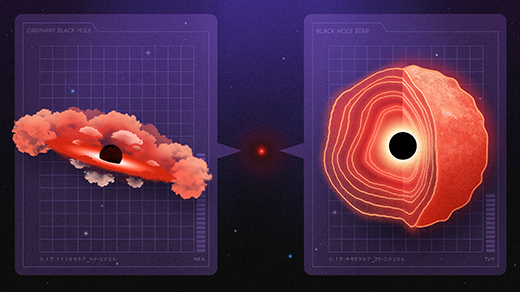
Black Holes or Black Hole Stars? Astronomers Spar Over Webb Telescope’s ‘Little Red Dots.’
The James Webb Space Telescope spots mysterious “little red dots” everywhere. A bold new theory suggests they’re suns dozens of times larger than our entire solar system.
How Fast Is the Universe Really Expanding?
One of the most contested issues in astrophysics is our understanding of the Universe’s expansion. Adam Riess discusses why there is disagreement and what might resolve it.
Will We Ever Find Alien Civilizations?
Astronomer David Kipping discusses why claims of extraterrestrial life keep dissolving under scrutiny, why we need a more statistically grounded approach to searching for life beyond Earth, and why it’s rational to believe that we may be alone.
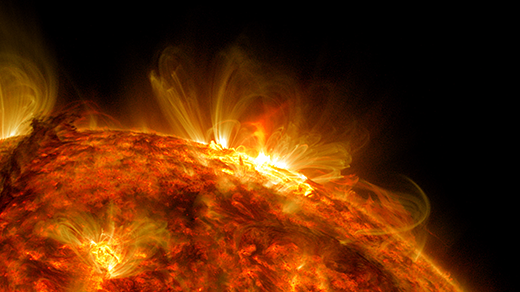
How We See the Beautiful, Violent Sun
Over hundreds of years, increasingly sophisticated instruments have revealed — and continue to reveal — the secrets of our star.
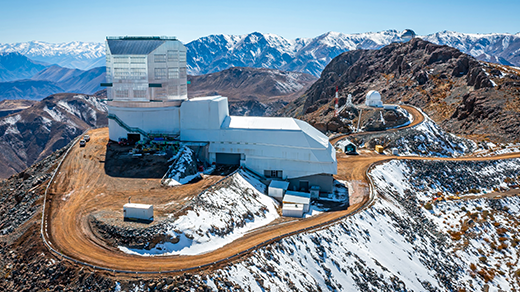
Rubin Tracks Skyscraper-Size Asteroids, Failed Supernovas, and Interstellar Visitors
Astronomers are preparing for a new era of big-data astronomy, and results are already starting to arrive.
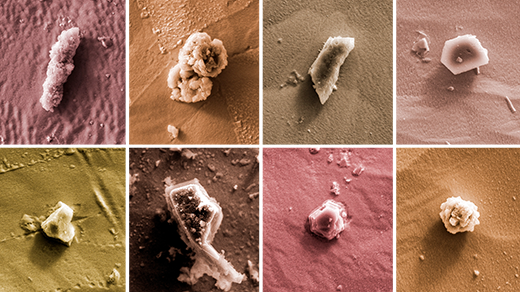
What Crystals Older Than the Sun Reveal About the Start of the Solar System
Microscopic crystals extracted from meteorites could help settle a debate about the birth of our patch of the Milky Way.
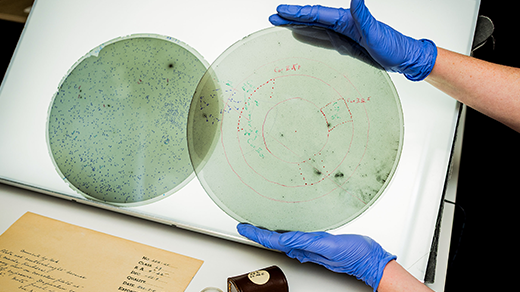
How Modern and Antique Technologies Reveal a Dynamic Cosmos
Today’s observatories document every pulse and flash in the sky each night. To understand how the cosmos has changed over longer periods, scientists rely on a more tactile technology.
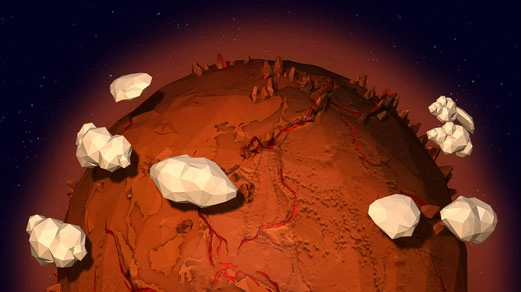
Why Is Venus Hell and Earth an Eden?
A team of scientists has investigated how Earth’s twin became so inhospitable, and whether the same will happen to our planet.
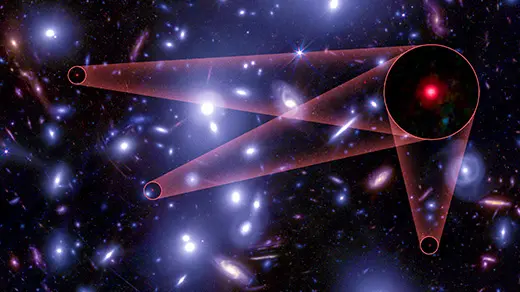
A Single, ‘Naked’ Black Hole Rewrites the History of the Universe
The James Webb Space Telescope has found a lonely black hole in the early universe that’s as heavy as 50 million suns. A major discovery, the object confounds theories of the young cosmos.