What's up in
Epigenetics
Latest Articles

To Learn More Quickly, Brain Cells Break Their DNA
New work shows that neurons and other brain cells use DNA double-strand breaks, often associated with cancer, neurodegeneration and aging, to quickly express genes related to learning and memory.
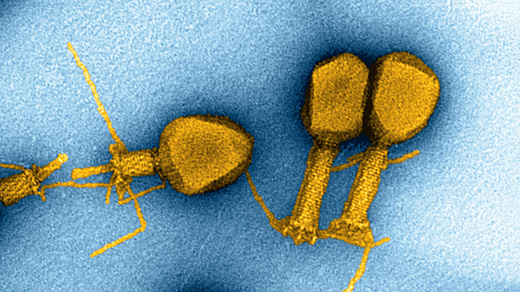
DNA Has Four Bases. Some Viruses Swap in a Fifth.
The DNA of some viruses doesn’t use the same four nucleotide bases found in all other life. New work shows how this exception is possible and hints that it could be more common than we think.

A Newfound Source of Cellular Order in the Chemistry of Life
Inside cells, droplets of biomolecules called condensates merge, divide and dissolve. Their dance may regulate vital processes.
The Epigenetic Secrets Behind Dopamine, Drug Addiction and Depression
New research links serotonin and dopamine not just to addiction and depression, but to the ability to control genes.

‘Trained Immunity’ Offers Hope in Fight Against Coronavirus
A novel form of immunological memory that was mostly ignored for a century extends the benefits of vaccines. It could be of help in ending the COVID-19 pandemic.

Inherited Learning? It Happens, but How Is Uncertain
Studies suggest that epigenetics allows some learned adaptive responses to be passed down to new generations. The question is how.

In the Ticking of the Embryonic Clock, She Finds Answers
Renee Reijo Pera has spent decades uncovering how the timing of embryonic development contributes to health and disease.

Salamander’s Genome Guards Secrets of Limb Regrowth
With a fully sequenced genome in hand, scientists hope they are finally poised to learn how axolotls regenerate lost body parts.

Bacteria Sacrifice DNA Repair for Better RNA
Preserving its DNA ought to be a cell’s top priority. But bacteria slow their DNA repair to a crawl in favor of proofreading gene transcripts.