The Jellies That Evolved a Different Way To Keep Time
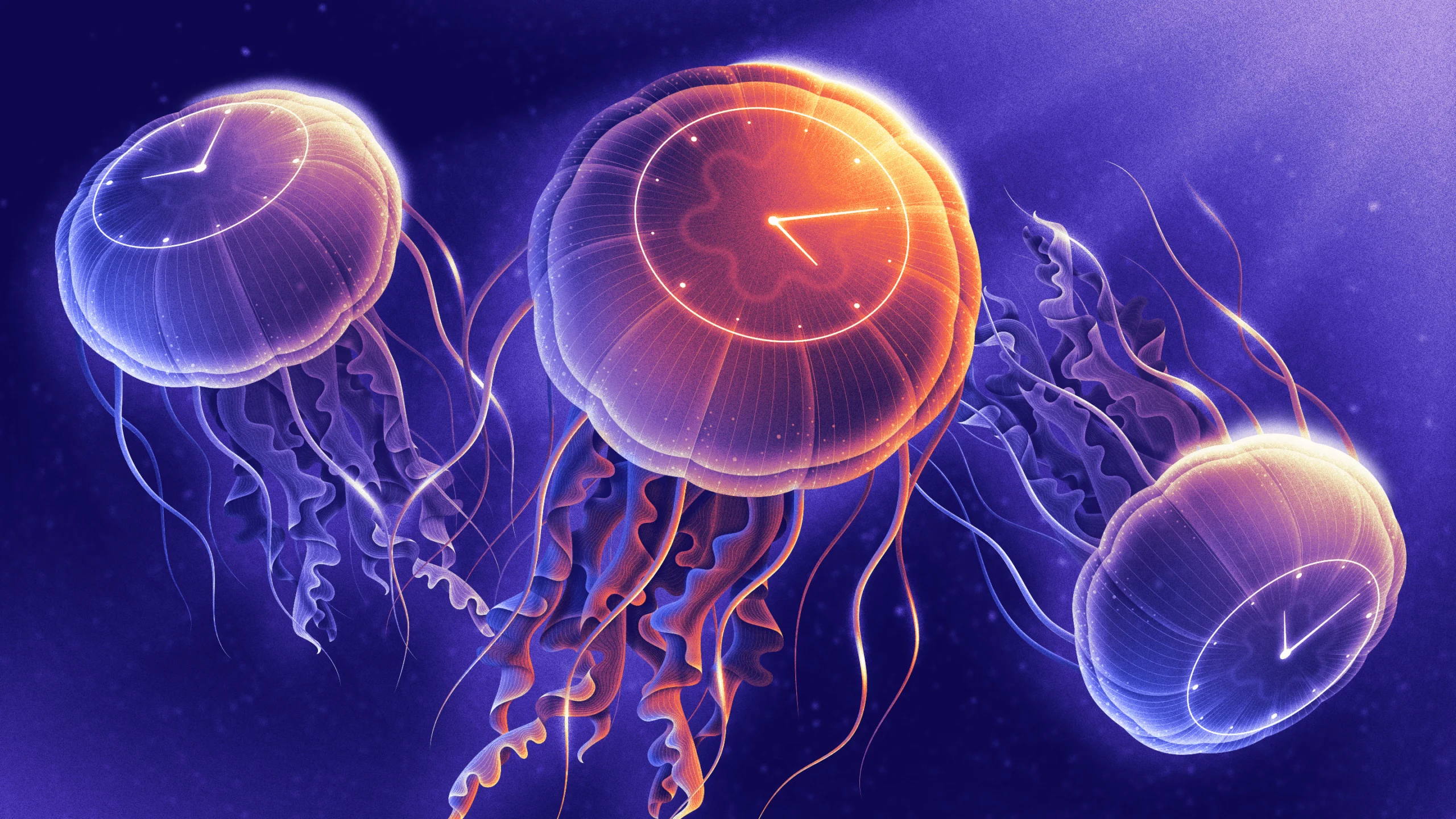
A new species of hydrozoan jellyfish keeps time in its own way.
Kristina Armitage/Quanta Magazine
Introduction
The passage of the sun across the sky — dawn, day, dusk, night — drives the clock of life. Some species wake with the sun and sleep with the moon. Others do the opposite, and a few keep odd hours. These naturally driven, 24-hour biological cycles are known as circadian rhythms, and they do more than cue bedtime: They regulate hormones, metabolism, DNA repair, and more. When life falls out of sync, there can be dire consequences for health, reproduction, and survival.
Lacking watches, many species keep time using an internal system — a set of interacting genes and their protein products that effectively keeps track of a 24-hour period — that is calibrated by sunlight. This kind of circadian clock is widespread, found even in single-celled algae, which suggests that biological timekeeping evolved billions of years ago. Across animals, most species have the same genetic system, using genes known as CLOCK, BMAL1, and CRY, or recognizable homologues. This form of biological clock mechanism appears even in ancient lineages, including sponges and some jellyfish.
But is this the only way to do it? In a pea-size jelly off the coast of Japan, biologists are examining a different kind of timekeeping.
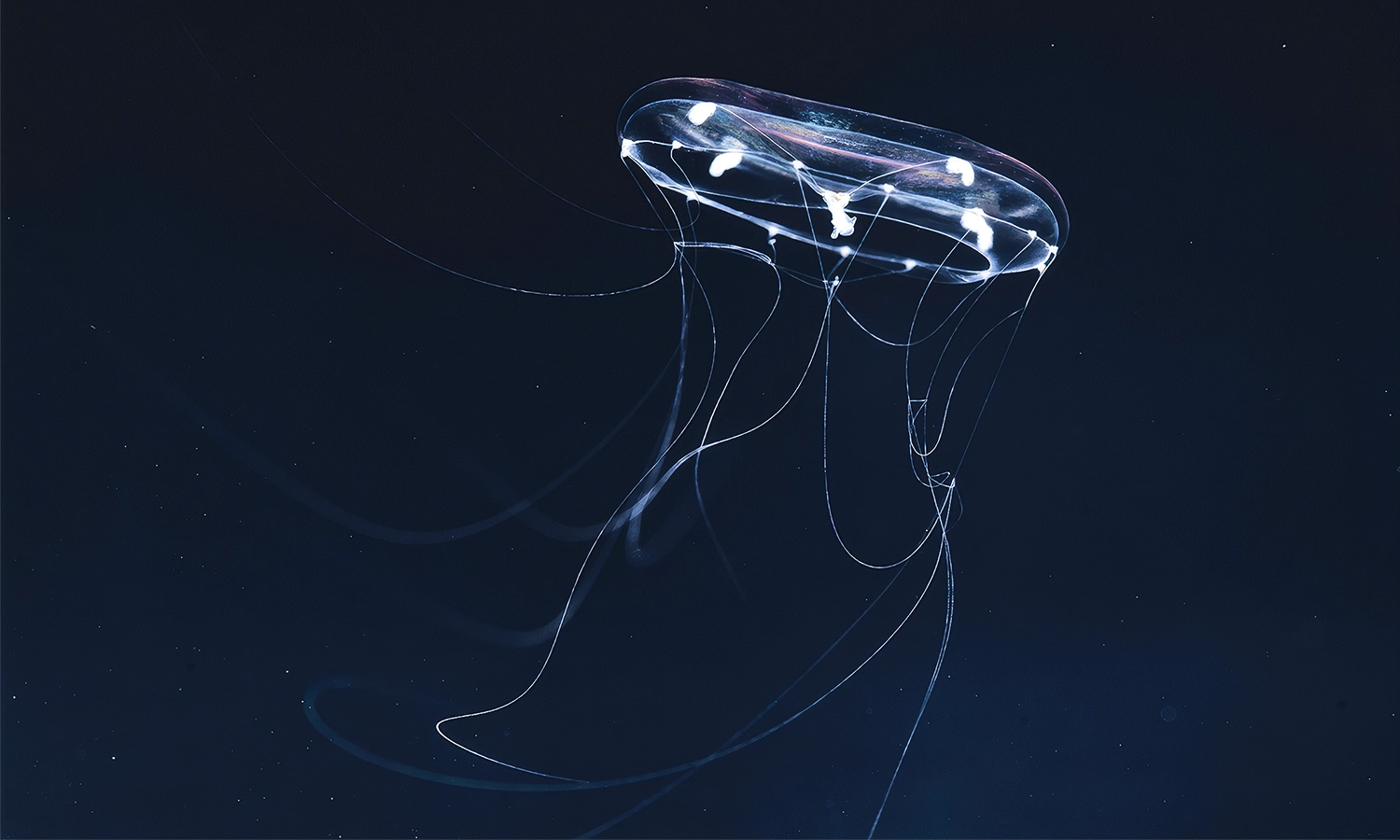
Somewhere over the course of their evolution, the class of hydrozoans — which includes certain kinds of jellyfish, hydras, and colonial siphonophores such as the Portuguese man-of-war — lost the genes that operate circadian clocks in the rest of the animal kingdom. Yet a newly discovered hydrozoan jellyfish species has a mysterious circadian clock that regularly tracks 20-hour periods, suggesting that its mechanism evolved independently. The findings, published in PLOS Biology in January 2026, push the limits of what chronobiologists consider “circadian.”
“We’ve wondered, do jellyfish have real clocks?” said Ann Tarrant, who studies circadian rhythms in sea anemones at the Woods Hole Oceanographic Institution and was not involved in the research. “This study is really exciting because it shows a clock in this animal that’s lost some of these genes that we think are essential for circadian regulation in most other animals.”
The clock found in this jellyfish, a new species to science, is unusual not only because it tracks 20 hours, instead of Earth’s 24-hour day length, but also because it seems to be paired with a molecular timer that counts down from sunrise until it’s time for the jellyfish to spawn. This surprising mechanism suggests that scientists may be overlooking unconventional clocks across the tree of life.
“Systems like this might be much more widespread, and we are not looking, because we only look at these genetic components, [the animal CLOCK genes],” said Ezio Rosato, a chronobiologist at the University of Leicester who penned a scientific commentary about the work. “You could make a clock with any molecular mechanism. All you need is a series of reactions which are organized in a certain way.”
A Light-Switch Sunrise
Once a quarter, Ryusaku Deguchi brings his students at Miyagi University of Education to Izushima, a 1-square-mile island in Sendai Bay along Japan’s northeastern coast. There, thousands of translucent orbs smaller than peas bob in the water column below the fishing dock. He and his students collect these jellyfish specimens, representing more than a dozen species, and rear them in the lab to study their reproductive cycles.

Sendai Bay, off the northeastern coast of Japan, as seen from Izushima, a small offshore island inhabited by only a few dozen fishers and shellfish farmers.
Ryusaku Deguchi
When Ruka Kitsui was a freshman in college, he was one of those students. Observing jellyfish gametes develop under a microscope lured him away from the neat logic of physics and chemistry and into the dynamic processes of biology. Later, he joined Deguchi’s lab to study invertebrate development and dedicated his master’s thesis to jellyfish reproduction, homing in on an unusual population among the specimens. Many of Deguchi’s jellyfish spawned daily, releasing their eggs and sperm into the water, usually shortly after sunrise. But these jellyfish were odd: They spawned at night.
For species that reproduce through mass spawning, including some corals and jellyfish, accurate timekeeping is crucial. They release gametes directly into the water, leaving fertilization to chance: If there aren’t sperm in the water when eggs arrive, there will be no next generation. So these species have evolved various molecular mechanisms to sync up their spawning, often using proteins that sense and respond to light signals.
Kitsui knew there had to be some molecular mechanism behind his jellies’ sundown clock. But the absence of an obvious light trigger made the night-spawning behavior a puzzle.
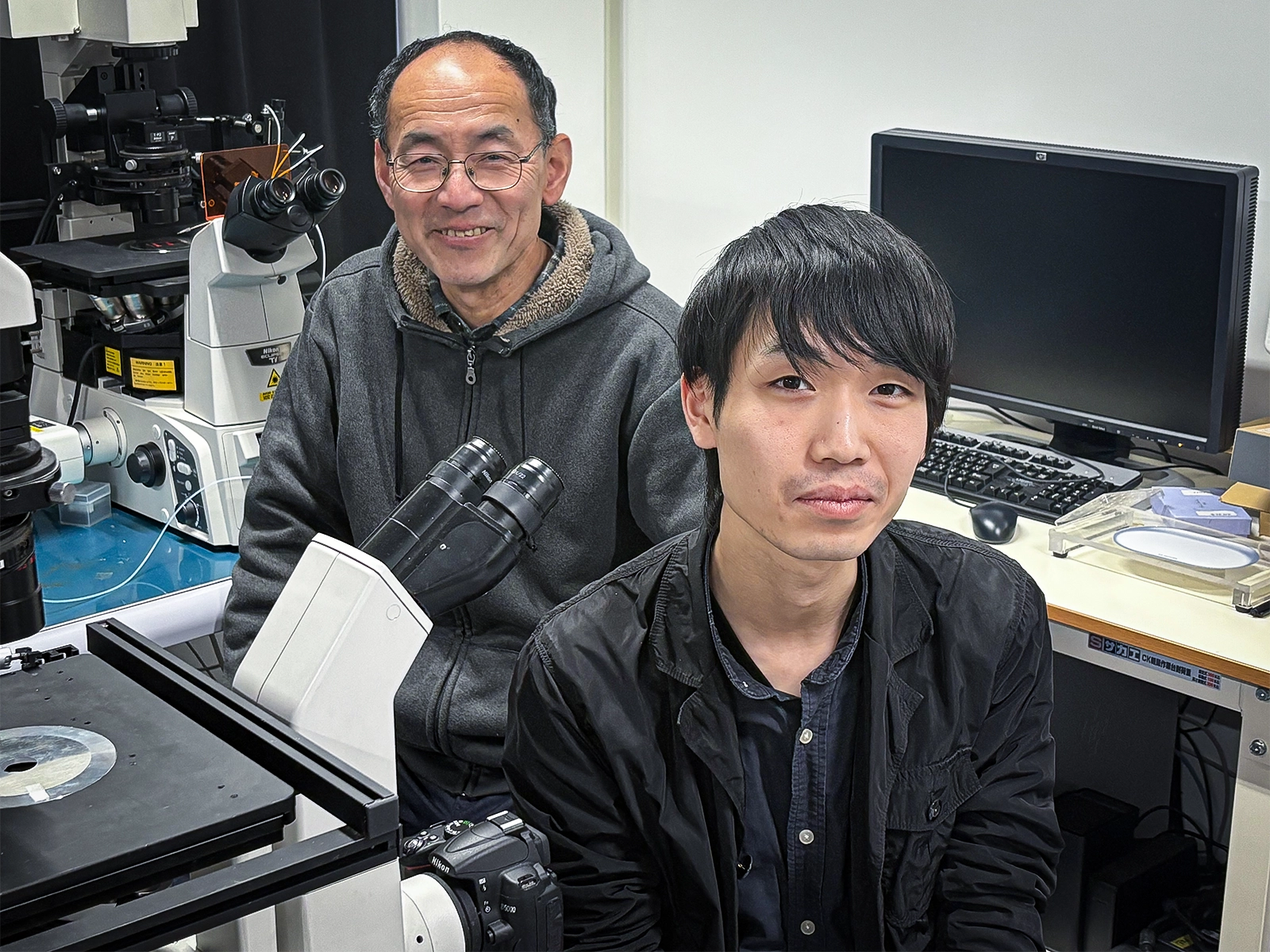
After taking a class with Ryusaku Deguchi (left) at Miyagi University of Education in Japan, Ruka Kitsui (right) became captivated by the mechanisms of jellyfish development.
Yu Murakami
He began with a series of light experiments. First he kept female jellyfish in a cycle of 12 hours of artificial light and 12 hours of darkness — roughly reflecting the natural day-night cycle at Izushima. Each time, precisely two hours after “dusk,” female jellies released their eggs into the water.
At first, Kitsui and Deguchi assumed that the transition from light to dark was the spawning signal. But when they turned the lights on two hours earlier, making “dawn” happen sooner but leaving “dusk” at the same time, the jellyfish spawned two hours earlier as well.
What would the jellies do under continuous sunlight? To Kitsui’s surprise, the jellyfish spawned every 20 hours on their own, without a specific cue. This suggested that the previously unknown jellyfish species — dubbed Clytia sp. IZ-D until it receives a formal name — had some kind of internally driven circadian rhythm. “In that instant, I felt the true joy at the core of research: uncovering something that no one in the world had known before,” he said.
Kitsui knew that C. sp. IZ-D’s clock wasn’t made of the clock genes widespread in animals; this hydrozoan lineage had lost those over evolutionary time. Yet it fit nearly all the requirements that chronobiologists have described for circadian clocks.
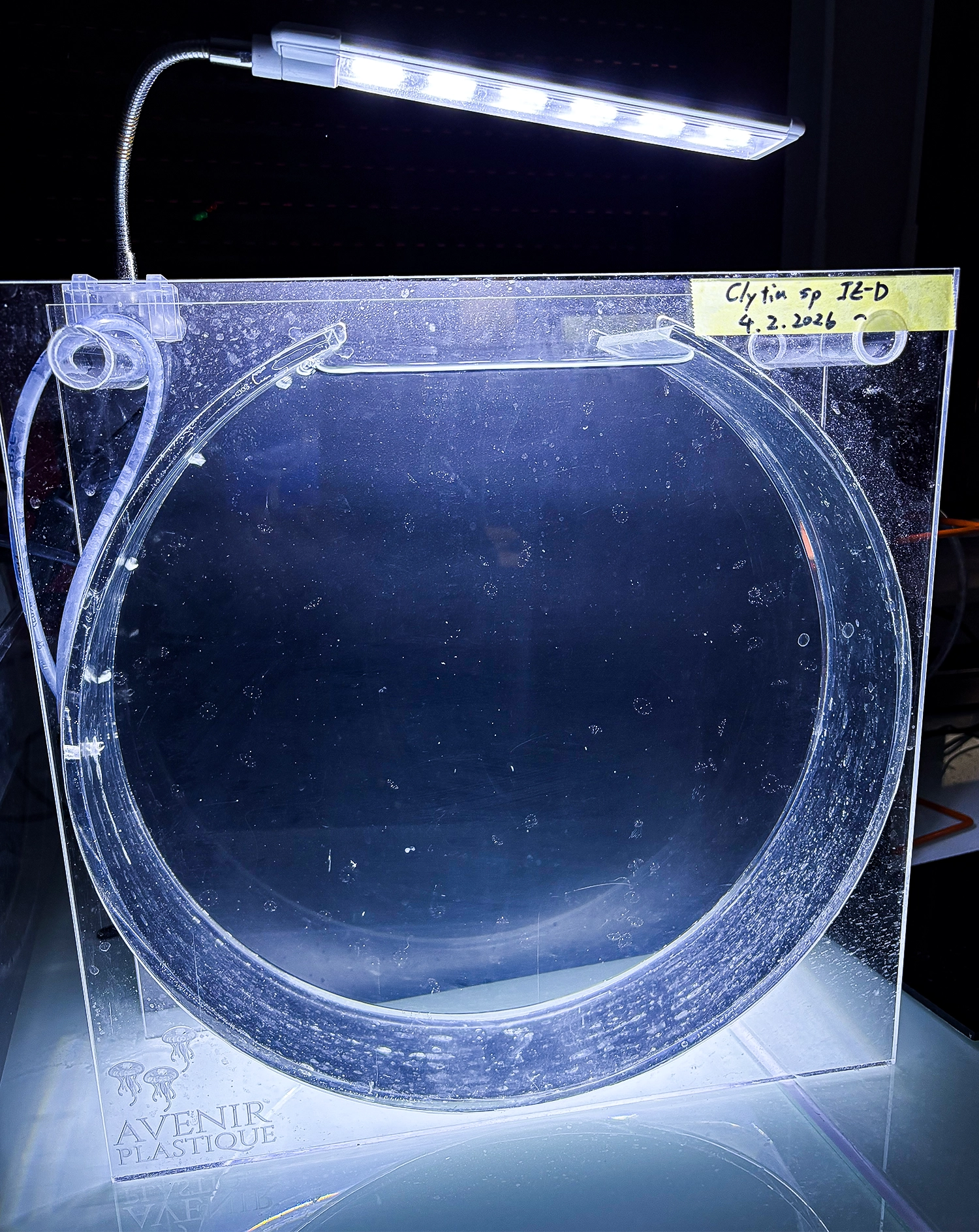
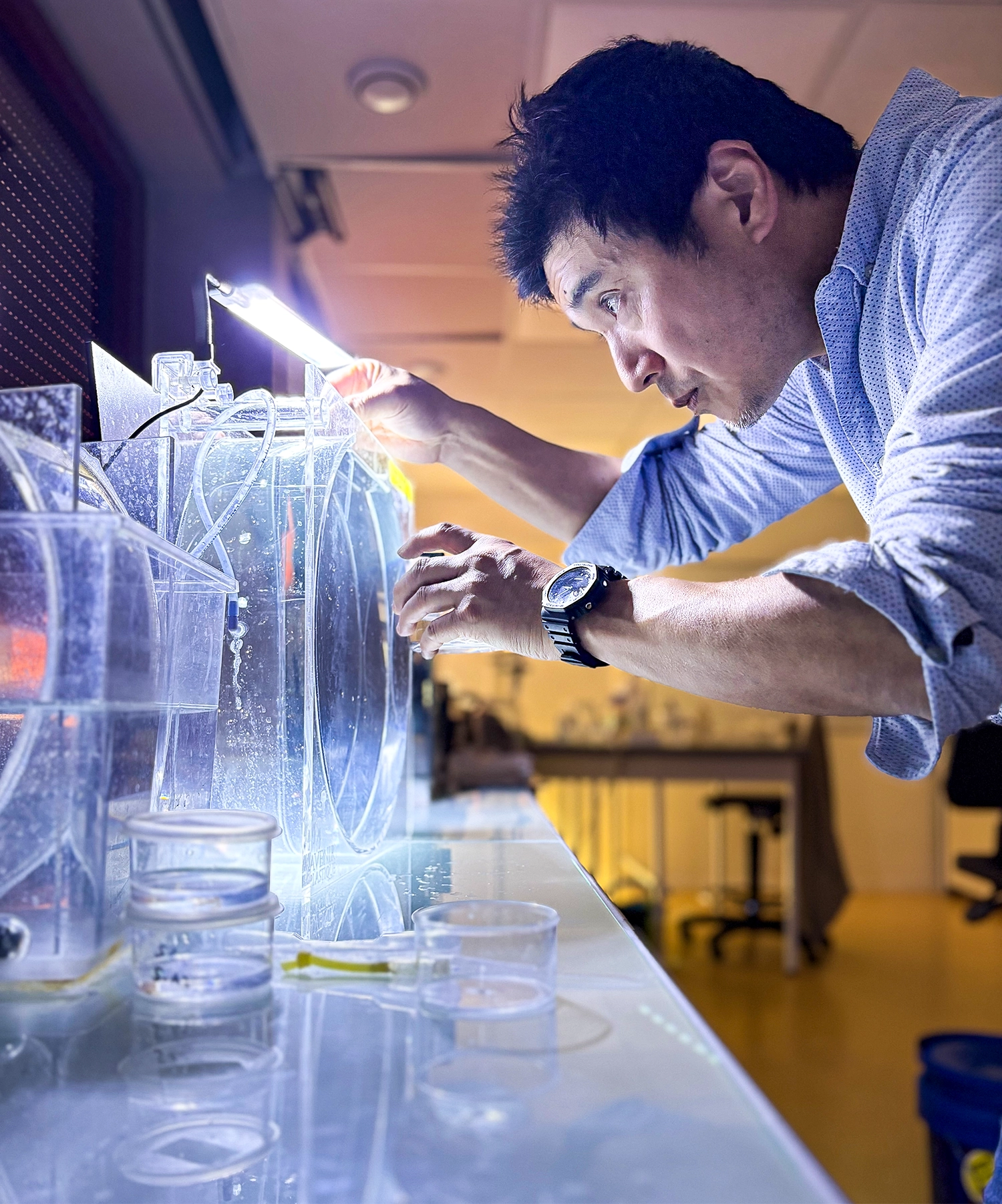
Courtesy of Tsuyoshi Momose
A circadian clock must be self-sustained and internally driven, as the 20-hour cycle of the jellies’ spawning is. It must also be regulated by an environmental stimulus such as light; while the jellies’ spawning clock can run on a 20-hour cycle under persistent light in the lab, in nature it resets every day. And a true circadian rhythm, like ours, should also be unaffected by temperature. In Kitsui’s experiments, however, warmer water made the 20-hour clock faster and cooler water made it slower. It is a molecular biological clock, but not in the way scientists typically define them.
“I wonder how [this] will be perceived in the chronobiology field,” said Kristin Tessmar-Raible, a chronobiologist at the Alfred Wegener Institute and the University of Vienna who was not involved in the research. Is it a true circadian rhythm if it breaks any of the three rules? “Or will we, as a community, take it as something [else]?”
But the 20-hour circadian clock couldn’t fully explain the jellies’ sunset spawning behavior. There had to be another piece to this clockwork mechanism.
Countdown to Launch
To understand more about what was going on in their new species, Deguchi and Kitsui turned to Clytia hemisphaerica, a close relative. C. hemisphaerica is visually identical to C. sp. IZ-D, with a transparent bell and long, trailing tentacles. Crucially, it is a well-studied animal model, and the details of its spawning and reproduction are well known. Eager for answers, they pulled in their friend Tsuyoshi Momose, a developmental biologist at the French National Center for Scientific Research and an expert on the species.
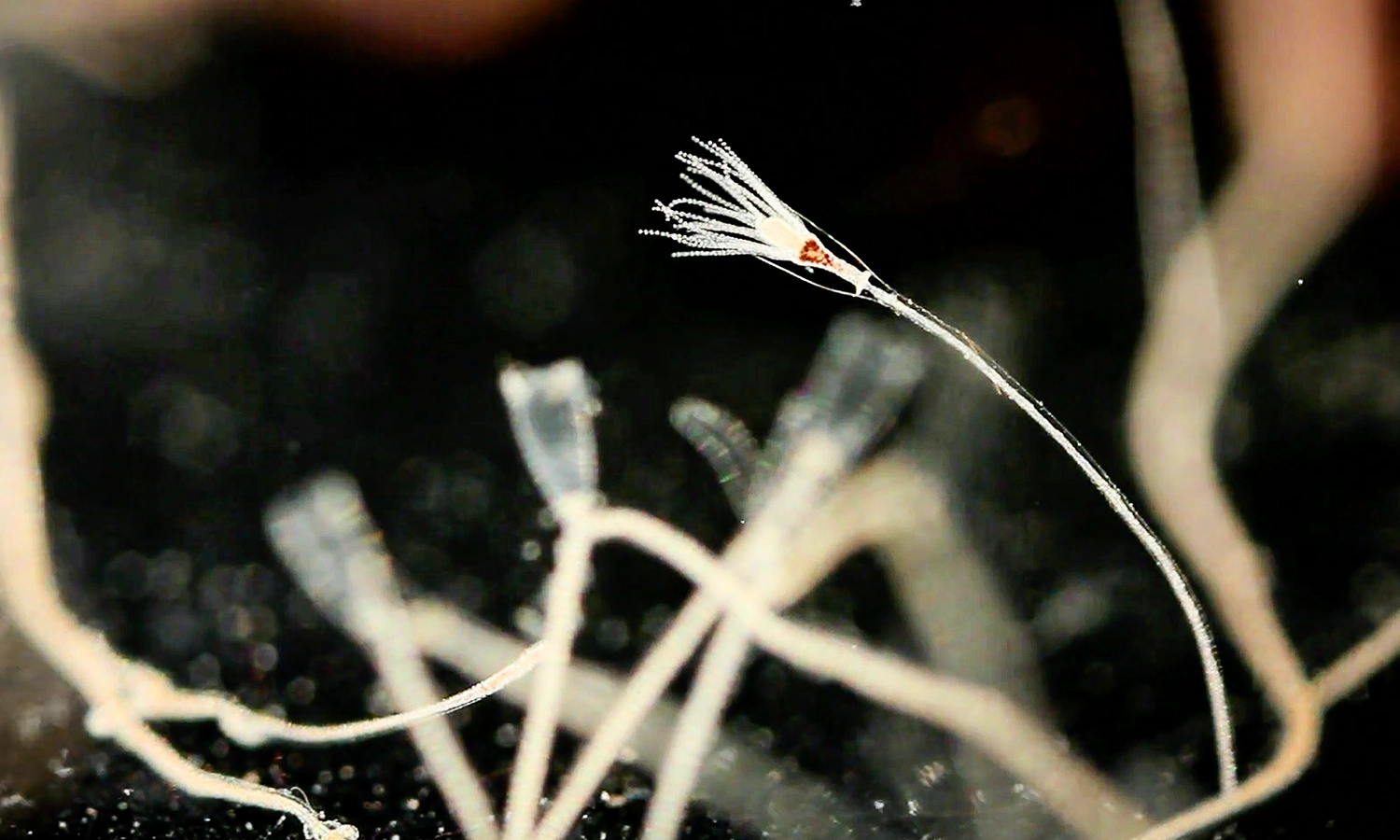
Clytia hemisphaerica, a model species for invertebrate reproduction, has two phases: sessile polyp (left) and free-floating medusa (right).
Plankton Chronicals (left); Marion Lechable and Alexandre Jan
Every day, two hours after sunrise, C. hemisphaerica spawns. This process begins with the day’s first light, when photoreceptive proteins called opsins in the gonads detect sunlight, triggering production of a hormone that matures developing gametes.
The team suspects that the new species C. sp. IZ-D has a slightly tweaked version of this mechanism in which the hormone is released slowly over time, dragging out the gamete maturation process to around 14 hours. Once enough of the hormone has accumulated and the gametes have fully developed, the jellies spawn simultaneously — roughly two hours after sunset, like clockwork.
“For me, as a chronobiologist, it is very interesting to see a system getting a different level of organization using almost the same tools that you had before,” Rosato said. “Just a little change” — slower hormone accumulation and therefore a slower gamete maturation process — “creates a much more complex level of organization.”
Next, Momose, Deguchi, and Kitsui plan to compare the genomes of C. hemisphaerica and C. sp. IZ-D to explore the molecular mechanisms at play in the 20-hour quasi-circadian clock and the 14-hour sunrise countdown timer. And in April 2026, Kitsui will start a doctorate program focused on clam reproduction at Tohoku University, where he can continue describing the quirks of invertebrate development.
Already, the unusual clock he stumbled upon has made an impact on the field. “It’s just a beautiful study that’ll inspire a lot more work,” Tarrant said. “It highlights that there’s novelty and diversity and perhaps completely different pathways, and it gives us some examples of how you can be really creative in studying those mechanisms.”