







Richard Prum explains why he thinks feathers and vibrant traits in birds evolved not solely for survival, but also through aesthetic choice.

Mark Belan/Quanta Magazine
A straightforward conjecture about runners moving around a track turns out to be equivalent to many complex mathematical questions. Three new proofs mark the first significant progress on the problem in decades.
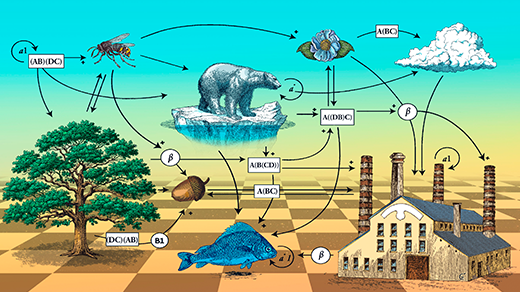
Columnist Natalie Wolchover explores whether applied category theory can be “green” math.
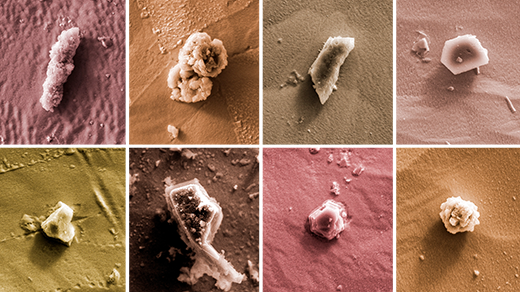
Microscopic crystals extracted from meteorites could help settle a debate about the birth of our patch of the Milky Way.
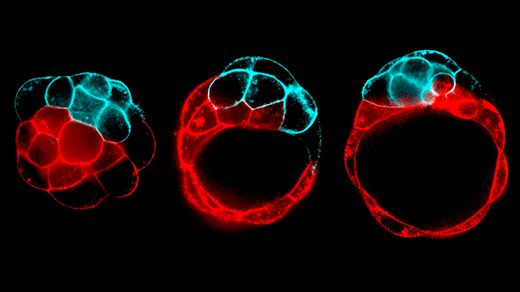
Growing tissues can crack, break, and dissociate to form structures that can later withstand immense forces.
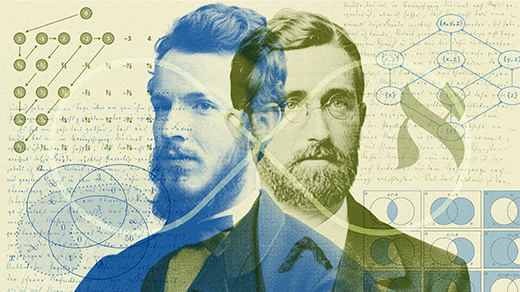
In an 1874 paper, Georg Cantor proved that there are different sizes of infinity and changed math forever. A trove of newly unearthed letters shows that it was also an act of plagiarism.
Intuition breaks down once we’re dealing with the endless. To begin with: Some infinities are bigger than others.
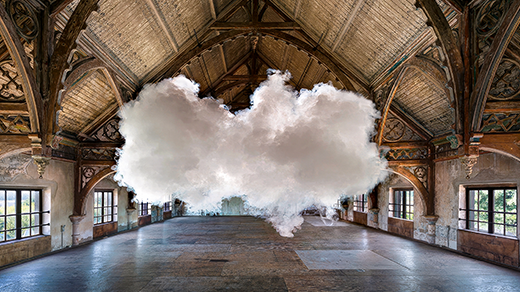
The planet is getting hotter, but one factor in particular makes it hard to tell just how hot it will get. Physicists and computer scientists are racing to solve the problem of clouds.
Innovations in imaging and genetic engineering are coming together to probe the biophysics of cytoplasm inside living animals.
Chris Young/Quanta Magazine; Carlos Arrojo for Quanta Magazine
Richard Prum explains why he thinks feathers and vibrant traits in birds evolved not solely for survival, but also through aesthetic choice.
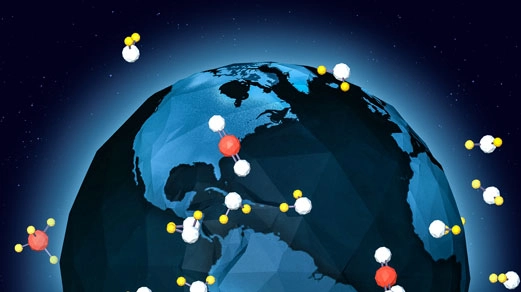
Earth’s radiation can send some molecules spinning or vibrating, which is what makes them greenhouse gases. This infographic explains how relatively few heat-trapping molecules can have a planetary effect.
Illuminating basic science and math research through public service journalism.
More about usQuanta Magazine is committed to in-depth, accurate journalism that serves the public interest. Each article braids the complexities of science with the malleable art of storytelling and is meticulously reported, edited and fact-checked. Launched and funded by the Simons Foundation, Quanta is editorially independent — our articles do not reflect or represent the views of the foundation.