What's up in
Features
Latest Articles
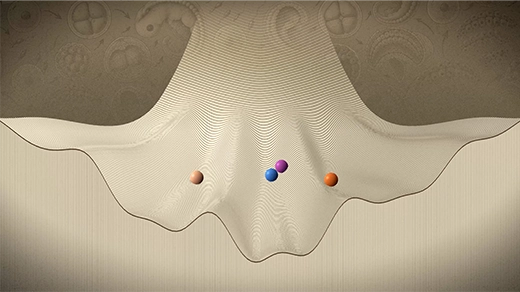
How Does Life Unfold? A Landscape Metaphor Comes Into Its Own.
C.H. Waddington’s powerful image of embryonic stem cells specializing on a rolling landscape has captivated biologists since the 1950s. Experimental data is finally confirming, and complicating, his visionary ideas.
Gravity Seems Holographic. What Does That Mean for Reality?
The biggest breakthrough in modern theoretical physics is the discovery that gravity can collapse the dimensions of space. Physicists don’t yet understand the implications.
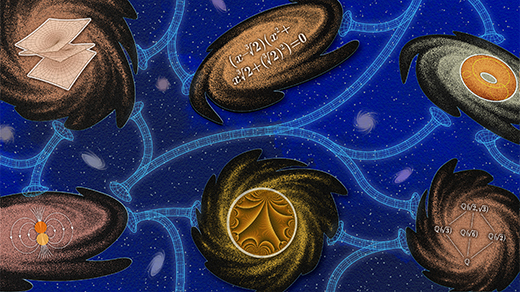
What Is Math’s Mysterious Langlands Program Really About?
Hidden correspondences hint at a deeper structure to the mathematical universe. Our columnist unpacks one of those connections and asks mathematicians what they might mean.
Theory of Fluids Enters the 21st Century
From the 1800s to the early 2000s, physicists used the same theory to understand the behavior of fluids. Now, using a modern insight, they have redefined fluids from the bottom up.
Why the Legendary Erdős Problems Are Falling to AI
AI’s greatest mathematical successes have come from answers to problems posed by a mid-20th century iconoclast. By examining what makes the Erdős problems unique, mathematicians are trying to understand how AI might change the rest of math.
Is AI Reasoning Right for the Wrong Reasons?
The idea that artificial intelligence can “reason” is more intuitive than ever. But intuitions can be wrong, and the science is far from settled.
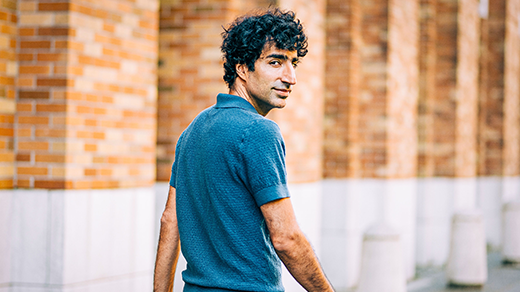
A Master of the Traveling Salesperson Problem Finds His Own Path
Shayan Oveis Gharan has won the Abacus Medal for using tools from across mathematics to boost the power of algorithms.
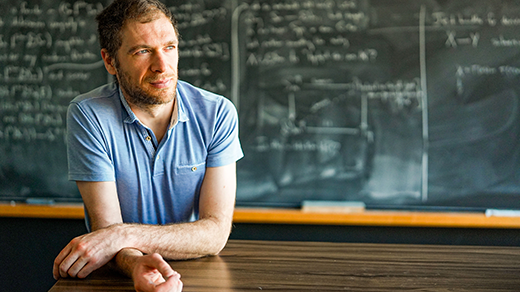
The Quietest Mathematician Has Always Been Worth Listening To
John Pardon sees connections between different areas of math that others don’t. For that vision, he’s now been awarded a Fields Medal.
Martin Picard’s Mitochondrial Theory of Mind
The biologist’s bold “energetic view of life” looks to the body’s strangest organelles as the link between cells, health, and mind and the foundation of our experience of being alive.