What's up in
Quantum physics
Latest Articles
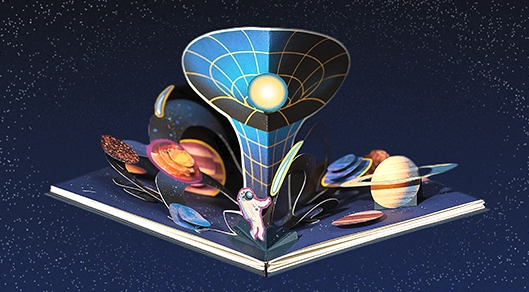
Gravity Seems Holographic. What Does That Mean for Reality?
The biggest breakthrough in modern theoretical physics is the discovery that gravity can collapse the dimensions of space. Physicists don’t yet understand the implications.

Biology Might Not Be Quantum, but Its Math Is Quantumlike
Scientists have a history of trying — and failing — to link biology and quantum mechanics. The real connection between them may be in the math.

Where Does the Quantum World End and Ours Begin?
Jonathan Halliwell explains how quantum decoherence is key to understanding how we transition from a world with a wave-like nature of matter and energy to the classical macroscopic world that we’re used to.

In Hilbert Space, All Things Are Quantumly Possible
To explore quantum phenomena, we must leave the familiar world and enter the abstract realm of Hilbert space.
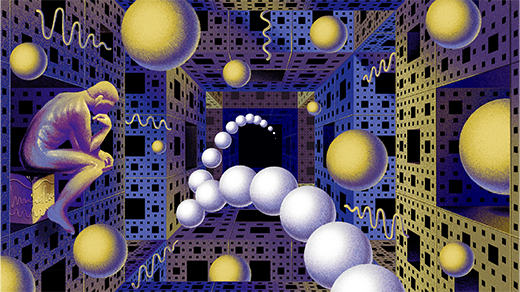
Graduate Student Proves a Quantum Uncertainty Principle for Fractals
The math, which combines chaos, quantum theory, and infinitely complex fractal structures, has been called a “foundational result.”
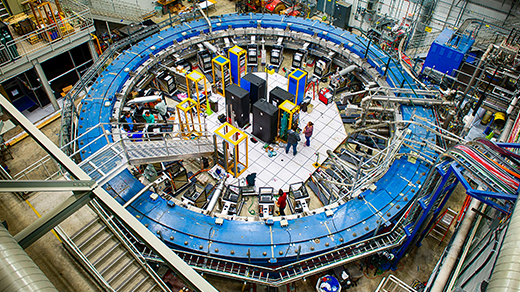
Physicists Solve a Big Quantum Mystery. Now, Old Results Don’t Add Up.
New calculations seem to have put a 25-year-old particle physics puzzle to rest. But they’ve also created a clash with other experimental results.
How Many Elementary Particles Are There, Really?
Plausible answers range from 17 to — in all seriousness — 995.5.
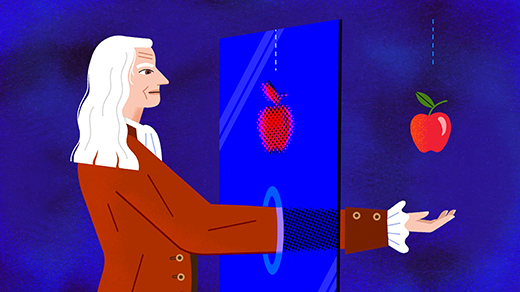
Entanglement Builds Space-Time. Now “Magic” Gives It Gravity.
In holographic theories, physicists may have traced the pliability of space-time to its quantum roots: a measure of quantumness known as “magic.”
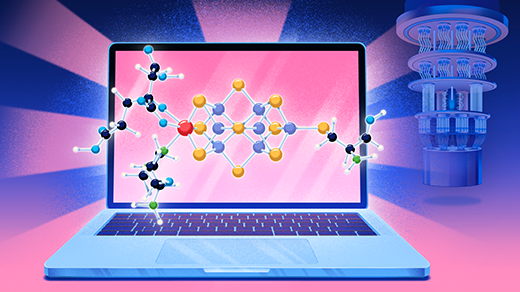
Key Chemistry Question Answered, No Quantum Computer Required
Do we need quantum computers to fully understand complex chemical reactions? A new result, decades in the making, shows the surprising power of ordinary “classical” machines.