Videos
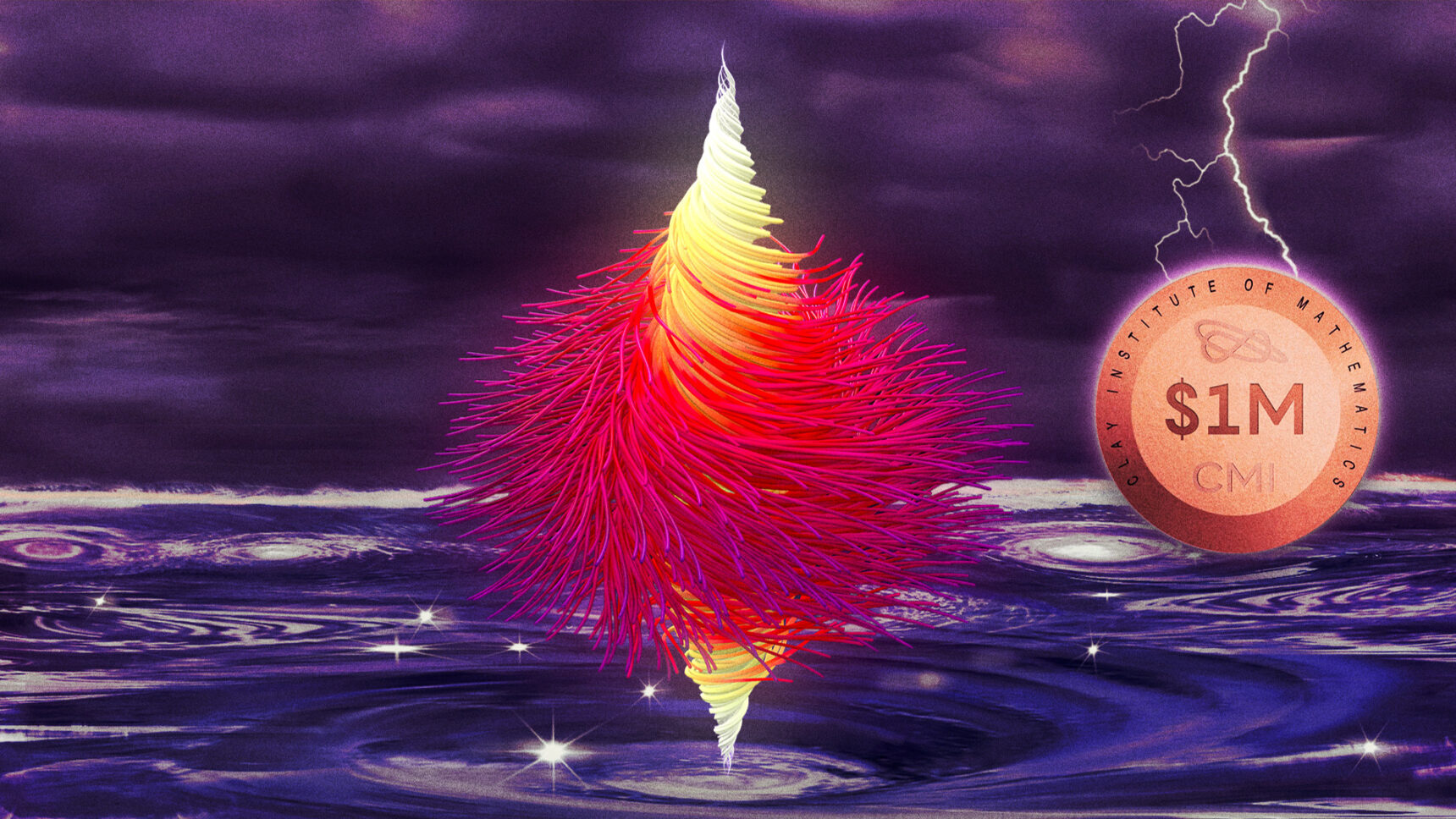
The Navier-Stokes Equations, Explained
This video explores why the Navier-Stokes equations are so difficult, what it means for their solutions to blow up, and how a new AI-assisted proof is reshaping one of mathematics’ most famous unsolved problems.
Read related article
Explore All Videos

Federico Ardila: A Mathematician Who Dances to the Joys and Sorrows of Discovery
Federico Ardila on the joys and challenges of teaching math and helping students find their mathematical voice.

Michael Assis: The Atomic Theory of Origami
Michael Assis demonstrates how defects can be used to tune the properties of Miura-ori origami.

Rebecca Goldin: Why Math Is the Best Way to Make Sense of the World
Rebecca Goldin explains why quantitative literacy is so important.

Nigel Goldenfeld: Seeing Emergent Physics Behind Evolution
Nigel Goldenfeld explains how condensed matter physics provides insights into the collective state of early life on Earth.

Neil Johnson: A Physicist Who Models ISIS and the Alt-Right
Neil Johnson on the physics of collective human behavior.

Svitlana Mayboroda: Taming Rogue Waves
Svitlana Mayboroda describes how the landscape function helps solve the mystery of wave localization.

Jay Pasachoff: Eclipse Hunter Reveals the Science That Can Only Be Done in the Dark
Jay Pasachoff explains what scientists can learn during a total solar eclipse.

Andrea Ghez: Black-Hole Hunter Takes Aim at Einstein
In this 2017 interview, the UCLA astrophysicist Andrea Ghez explains how tracking the movement of stars revealed the existence of a supermassive black hole at the center of the Milky Way galaxy.

Jessica Flack: How Nature Solves Problems Through Computation
Jessica Flack describes the special challenges of applying collective computation to the understanding of complex biological systems.