
Latest Articles
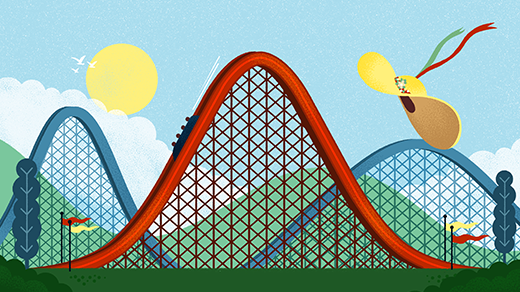
The Math That Explains Why Bell Curves Are Everywhere
The central limit theorem started as a bar trick for 18th-century gamblers. Now scientists rely on it every day.
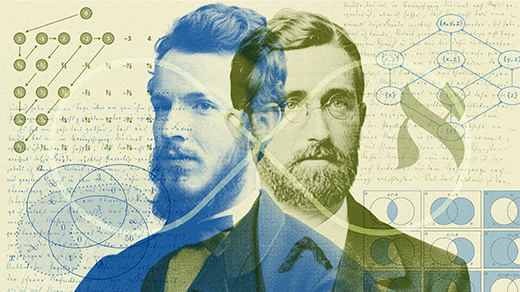
The Man Who Stole Infinity
In an 1874 paper, Georg Cantor proved that there are different sizes of infinity and changed math forever. A trove of newly unearthed letters shows that it was also an act of plagiarism.
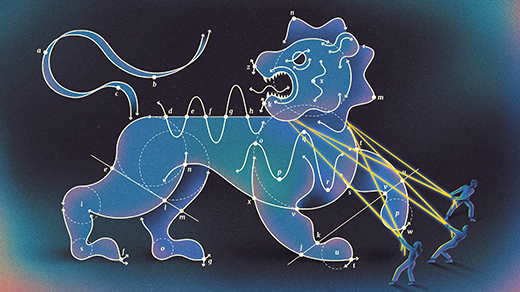
String Theory Inspires a Brilliant, Baffling New Math Proof
Years ago, an audacious Fields medalist outlined a sweeping program that, he claimed, could be used to resolve a major problem in algebraic geometry. Other mathematicians had their doubts. Now he says he has a proof.

A New Bridge Links the Strange Math of Infinity to Computer Science
Descriptive set theorists study the niche mathematics of infinity. Now, they’ve shown that their problems can be rewritten in the concrete language of algorithms.
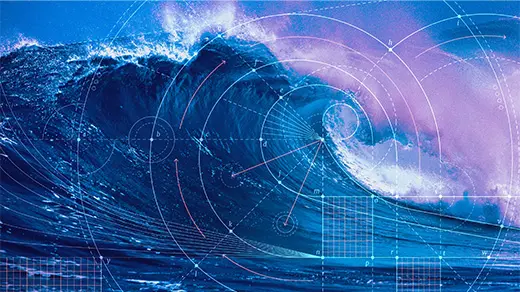
The Hidden Math of Ocean Waves Crashes Into View
The math of even the simplest ocean waves is notoriously uncooperative. A team of Italian mathematicians has made major advances toward understanding it.
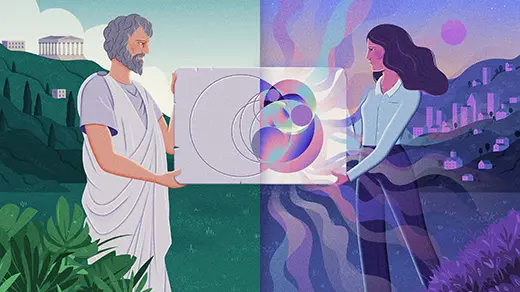
New Math Revives Geometry’s Oldest Problems
Using a relatively young theory, a team of mathematicians has started to answer questions whose roots lie at the very beginning of mathematics.
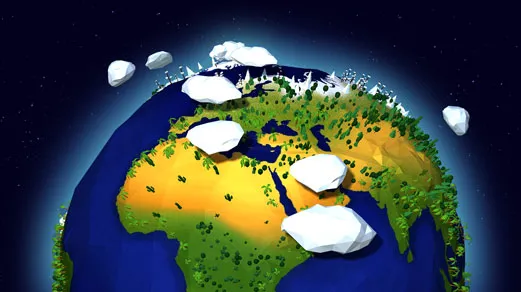
How We Came To Know Earth
Climate science is the most significant scientific collaboration in history. This series from Quanta Magazine guides you through basic climate science — from quantum effects to ancient hothouses, from the math of tipping points to the audacity of climate models.

The Climate Change Paradox
Earth’s climate is chaotic and volatile. Climate change is simple and predictable. How can both be true?
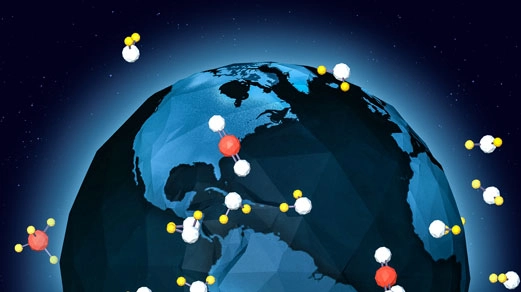
The Quantum Mechanics of Greenhouse Gases
Earth’s radiation can send some molecules spinning or vibrating, which is what makes them greenhouse gases. This infographic explains how relatively few heat-trapping molecules can have a planetary effect.