How We See the Beautiful, Violent Sun
The sun is one of the most studied objects in the history of science. The ancient Babylonians and Chinese tracked sunspots and solar eclipses, etching their observations into clay tablets; these records would outlast their civilizations. When the telescope arrived in the early 1600s, astronomers such as Galileo Galilei, Christoph Scheiner, and Johannes Fabricius turned these instruments toward this nearest star, projected the image onto paper, and saw dark blemishes drifting slowly across the solar surface.
In the 1800s, our ability to understand the sun’s composition launched a new era of solar science. Spectroscopy could split light emitted from objects into a kind of barcode that characterized elemental makeup. Armed with this method, Pierre Janssen and Norman Lockyer independently found lines in the sun’s spectrum that didn’t match any known element on Earth. Lockyer named it helium, after Helios, the Greek god of the sun. It would be another 27 years before Sir William Ramsay isolated and identified that element on our planet.
In the early 1900s, the pioneering American astrophysicist George Ellery Hale discovered that the sunspots that Galileo and others had traced weren’t blemishes but magnetic storms, regions of intense activity that waxed and waned on the 11-year solar cycle. The French astronomer Bernard Lyot built a coronagraph in 1930: a telescope with a disc at its center that blocked the sun’s blinding light, mimicking an eclipse on demand. For the first time, scientists could study the corona — the sun’s ghostly outer atmosphere — without waiting for the moon to cooperate.
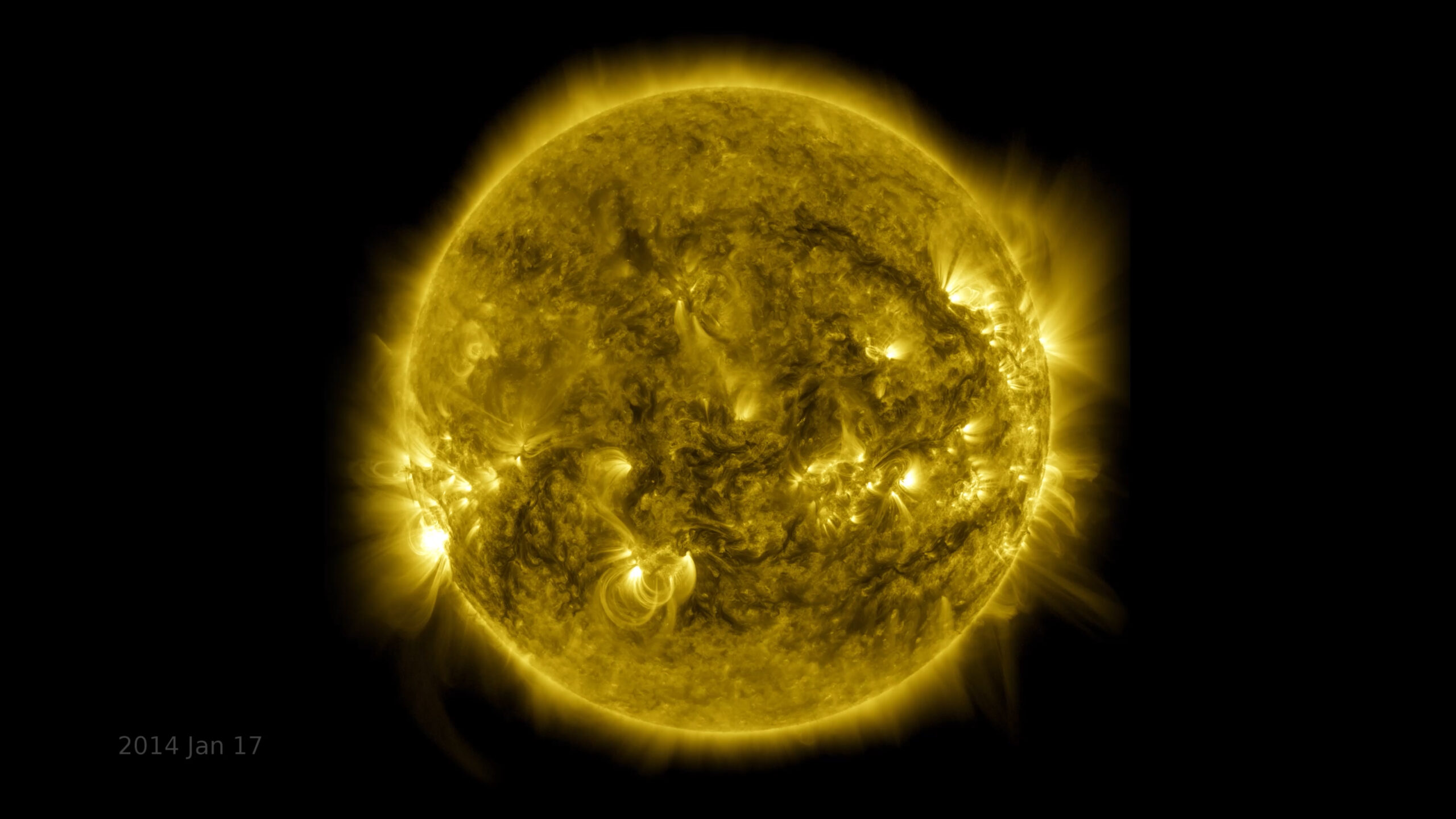
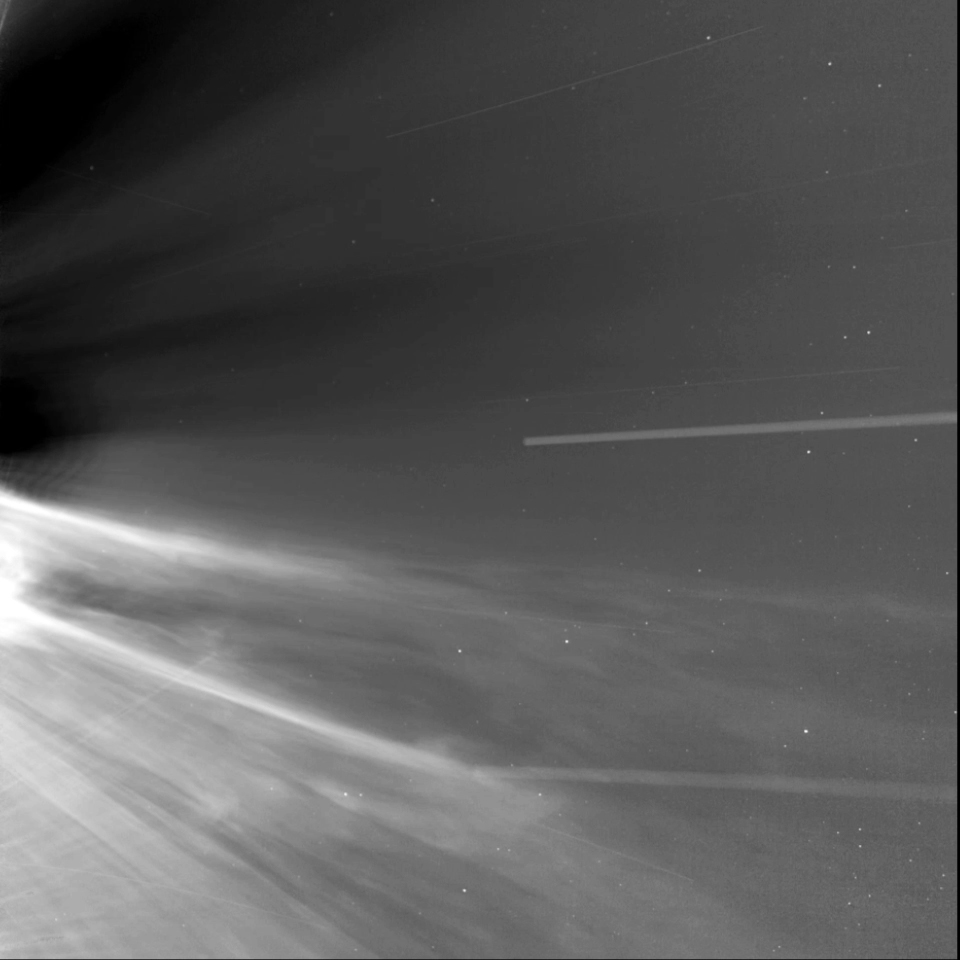
From the 1950s on, the space age allowed scientists to create instruments that could escape the observational barriers of Earth. Satellites and probes began directly measuring the solar wind — the constant stream of charged particles the sun throws off in all directions — along with the violent phenomenon of coronal mass ejections, plasma founts that are some of the most energetic events in our solar neighborhood. Since 1995, the Solar and Heliospheric Observatory, a collaboration between NASA and the European Space Agency, has been on constant surveillance, and NASA’s Solar Dynamics Observatory joined the fold in 2010. The Parker Solar Probe first flew through the corona itself in 2021. Its pass in 2024 was the closest any human-made object has ever come to a star.
Observations and questions have continued to accumulate. Why is the corona hundreds of times hotter than the surface below it? What drives the solar cycle? How do the electromagnetic radiation bursts known as flares decide to erupt? The instruments keep improving, and the secrets they uncover continue to fascinate.
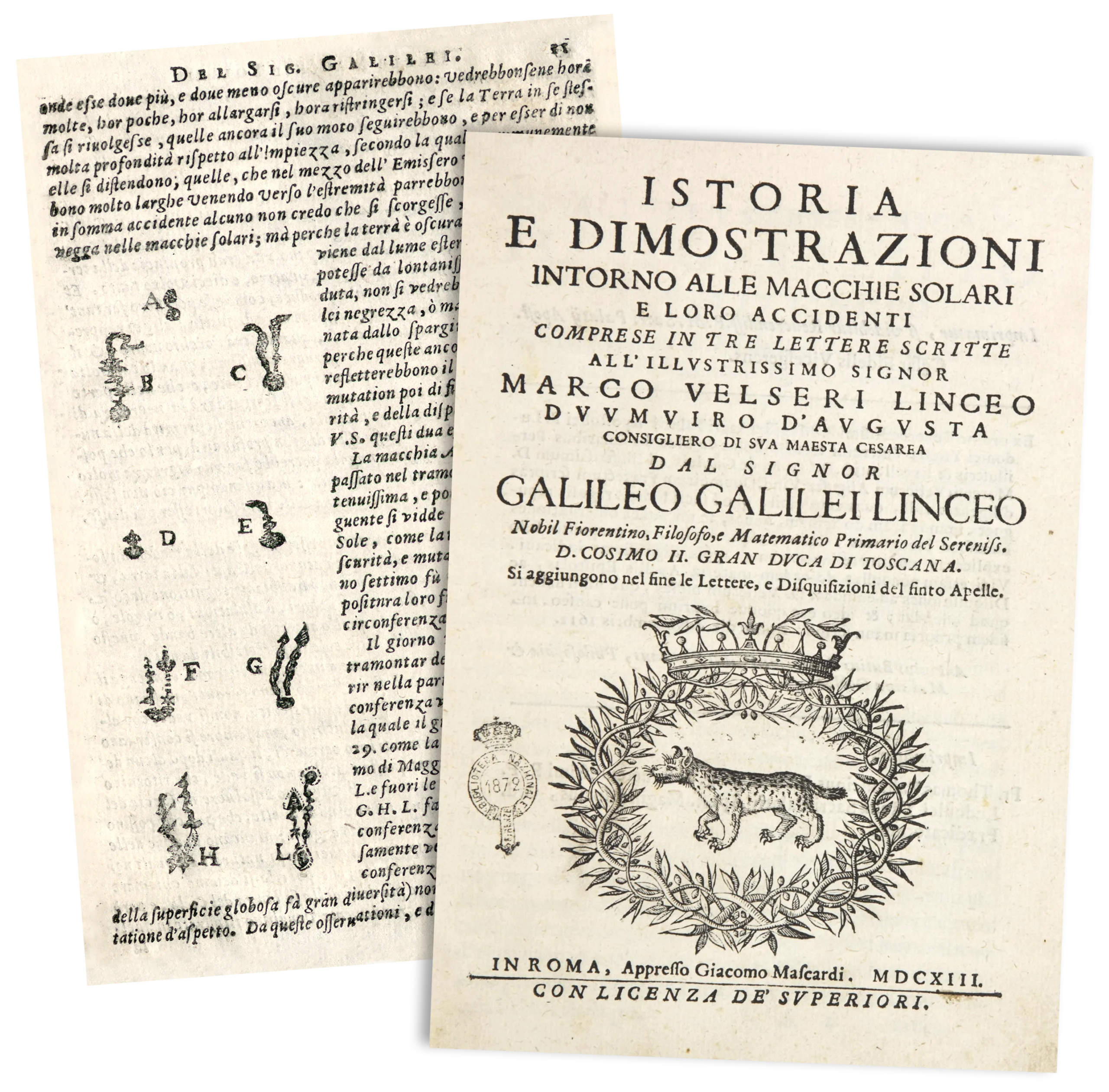
Published in 1613, Galileo’s Letters on Sunspots (Istoria e dimostrazioni intorno alle macchie solari) featured his observations of dark spots on the face of the sun, which he thought resembled clouds.
Public Domain
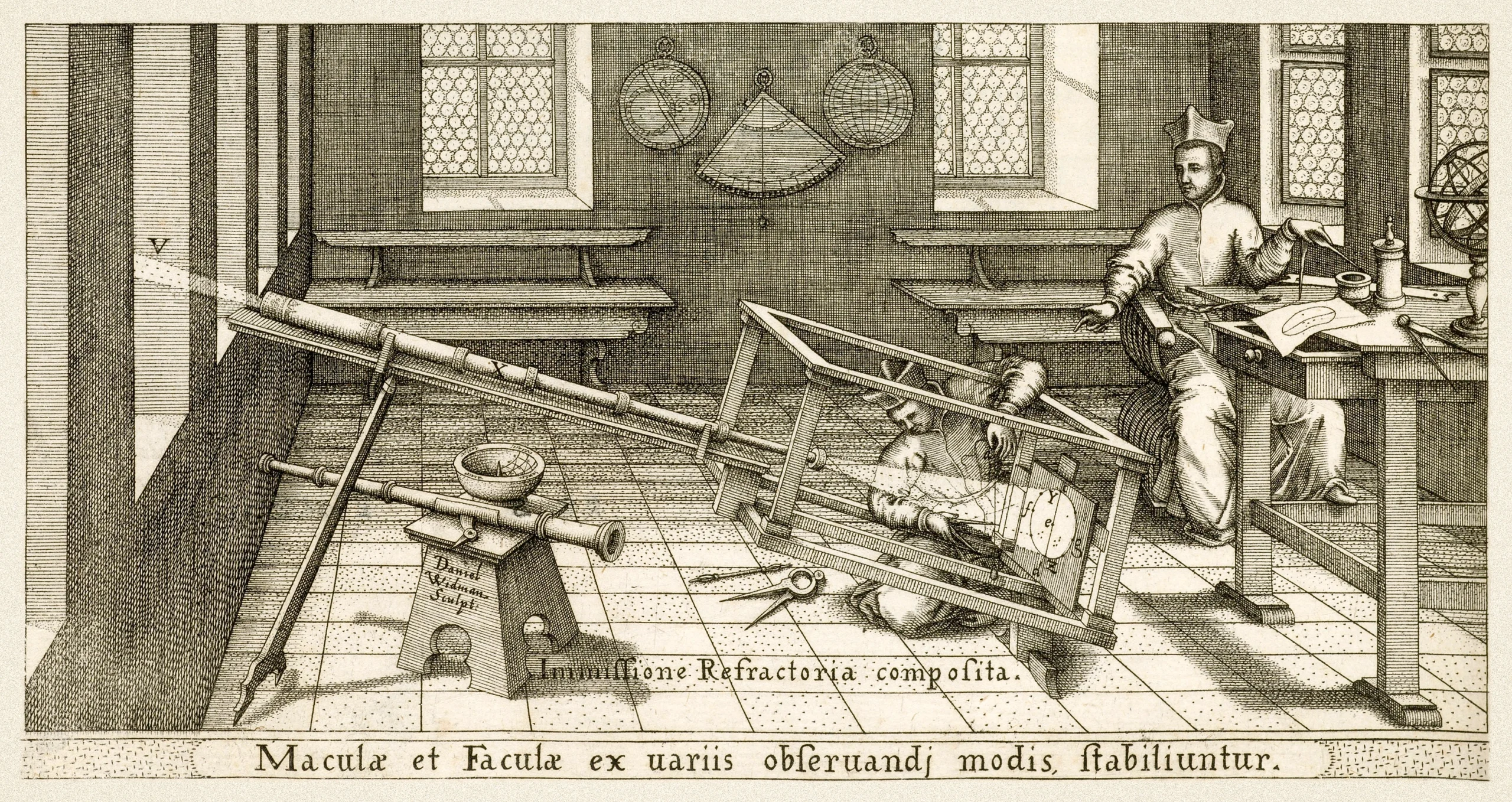
Around the same time, the Jesuit mathematician Christoph Scheiner developed a method for safely observing sunspots by projecting the sun’s image through a telescope onto a screen
Houghton Library, Harvard University
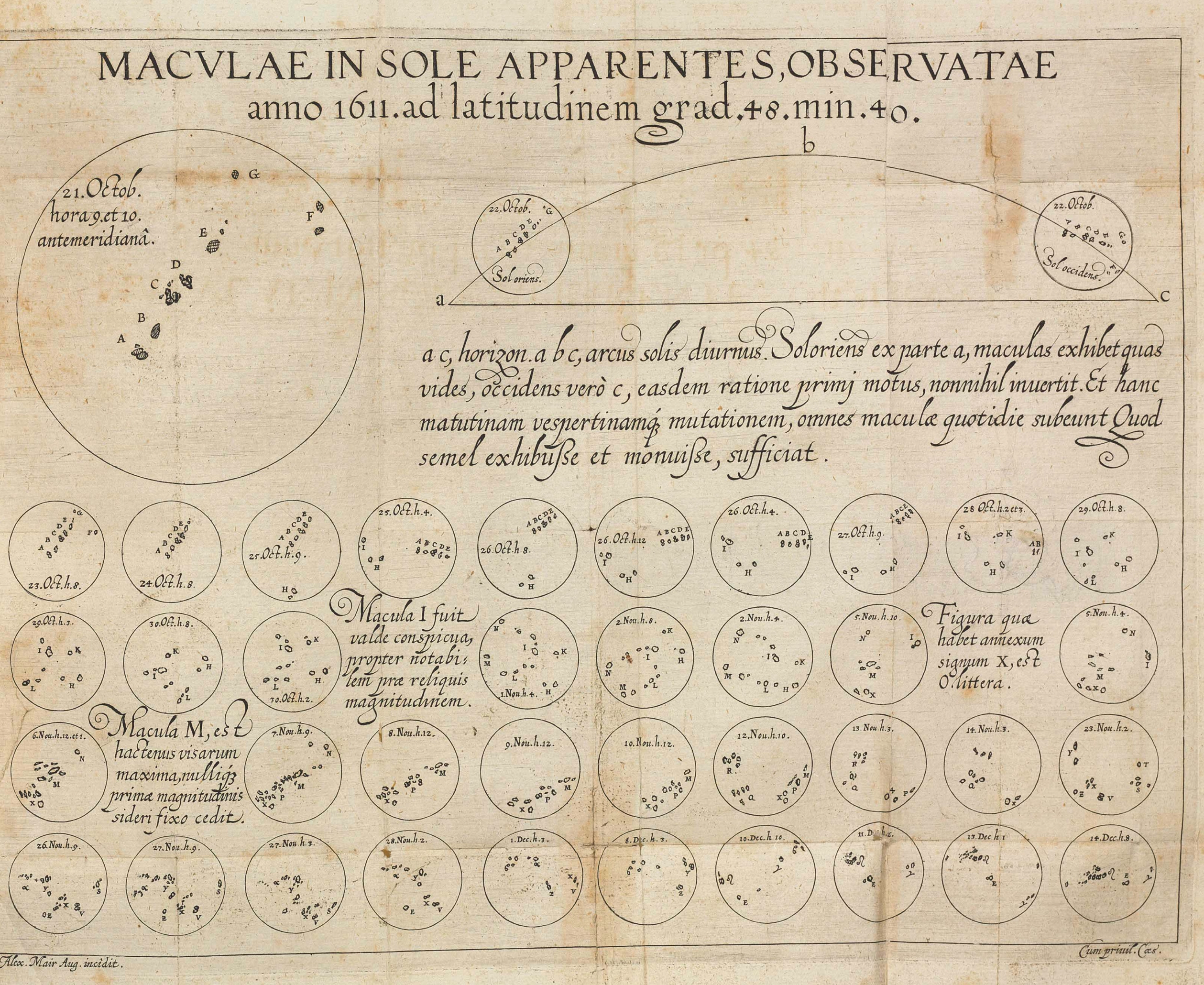
Scheiner argued that the sunspots he observed and recorded were satellites of the sun. Galileo disagreed, arguing that sunspots must reside on the sun.
Public Domain
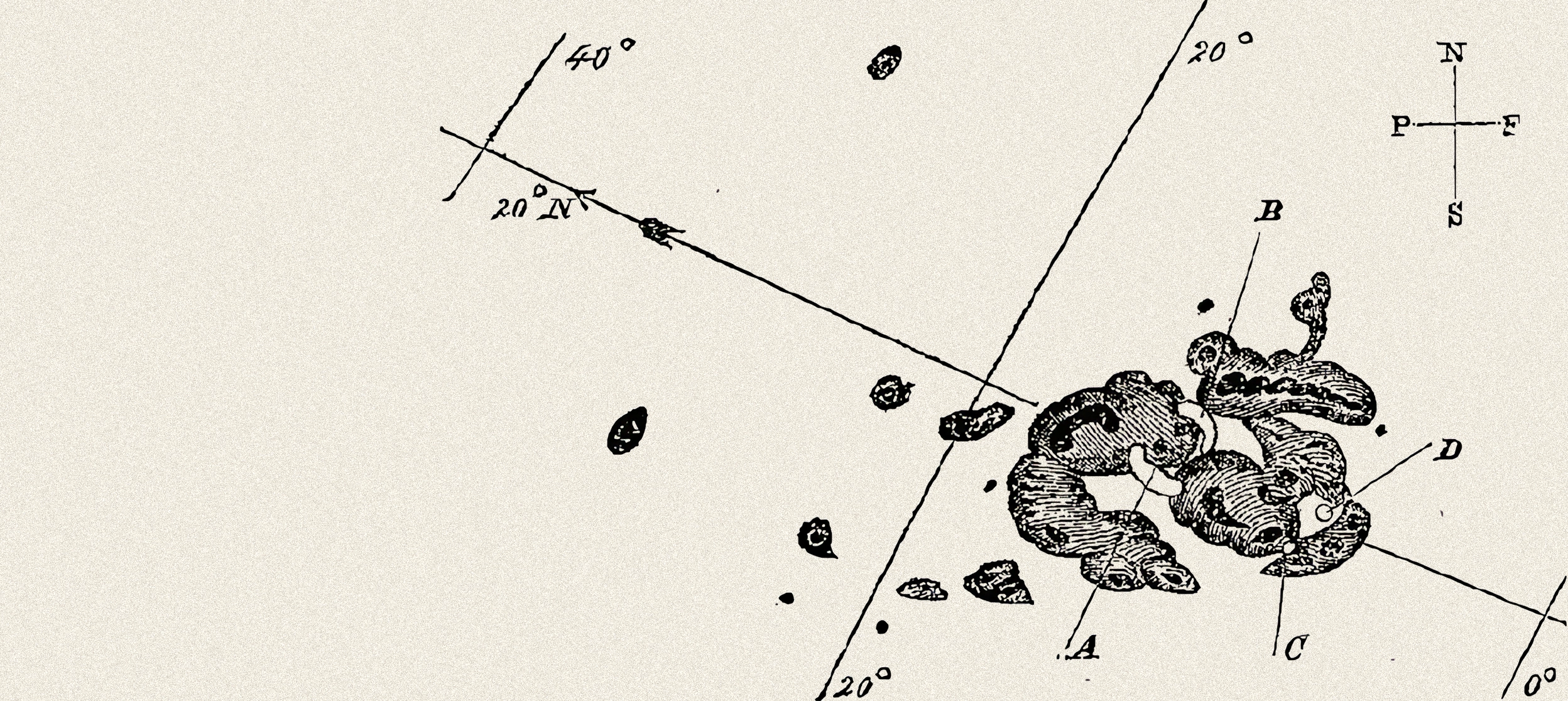
On September 1, 1859, the English astronomer Richard Carrington spotted an unusual and sudden brightening on the solar surface, which he mapped out in this drawing. Seventeen hours later, the northern lights were visible as far south as Cuba, and telegraph systems across the Western world failed and even caught fire. The Carrington Event, as it became known, was the first documented case of a geomagnetic storm associated with a solar flare.
Public Domain
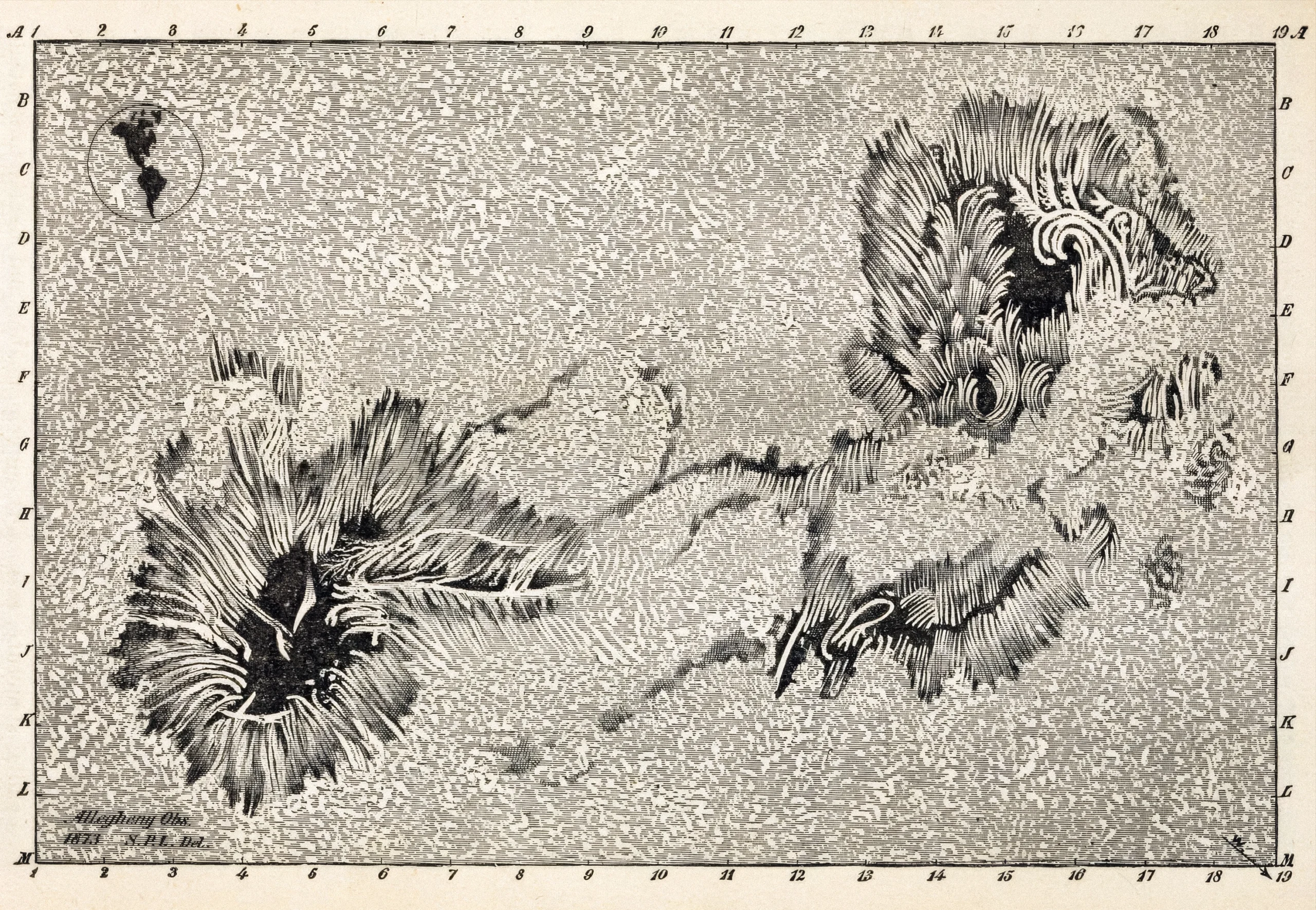
The American astronomer Samuel Pierpont Langley created this drawing of a sunspot in 1873. It has become an iconic image in solar science. Note the scale as indicated by the inset of the Americas at the upper left.
AIP Emilio Segrè Visual Archives
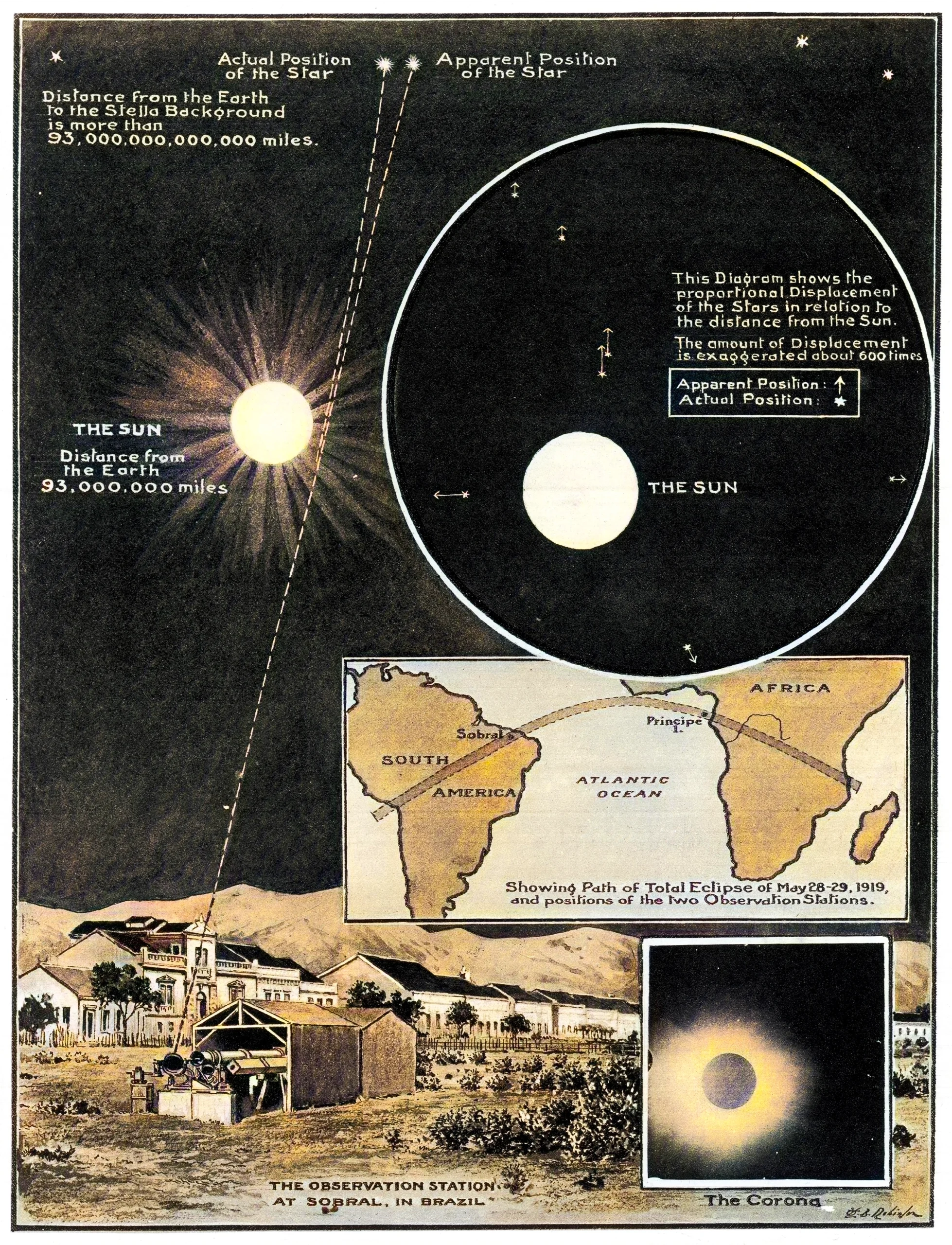
In 1919, the English astronomer Sir Frank Dyson organized expeditions to the West African island of Principe and the Brazilian town of Sobral to observe a total solar eclipse. The results showed that starlight bent around the sun, confirming a key prediction of Albert Einstein’s general theory of relativity. Einstein became world famous overnight.
W.B. Robinson
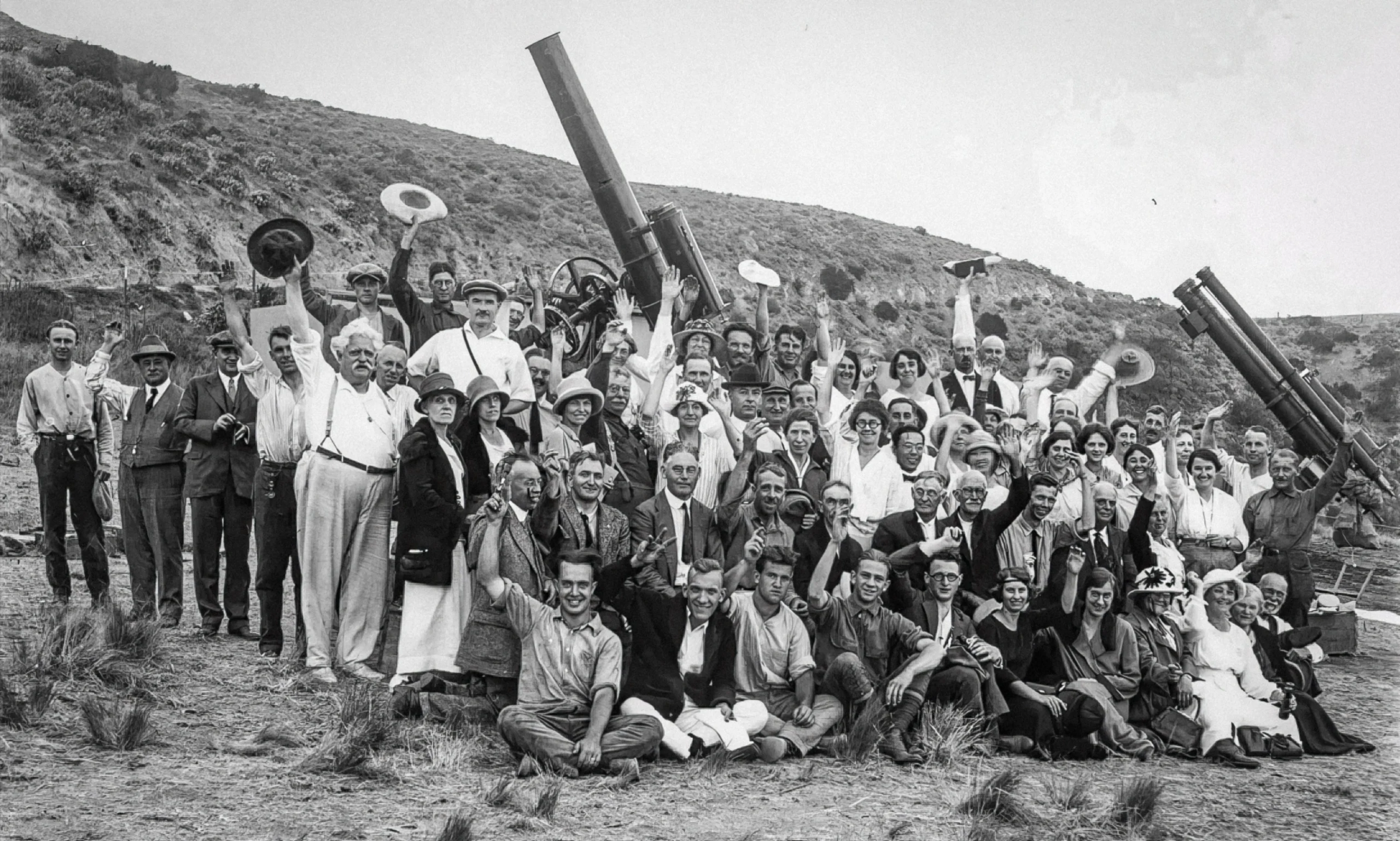
Another solar eclipse meant another expedition, this time on September 10, 1923. The Yerkes Observatory sent a team to Santa Catalina Island, California.
B.W. Harris Yerkes Observatory, University of Chicago
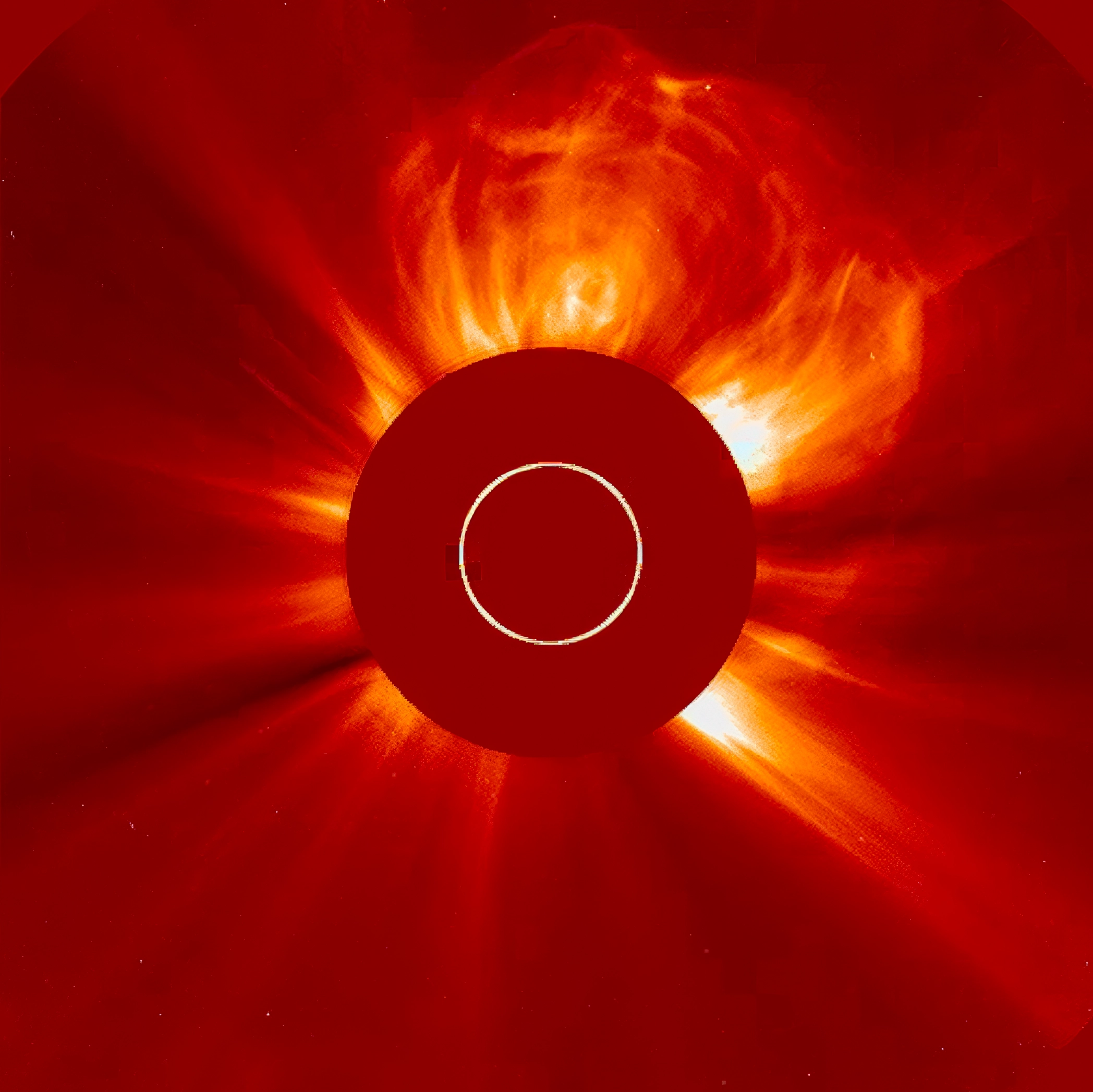
Launched in 1995 and still in operation, the Solar and Heliospheric Observatory orbits around a point on the direct line between the sun and the Earth, giving it an uninterrupted view. It revolutionized our ability to forecast space weather and provides detailed views of large solar flares such as this one.
ESA/NASA
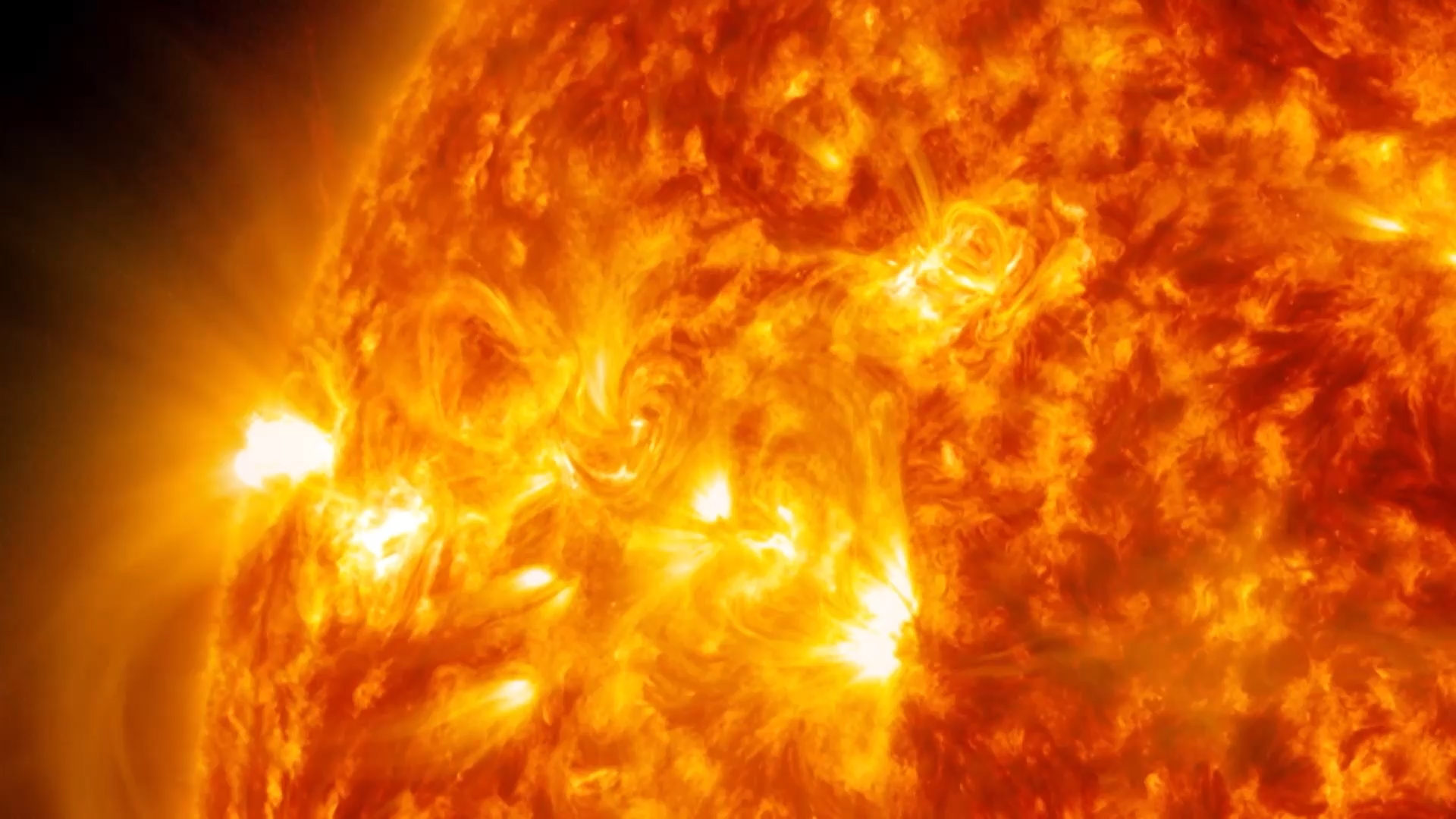
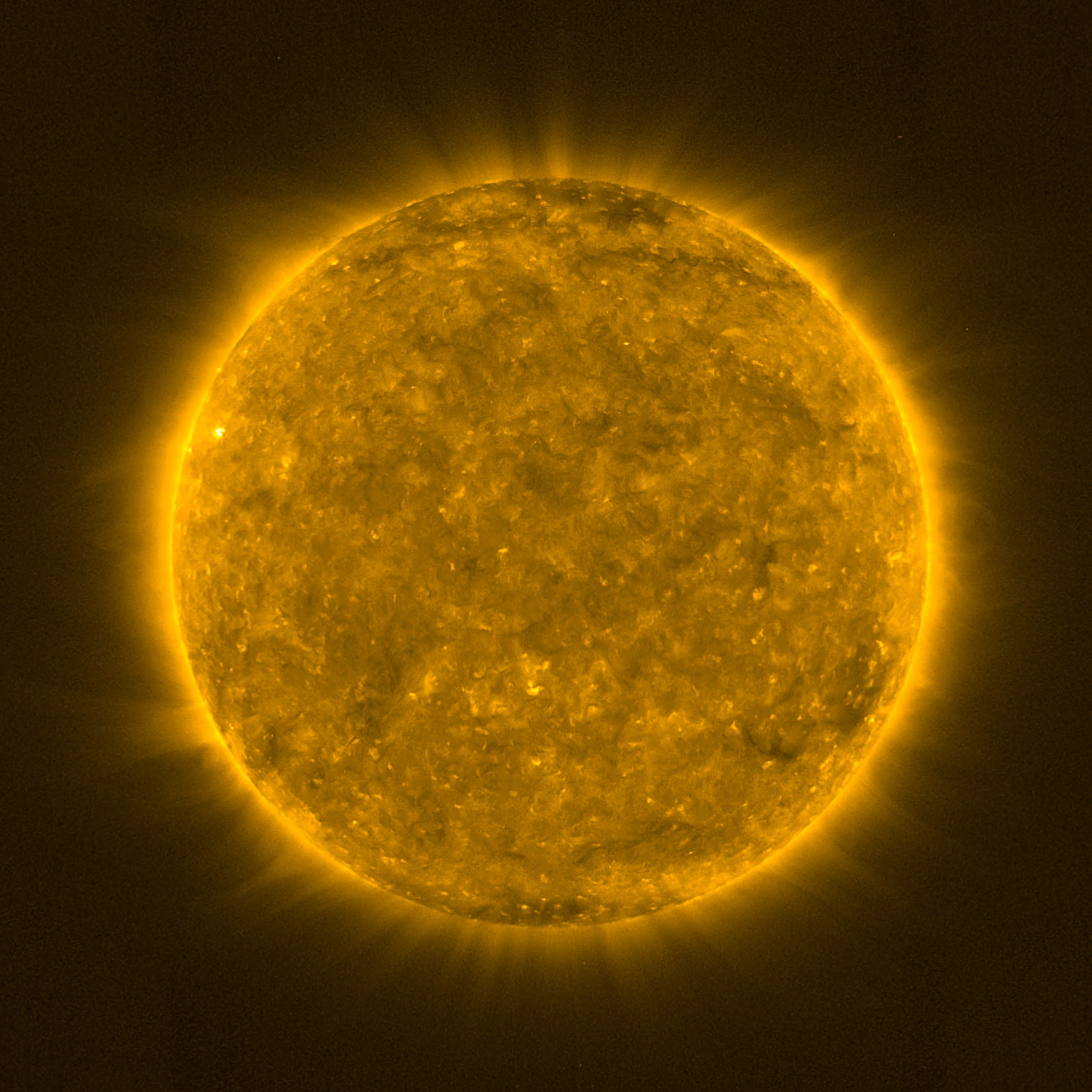
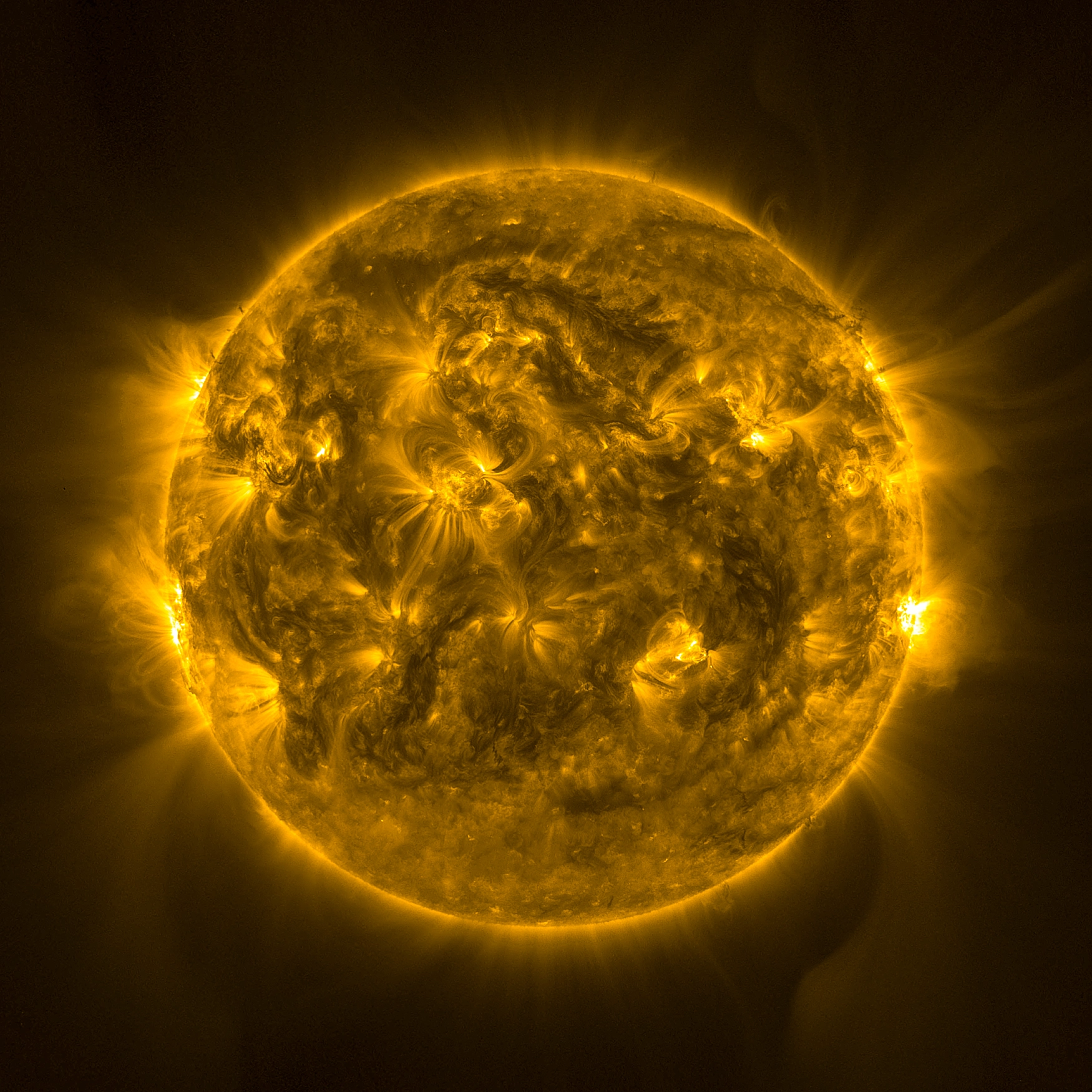
Solar Orbiter, a joint mission of the European Space Agency and NASA that launched in 2020, captured these two images in February 2021 and October 2023. As the sun approached its solar maximum (a year after the second image), observations revealed more explosions, dark sunspots, and swirls of super-hot gas.
ESA & NASA/Solar Orbiter/EUI-Team
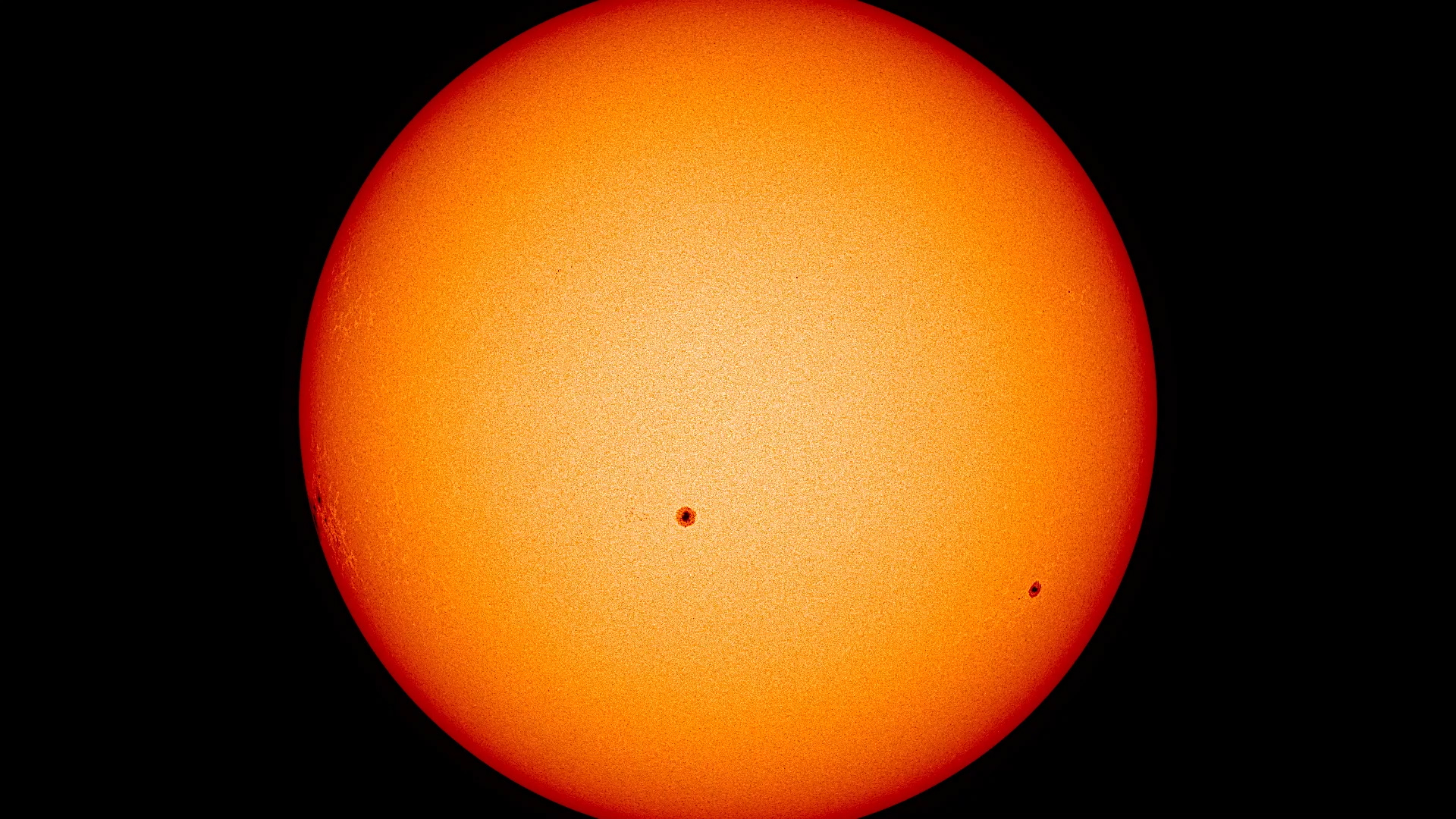
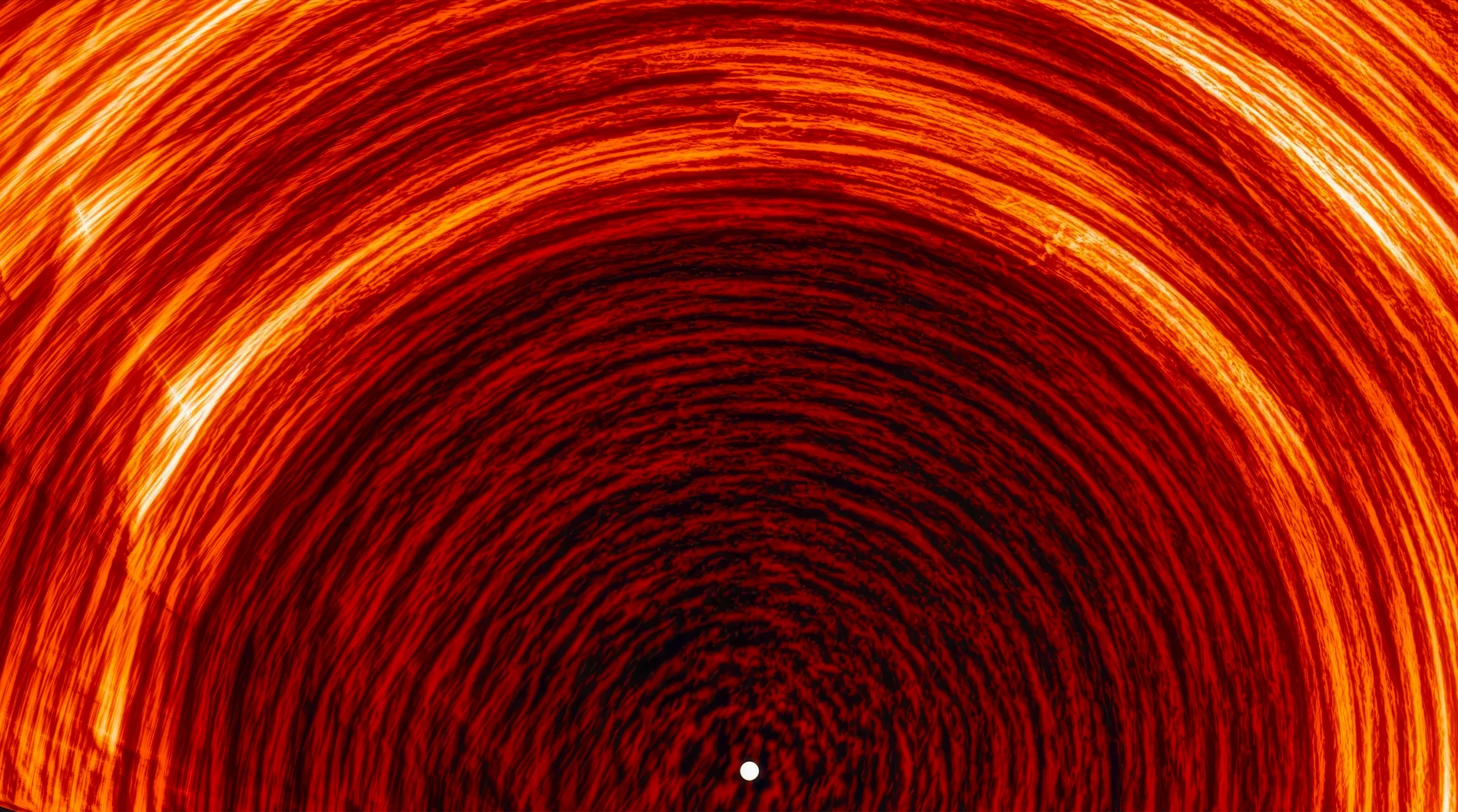
All previous views of the sun have been oriented toward its equator, taken from the plane on which Earth orbits. Solar Orbiter has provided the first look at the sun’s south pole. In this image, we see the sun’s polar magnetic field in motion. The magnetic network on the solar surface leaves imprints in the chromosphere, between the sun’s surface and the corona. Over eight days of observations, Solar Orbiter measured the tracks of these imprints, which were elongated by the sun’s rotation.
ESA & NASA/Solar Orbiter/EUI-Team