What’s the Future of Gene Editing?
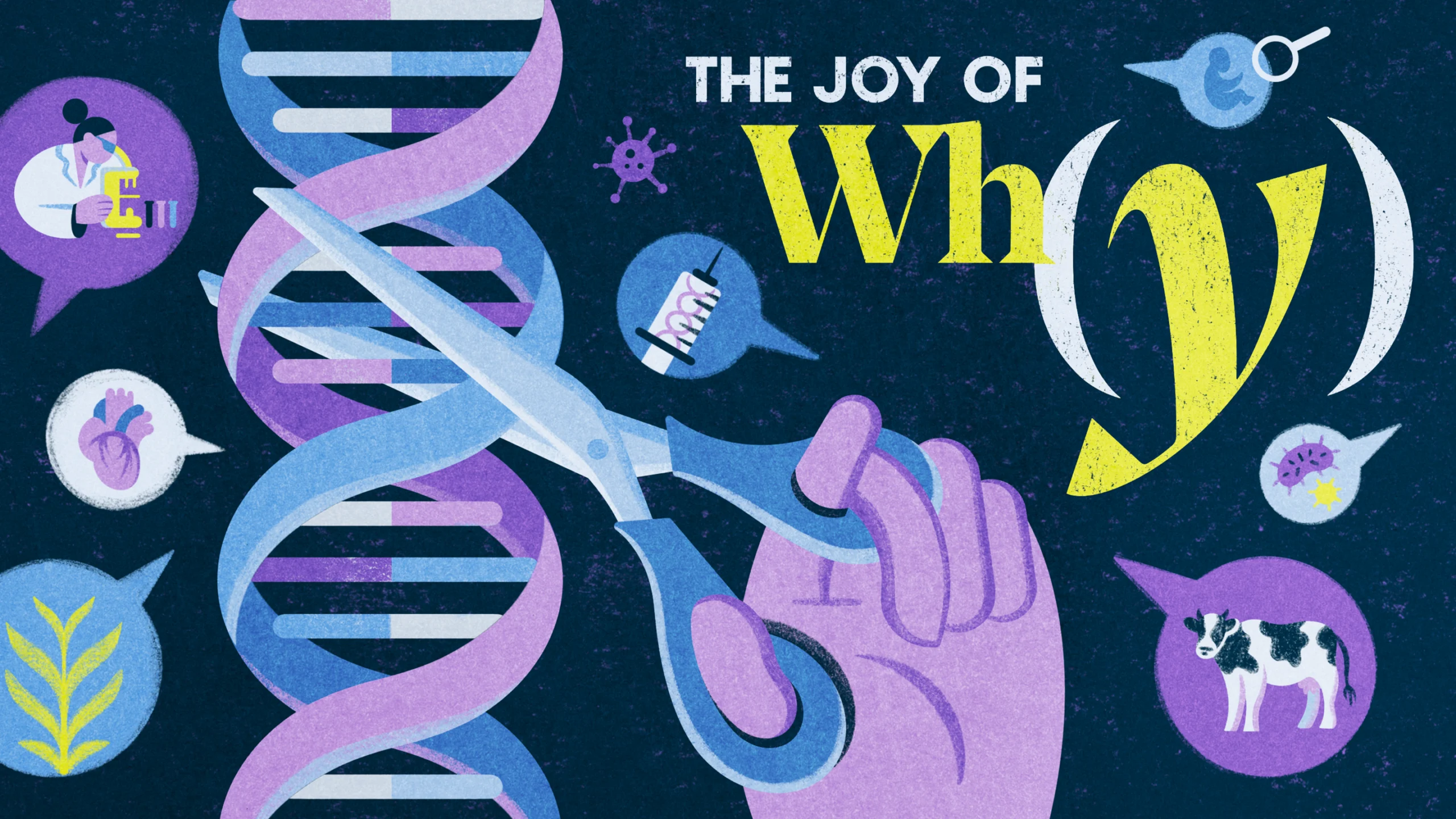
Chanelle Nibbelink for Quanta Magazine
Introduction
One of the most surprising and remarkable discoveries in recent scientific history has been CRISPR. Short for Clustered Regularly Interspaced Short Palindromic Repeats, CRISPR is a form of immune system that evolved in bacteria more than a billion years ago to defend against persistent viral threats. Under attack, bacteria can snip a small fragment of a virus’s DNA, store it in the CRISPR region of their genome, and then use it to recognize and destroy the same virus if it returns. The CRISPR-Cas9 system, to give it its longer name, consists of a short strand of guide RNA that identifies where to cut the DNA and a protein that acts as the molecular scissors.
What made this system truly revolutionary was the demonstration in 2012 that it could be reprogrammed with different pieces of guide RNA to edit virtually any genome in any species, and at a level of precision and ease that far surpassed existing gene-editing tools. Since then, the editing capability of CRISPR has been tested on everything from developing disease treatments to engineering drought-resistant crops to resurrecting genes of extinct species. The possibilities have expanded so rapidly that researchers, ethicists, and regulators have found themselves struggling to keep up.
One person acutely aware of the power of CRISPR is Jennifer Doudna, co-developer of the technology. Doudna, who received the Nobel Prize in Chemistry in 2020 with Emmanuelle Charpentier for this pioneering work, has been a prominent voice not only for its vast potential but also for its responsible and ethical use. In this episode of The Joy of Why, Doudna tells co-host Janna Levin how her early, “rebellious,” decision to study RNA led her on a serendipitous path to one of biology’s most transformative discoveries. They also discuss the breakthroughs, barriers, and frontiers that will define CRISPR’s true impact.
Listen on Apple Podcasts, Spotify, TuneIn or your favorite podcasting app, or you can stream it from Quanta.
Transcript
[Music plays]
JANNA LEVIN: Okay, here we go. I’m Janna Levin.
STEVE STROGATZ: And I’m Steve Strogatz.
LEVIN: And this is The Joy of Why.
STROGATZ: A podcast from Quanta Magazine, where we discuss some of the biggest unanswered questions in math and science today.
LEVIN: Hi, Steve. Here we are.
STROGATZ: Hi, Janna. It’s a new season.
LEVIN: I know, this is fun. Season Five. I’m pretty excited to talk to you about CRISPR today. Have we ever had this conversation?
STROGATZ: No, we have not.
LEVIN: Do you remember first learning about the CRISPR mechanism for gene editing?
STROGATZ: Well, I, I have heard of CRISPR, but I barely know anything about it. Should I think of it as some kind of molecular scissors that can do chopping of bacterial DNA by the bacterium itself?
LEVIN: Yeah, gosh, now you’re going to be challenging me, but yes. CRISPR, it’s a mechanism that can chop the DNA and then insert it. So it’s a combination of a cut and a paste.
STROGATZ: Aha!
LEVIN: And, I so distinctly remember hearing someone describe to me that there was a naturally occurring mechanism in bacteria which indicated they could edit their own genome and splice in the DNA of an invading virus, for instance, and store it for later so that it was more effective as an immune system if that same virus attacks.
STROGATZ: It’s a really cool idea in itself. I mean, aside from any applications it might have, I think I remember from high school biology that bacteria don’t have any immune system.
LEVIN: Yeah. I mean, pretty simple organism. I think about this also, if you just imagine its molecules acting as prescribed, right? Just moving around. When you hear it from this perspective, it sounds like a stroke of genius. Yet, there’s really nobody doing the thinking. It’s just molecules responding.
STROGATZ: You know, thank you for saying that. Because it’s so easy when you hear biologists talk about this or that mechanism. It’s good to remember there’s nobody home. This is, this is molecules.
LEVIN: Yeah. It’s just a little bit of positive charge making it move a little bit towards this. It is incredible that through this kind of iterative steps of just very simple application of basically electrical attraction that something this sophisticated could emerge, and is essential to the survival of an organism, and even the definition of an organism. Absolutely fascinating. Of course, this is our history. We come from very simple organisms ultimately all the way back down, and yet we don’t have a CRISPR mechanism.
So, let me tell you about our guest. Jennifer Doudna is a professor of biochemistry, biophysics, and structural biology. She shared the 2020 Nobel Prize for her incredible pioneering work on CRISPR. First time two women have won the Nobel Prize together, I believe, by the way. She’s at UC Berkeley, and she leads the Innovative Genomics Institute and does so much beyond that.
And I’ve been wanting to speak to her for many years because I find the work so fascinating, and she’s an incredibly productive and prolific scientist. Really incredible person.
If you will, here is Jennifer Doudna.
[Music plays]
LEVIN: Welcome to The Joy of Why, Jennifer, it’s such a pleasure to have you.
JENNIFER DOUDNA: I’m delighted to be here, Janna.
LEVIN: Thanks for joining us. I was saying I’m a big fan of your work. I’ve been following it for years as much as I can. For you, you have had such an unbelievably storied career. You’re so accomplished, incredibly productive, both in academia and outside in industry. You literally discovered a means to rewrite the code of life. It’s a discovery of almost unfathomable ramifications. I think everyone wants to know the secret of your success, or at least what drew you to your subject? How did you know you were such a natural match for this subject?
DOUDNA: Well, Janna, I’ll start by saying I certainly did not know that I was a natural match for my subject area. I happened to be growing up on a rural island in Hawaii. I got fascinated by chemistry in high school. I had a great chemistry teacher and I was amazed at the variety of life I saw on the island there. And I guess I put all of that together and said, “I wanna understand the chemistry of all of that, of how life evolves.”
And I didn’t really know about that from a chemical perspective until I read The Double Helix by James Watson. And I think it was the realization that science is a process of discovery. It’s not about memorizing a bunch of facts. It’s about figuring things out. I remember thinking clearly when I was in high school that it would be a really fun career to be paid to figure things out, and I think that’s what I’ve always pursued.
LEVIN: Now The Double Helix is a fascinating story of discovery. It really is a great classic book. How they go from chemistry to life is so exciting. I feel that a lot when I read about your work. It’s really descriptions of molecules and bonds and enzymes and protein folding. How you get from there to life just seems to still be tremendously elusive. And is that still a huge source of curiosity for you?
DOUDNA: It is a source of curiosity. My line of work is biochemistry. We’ve always worked with purified molecules and tried to figure out how they function, what they’re doing inside of cells. But taking knowledge like that and trying to weave it into a story that explains evolution or even just explains biology as we experience it in our own bodies and in our world. That’s a big stretch. So, we’re still working on that one.
LEVIN: Yeah, fascinating. When you were doing your PhD work, it was in the mid-’80s, and your work went on around the time the Human Genome Project started to become a really viable possibility and was grabbing a lot of people’s attention… all of this work on DNA. But you took the direction to study RNA. And you’ve even described that yourself as a kind of bold and risky move. Why was it that you were motivated to move away from where the crowd was going and to look at RNA instead, even knowing that it was risky?
DOUDNA: Well, it felt just a little bit rebellious, I guess. If I’m honest, that’s part of the reason. But I guess I feel that when you go to graduate school and I was, you know, very young, I was in my early 20s, I didn’t know anything and I had the really good fortune to work with an amazing mentor, Jack Szostak, who was a yeast geneticist.
So he studied how chromosomes divide in yeast cells. Sounds kind of esoteric, but actually a lot of fundamental discoveries were made from that system that ended up relating to things like how human chromosomes go awry and give rise to cancer. So that’s been an interesting line of work for sure.
However, when I arrived in Szostak’s lab, he said, “Actually, I’m changing my field of research because I’ve gotten very interested in evolution and specifically in the origin of life.”
LEVIN: Exactly the question.
DOUDNA: And I thought, wow, I can’t think of a bigger question than that. And not only that, but he had a very specific experimental path to discovery there. He was curious about how RNA molecules might have, in fact, given rise to modern life by preexisting DNA being around on our planet before there was DNA, and that perhaps RNA could have played an original role as a self-replicating form of genetic material.
So, you know, I didn’t know, again, anything about that, but it certainly sounded amazing, and that’s how I got into the field in the first place, was really through his encouragement and my ability to jump onto a seemingly kind of rebellious project at a time when nobody else, for the most part, was working in that space.
LEVIN: Yeah, RNA was highly underrated at the time. I mean, here he proposed this suggestion that seems quite grand, but that wasn’t really a popular thought about RNA at the time, was it? I mean, RNA was kind of underrated.
DOUDNA: Well, to be fair, there were a few visionaries who were absolutely thinking about that. Tom Cech is one of them.
He, with Sid Altman, won the Nobel Prize in 1989 for their discovery of catalytic RNA, RNA that could function like an enzyme. And then there were quite an interesting collection of people who were also very interested in questions about the origin of life and were investigating curious examples of RNA molecules that have either catalytic properties, they can function like enzymes, or seem to play other very interesting roles in biology. For example, serving as the genetic material of viruses. For me, it was really those colleagues, my superiors really, but it was that whole generation of scientists who were interested in these questions that were not really in the mainstream at the time, who had a huge influence on me.
And in particular, a scientific conference that I went to when I was a second-year graduate student in 1987, where I had the chance to see a number of those folks giving lectures and meeting them for the first time, hugely influential on my decisions for the future of my career.
LEVIN: And how did it play out? Does RNA have that role of possibly preceding DNA in the emergence of life in evolution? Is that a question we can answer?
DOUDNA: Well, it’s hard to answer it definitively because unless we build a time machine, we can’t really go back and check, you know? But I think what’s fascinating is that over the years, I think there’s only been increasing evidence that that theory is probably correct, or at least that’s an important piece of the story of evolution on the planet.
Where RNA came from in the beginning is still debated. You know, did it arise here on the planet, or did it come from somewhere else in the universe and arrive on our planet as a seed? People still debate that kind of thing. It’s an interesting speculation, but there’s a lot of evidence that RNA was probably the first kind of self-replicating biological molecule that gave rise to life on the planet.
LEVIN: Hmm, I mean, the idea of a panspermia is fascinating, but it also just sort of kicks the question down the road. It emerged somewhere. But it is a fascinating possibility. So here you are, you’re trying to understand these deep questions. How does that lead you to the CRISPR story?
DOUDNA: It was a circuitous route, if I’m honest, and this has really been my experience more generally in science, is that I think you start off in one direction, and if you are open to interesting ideas and results that come up along the way, the path is never straight.
In my case, that was through a process where initially we investigated catalytic RNAs and, in particular, understanding their molecular structures to try to find out how they could actually function in an enzymatic way, which was a very interesting question. Still is, frankly. And then we started to look into how RNA molecules control the way that gene expression works, and that simply means control the levels of proteins that are made in different kinds of cells.
It turns out that that’s something that is very fundamental to all of life. It probably influences not only organismal behaviors, but also the way that certain tissues form, the way that viruses function, of course. Fascinating aspects of gene regulation that really boil down to understanding the levels of proteins that are made at any given time.
There’s a lot of evidence that RNA molecules in different ways are a very important part of that story. They help control those expression levels of genes. And so we were investigating this in viruses and in different types of cells. And at that point I had started my career at Yale. I moved my lab to UC Berkeley in 2002. And I was fascinated to make the acquaintance of Jill Banfield here at Berkeley, who had discovered evidence at a computational level of an adaptive RNA-guided immune system in bacteria. So this was, for me, yet another fascinating example of RNA molecules controlling the expression of genes, and we wondered, how does that work?
And that was really my entrée into the CRISPR system and all of the CRISPR biology that came from that.
LEVIN: Wow. Now CRISPR is an absolutely fascinating, I guess I would say mechanism. How would you, how would you best describe CRISPR? I mean, maybe it would be fair to the uninitiated to tell us what the acronym stands for.
DOUDNA: Uh, let’s see if I can pull it out. Clusters of Regularly Interspaced Short Palindromic Repeats. Ooh! Don’t ask me to do that again! Yeah, it’s a bit of a mouthful!
LEVIN: I had a little cheat sheet somewhere if I had to look it up. It’s part of the genome of bacteria, is that right?
DOUDNA: That’s right. It’s in the genome of bacteria, and it’s a very special part of the genome because it actually allows bacteria to create a genetic vaccination card.
They capture little pieces of DNA from viruses and insert them into this special place in the genome called the CRISPR locus that stores that information from viruses over time. It, it makes an amazing, you know, recording really in real time of infections that are happening. And not only that, it’s not sort of dead information, it’s actually information that gets reused in the form of RNA molecules that are produced from those little templates in the DNA to make molecules of RNA that can go out and search for matching sequences in DNA.
When those matches are found, they recruit proteins that can come in and snip the viral DNA and protect the cell.
LEVIN: That’s just unbelievable actually, right? So the RNA is playing a really active role going out and then annihilating the virus that it might previously have contracted. But it’s hard to imagine that all of this is just molecules interacting electromagnetically. It’s, it really is such a sophisticated mechanism. I think one of the interesting questions is, why did humans not develop this amazing vaccination system?
DOUDNA: Well, it’s hard to say, you know, why something doesn’t exist, or at least as far as we know. But I guess what I would say is that humans have other ways of defending against viruses that are in some ways more advanced, in the sense that they are protein-based and they allow very sophisticated defenses against viruses that themselves have clever ways of trying to avoid immunity.
And I think what we see with CRISPR systems is that because they’re based on direct recognition of a viral DNA sequence, it means that viruses can avoid being detected by simply mutating their DNA sequences. And this is probably one of the reasons why we see so many different types of CRISPR systems in biology. There’s a lot of active evolution of those systems going on over time.
LEVIN: They have to keep ahead.
DOUDNA: They have to keep ahead. Right? Yeah. And so I think when you have rapidly growing cells, like bacteria that are reproducing on a scale that is very similar to the rate at which viruses are reproducing, that kind of works. But when you have viruses that reproduce much faster than the cells they’re infecting, like in us, I suspect that kind of a mechanism just can’t keep up if it’s a CRISPR system. And so we evolved other ways of being able to defend against viruses that avoid those immediate escape mechanisms in viruses.
LEVIN: Now, because the CRISPR mechanism also involves cutting the DNA of the host, it introduces the potential to damage the host as well. And so how does a repair mechanism get involved to make sure that it’s not a more damaging system than it is protective?
DOUDNA: Well, in bacteria, of course, that’s kind of the point, right? The cutting is the way that the immune system functions, so it helps the cell to find and then cut up viral DNA sequences. But what’s very interesting is that it turns out that in animal and plant cells, these cells respond to DNA cutting differently. They detect cuts in DNA, and they tend to try to fix them, and they can fix them because they have time, and that’s, again, because the cells are dividing much slower than if the cell is a bacterial cell.
And as a result, when there’s an insult to the DNA, like, say, a double-stranded break that gets introduced, for example, by CRISPR, cells can find the break and fix it. And when they fix it, as you just said, that’s an opportunity to also introduce a change to the DNA sequence, and that’s fundamentally how CRISPR works to induce gene editing.
LEVIN: Now, here you’re studying this esoteric mechanism in bacteria, might be relevant for evolution. Clearly really fascinating. But then there’s a big step forward, which is to contemplate how you might alter this mechanism to allow editing for, for the human genome. Was that something you intentionally sought out, or was it kind of an accidental realization that this was possible?
DOUDNA: Well, it certainly wasn’t something that was the motivation for the project in the beginning. The project was designed to ask and answer a question about how bacterial adaptive immunity was operating.
However, as soon as we understood the chemistry of that RNA-guided DNA-cutting activity of a protein known as Cas9. It was, you know, an amazing example of how when you do fundamental research, it leads in unexpected directions. That understanding of the chemistry of RNA-guided DNA cutting immediately suggested a very interesting application of that activity, namely to induce precision editing in cells like ours, or like plants and animal cells, that have this capacity to repair double-stranded DNA breaks.
LEVIN: You mentioned the Cas protein. What was so important about the Cas protein specifically. Proteins abound in these systems. So what was so important? Why is it often paired, CRISPR-Cas9?
DOUDNA: Well, it turns out to be the real engine of gene editing, and the reason is that it’s the enzyme that does the DNA cutting. It uses the RNA molecule that comes from the CRISPR sequence as the zip code. It’s the molecular guide that tells that protein where to go and where to cut DNA.
But Cas9 is the actual machine that does the cutting. And so you really need both together and the two together provide a very powerful tool for programmable gene editing in different kinds of cells.
LEVIN: Once you’re editing genes, you immediately realize that you have the potential to radically alter life on Earth, to participate in the process of evolution. But there were other gene-editing tools also at the time. What was so special about this gene-editing tool that really made it transcendent and ubiquitous in a way that the other gene-editing tools didn’t really take on?
DOUDNA: Well, you bring up an important point because you’re right, that there had been a fairly long-standing effort among molecular biologists to figure out how to manipulate genes in a precise way.
There were a whole series of discoveries that were made that were instrumental to that capability. Partly it was the understanding of how double-stranded DNA-break repair works in cells, and the other was figuring out how to introduce a double-stranded DNA break in the first place, especially at a place that you might want to induce a gene-editing event.
And so because that knowledge was preexisting, I think it created a very nice path for CRISPR because what CRISPR offers is an easy way to generate double-stranded breaks. And not only that, back to the role of this Cas9 protein, what’s really interesting and kind of crazy about the CRISPR technology is that we can use exactly the same protein to manipulate genes in wheat, rice, human liver cells, the brain, you name it, right? It’s the same enzyme. And the reason that works is because we can simply change the guide RNA that tells it where to go, and we can redirect its activity to a gene of interest in any cell type.
Because of that, it just makes it a very easy technology to deploy, and that’s really what we saw in the field. As soon as that original article with my collaborator Emmanuelle Charpentier was published in the summer of 2012, immediately there were many labs that started using it and testing it for gene editing in different systems. And that set off an enormous race, and then of course a trajectory of many labs adopting the technology for all kinds of applications.
LEVIN: I mean, this is the discovery of a lifetime. I mean, it really is. You described, in response to receiving the Nobel Prize with Emmanuelle Charpentier, that this was a joyous time of discovery, as though it was singular, as it stood out. And I guess I’m wondering, would you describe it as a moment of a realization or was it more the process of the discovery?
DOUDNA: Well, it wasn’t instantaneous, but it was pretty fast actually. Because, you know, and that, that’s sort of been my experience in science over the years is that, you know, when you discover something that is of real import you kind of know it right away in a sense.
With CRISPR it’s not as though we could foresee everything that was to come, of course, from the technology. But we could really pretty immediately see how this could be a very powerful tool because of the ease of deployment, how easy it was to alter this RNA molecule and send Cas9 to different places in a genome. And all of the potential uses of that kind of technology. It was just very exciting to think about and contemplate and imagine what could be possible.
LEVIN: So, has the technology changed significantly? And what do you think the most impactful technological advances have been since its discovery?
DOUDNA: Well, since the discovery of CRISPR, what’s happened is that it’s become a whole toolbox, and the way that’s happened is that it’s been possible to take advantage of, again, the fundamental chemistry of the way the CRISPR system functions as an RNA-guided mechanism of recognizing and cutting DNA.
It’s been possible to change that into a mechanism of recognizing and changing DNA in different ways. And so that’s really made it an incredibly versatile technology that can now be used for all kinds of different types of genetic manipulations. And I think that I’m just excited about all of those, to be honest, because I think that it gives scientists a very rich set of technologies that can be deployed as they’re needed in different settings, and it’s only gonna continue. I mean, every time I go to a meeting about CRISPR, I’m continually blown away by you know, by that expansion of the toolbox. And so I just think it continues to get better and better and better.
[Music plays]
STROGATZ: Wow, this is making me try to remember some of my biology classes because, for instance, the phrase double-stranded break. I’m not sure I fully appreciate what’s going on here. So let’s just remember, maybe you can correct me if I’m getting this wrong.
DNA is a double helix, we all learned that. It has these two strands, and you can break one strand and leave the other strand intact. There are enzymes that do single-stranded breaks, and that’s not super dangerous from the point of view of the integrity of the DNA molecule or the gene because you’ve still got one intact strand. There’s still all the base pairing along the whole double-stranded structure. You put a snip in one strand, but you haven’t broken the back of the molecule. A double-stranded break is literally chopping the molecule, DNA in half. Really very dramatic move.
LEVIN: Right. In principle, it should be very damaging to the cell.
STROGATZ: Yeah, and so to be able to have access to genetic machinery that can not only do these double-stranded breaks, but do it in a manageable way, and this is the part that got me, it’s like it’s a sort of universal scissors. It can work in any organism.
LEVIN: Yeah.
STROGATZ: And you can just guide it to any place.
LEVIN: Yeah, it’s insane
STROGATZ: Right? Like, in the old days, there were enzymes that they’re good at snipping one strand, but only if the sequence was such and such, you know, like much more restricted kinds of scissors. This is like a really magnificent all-purpose gadget.
LEVIN: I think she really says it well when she says, “It was just so easy to deploy.” And you saw it right away in use in other labs immediately. There was very little barrier to its application. I think this point about the double-strand breaking is a single-strand breaking, as I understand, is more easily repaired. Yeah. And you can, but you don’t, in principle, change the DNA. But if you double break, you can now insert new base pairs.
STROGATZ: Okay.
LEVIN: And that’s really what CRISPR is doing. It’s, for instance, taking the DNA from an invading virus. It’s cutting its own DNA and putting the viral DNA in its own strands. It’s inserting the base pairs, and you need the double break to do that. And the reason why that’s interesting is you’ve essentially made an immunization card, a record of your own ability to immunize against that invader. At least that’s the case for bacteria.
So here now we can adapt this from the bacterial toolkit and implement it in human beings, and fundamentally change the genetic material.
STROGATZ: It’s incredible.
LEVIN: It’s pretty incredible.
STROGATZ: It’s, it’s not the biology I ever learned, and I guess the real experts are just as shocked, right? It was a really monumental discovery.
LEVIN: I’ve got to say, this sort of excitement over CRISPR, I think, is among the most fascinating scientific discoveries that I’ve ever heard of, and it has the potential to change fundamentally the human blueprint.
STROGATZ: It’s just astonishing now what’s possible. But it sounds like it’s been discovered in the laboratory, tested in the laboratory. Is it making its way to the bedside, to the clinic? Is it helping real people?
LEVIN: Yeah, exactly. Jennifer discussed cases, real patients, living human beings who are alive precisely because of CRISPR therapies. So, we’re gonna get right into that after the break.
[Music plays]
LEVIN: Welcome back to The Joy of Why. We’ve got biochemist Jennifer Doudna with us here today to discuss CRISPR and the future of gene editing.
It’s not quite 20 years, but we are living in the time where there’s these really impactful technological advances. You have this work with Baby KJ. Why don’t we talk about Baby KJ? Maybe you could tell us, it’s a very concrete example of what’s actually being done therapeutically.
DOUDNA: Well, Baby KJ was born in August of 2024 and he had a rare metabolic disease that was diagnosed right away after he was born. He couldn’t digest protein properly, meaning that he was extremely sick. He couldn’t eat a normal diet. He wasn’t gaining weight. He was in the neonatal intensive care unit. You can imagine that his parents were distraught and, you know, desperate to do something to help their boy.
Fortunately, his clinical team at the Children’s Hospital of Philadelphia realized that he probably had a rare genetic disorder and were able to quickly get a sample and sequence the DNA. They figured out that this boy had mutations in both copies of a gene encoding an essential enzyme required for protein digestion.
And not only that, they realized that this was a type of mutation that could in principle be fixed using a version of CRISPR that would have that capability. And so they reached out to a number of groups, including the Innovative Genomics Institute out here in California, about helping them to create a version of CRISPR that could treat this boy. And incredibly, incredibly, I still can’t really believe it, but it did happen in an eight-month time period.
LEVIN: That’s incredible.
DOUDNA: And the baby was treated and today he seems to be thriving, which is absolutely wonderful. So, you know, it’s just an extraordinary story of teamwork. It’s an extraordinary story of using off-the-shelf technology. No new research had to be done. We could use existing versions of CRISPR and a delivery tool that had been developed originally for the COVID vaccine, actually. And using that in the patient, it was possible to create a therapy I don’t know if anyone’s ever created a therapy that quickly tested it and delivered it to a patient. But now we know it can happen, which is really exciting.
LEVIN: It’s fascinating. I have so many questions, but when you deliver this kind of a therapy, since it’s a gene editing therapy, is it a one time you deliver it? The genome is edited? Or is it a therapy that has to be re-administer over time?
DOUDNA: Well, in this case it was a little of both in the sense that it was three times into the patient, but not since then. And I think the hope is that sufficient editing of that patient’s cells in his liver, that are essentially repopulating his liver over time, have been edited such that he now has a normal functioning liver that’s producing the kind of digestive enzymes that are needed for his health. That will just have to be monitored, of course, over time. And because it’s a one patient situation, we don’t have any way of actually testing whether and how much editing occurred in his liver. It’s just, looking at his physiological properties now and trying to assess what his health is.
But it is quite impressive that it took just this, you know, kind-of very succinct delivery. It doesn’t require treating the patient every day or every month. He had three treatments with this therapy, and we hope that that’s sufficient to give him a normal lifespan with a normal outlook.
LEVIN: It’s incredible. I mean, there are other areas in terms of human health therapeutics where you would see this kind of possibility, cardiovascular disease or, I dunno, altering the microbiome. Where do you see the most sort-of productive direction for thinking about gene therapies?
DOUDNA: Well, you just mentioned two big ones that we think about a lot. So I think, you know, the cardiovascular angle is fascinating. It might not be obvious to someone listening to this, you know, why would CRISPR be useful for treating heart disease? And yet it is. And the reason is that many studies have shown that people that have a particular form of an enzyme in the liver that processes cholesterol differently than others have protection against cardiovascular disease because they don’t tend to accumulate plaques in their arteries over time. So, wouldn’t it be great if you could actually use CRISPR to give everybody that form of the gene? And that’s what the principle is for using CRISPR in that fashion.
And in fact, there was a company that was founded to do this, a company called Verve that has demonstrated enough potential for this approach that they were actually purchased by Eli Lilly last year. And so, you know, there’s a lot of interest on the part of even big pharmaceutical companies in pursuing a strategy that could give people an option that doesn’t involve taking a daily pill or getting, you know, frequent injections or something, or having to radically change their diet, but instead having a one-and-done therapy that just gives them a genetic fix to the problem of high cholesterol.
LEVIN: Now, this is the upside, the success stories. But there are also barriers to developing these treatments at scale. What are the barriers? Are they all just financial barriers or getting FDA approval, or are there actual barriers to scaling up these kinds of treatments?
DOUDNA: Well, certainly the financial and barriers are there. What’s exciting about the case of Baby KJ in particular is that those barriers were overcome and that sort-of speaks to what’s possible. On the flip side, we know that that strategy isn’t going to work for everybody. It’s very hard to scale that. For example, how would we replicate that particular path for other patients that have rare diseases?
So, I think it’s worth really for the field to think about what are the approaches that could just radically reduce the cost and make it a lot easier for other patients to get access to this type of a therapeutic. And so I think it’ll take not only getting creative with engineering and the way that these molecules are manufactured, and that’s already underway to try to reduce costs there. But it also goes back to the science and the technology. For example, you know, Baby KJ was lucky that his disease affected his liver, so it was possible to use an off-the-shelf delivery technology to introduce the CRISPR molecules to cells in his liver. But that’s not going to be helpful for people that have a lung disorder or a muscle disease or a brain disorder.
And so, one of the real forefronts in the field right now is figuring out how to solve the delivery problem for all these other tissue types. I think it’s gonna be solvable. You know, I’m very bullish on this. But it’s gonna take real work. I mean, you know, it’s not going to just happen. I think we have to really focus on it.
And fortunately, many people recognize that this is an important challenge. And so we’re seeing more and more efforts in this regard. A lot of our young students that come in to the Innovative Genomics Institute here in California certainly are very motivated by this. They’re excited about it. It’s a hard problem. They wanna grapple with it. They wanna figure it out. So, that’s the kind of energy and innovation that I think will solve a hard problem like delivery.
LEVIN: If you have a newborn baby with a terrible genetic disease, who is not going to have a long life prognosis, you can imagine risking anything to treat this child. But for somebody who has alternative therapies, how scared are people of doing something as radical as editing their genome? And are there negative consequences? Are there possibilities of having mistakes in what’s edited, or how it’s edited, or immune response?
DOUDNA: Yeah. Well, you know, with any technology of course there’s always risk, right? And with gene editing in particular, you could imagine, right, you don’t wanna have something that’s not accurate, or editing sites that are unintended or even that are harmful. You certainly don’t want to be in a situation where you have consequences of editing that lead to undesired outcomes.
I think a good case in point is actually the situation with sickle cell disease, because that’s a disease where the presence of the sickle cell mutation in the human population is probably in part because it gives some protection against malaria infection. So, people that have one copy of the so-called sickle cell gene, phenotypically they’re normal, but they have some protection against malaria infection. So you could argue that for them a bit of an advantage to have that in parts of the world where malaria is endemic.
And so that’s just kind of a good reminder that our genetics are complex and genes, you know, aren’t necessarily good or bad. They could be a little of both depending on the situation. So I think, gene editing just, we have to employ it cautiously because it does require a lot of knowledge about what effect a genetic change is going to have on a person over the course of their life.
LEVIN: Yeah, you raised this fascinating possibility that a gene we think is simply harmful, actually has a protective purpose. And we talk a lot about, you know, maybe myopic people also have some correlation with abilities, or you can’t fix one thing without possibly damaging another. I think that’s just generally true about human beings.
It also leads to some ethical questions, and I know you’ve thought a lot about the ethical questions. I feel like we have to talk about the somewhat shocking case of the Chinese scientist in 2018 who used CRISPR to genetically alter human embryos, which seemed like it was really crossing a line, resulting in the birth of two twin girls. It’s my understanding that he was trying to make the babies resistant to HIV. Now, when you heard about that were you shocked, or did you feel it was inevitable that somebody would transgress across this unspoken ethical line?
DOUDNA: It was shocking. No, it was definitely shocking. It had already been on my mind though that, you know, this was certainly a possibility. And this particular individual had been going around and attending meetings on gene editing, so he wasn’t unknown to the genome editing community.
But that all being said it was certainly shocking to find out that this wasn’t just chat, it was actual action that he had taken. And once the details were revealed, it was pretty clear it was an extraordinarily unethical thing to have done for multiple reasons.
You know, if there’s a silver lining to that story, it’s that I think internationally people recognized right away that this was wrong and they took a stand against it. And in fact, that scientist was arrested and his lab was closed and he was jailed for a few years. So, we’ll see what happens going forward, but I was pleased, I guess, that there was a very strong and concerted response by the international community about his action.
LEVIN: And the big issue being that it was in embryos, it was editing the germline. So in other words, it could be passed down. Was that the big line that was crossed versus another therapy?
DOUDNA: Well, for me, even more than that was that it was first of all used in a way that was medically unnecessary because there were other proven ways to protect those babies from transmission of HIV during their development and birth.
Secondly, I don’t think from the evidence that I saw that the parents were aware particularly of what they were actually agreeing to, which is also very shocking. And then as you mentioned, the third piece is that this is a permanent technology. And not only that, when you perform it in embryos, you are making changes that are heritable. So those changes will now be passed to future generations, and we really don’t know what the impact of that will be.
LEVIN: Do you think that there are others that are unscrupulously performing these kinds of experiments? As you said, it’s an incredibly flexible, programmable, swift, and not terribly expensive technology, which also makes it kind of scary.
DOUDNA: You know, it’s possible. I think that my assessment is that the original perpetrator, I guess you could say of that germline application of CRISPR, a lot of his motivation I think was frankly for publicity. And so I think that part of the deterrent now is the idea that publicity would be pretty negative for somebody forging ahead with something like that today.
And yet, you know, we do know of companies, for example, I’ve heard of a few around the country that are exploring again the possibility of germline editing and offering that as a service to people. So, it’s not as though this is off the table or no one’s thinking about it anymore. I think it’s still very much in the milieu and we’ll have to see what happens in the future. But it, to me, just underscores the continued importance of public engagement, of scientists being involved in the conversation around CRISPR and how it should be used.
LEVIN: There are implications for using this technology for climate, for plant life. I mean possibly even food, to address food scarcity, or diseases like malaria, where you stop it at the level of the insect, not at the human-body level. How do you see those advances progressing? Is that an area that’s very active at the moment?
DOUDNA: Yeah, it’s pretty active and I think there’s a real upswing in the applications of CRISPR for those kinds of things that we’re seeing right now. Especially for addressing challenges that are coming with the changing climate, both in terms of food security, how we ensure that we have plants that are robust with respect to drought, with respect to pests, that have improved nutritional value. All of those things are interesting applications using CRISPR.
And then the other is thinking directly about carbon release and applications that involve changing the microbiome in cattle to avoid the emission of methane. Cattle are one of the major sources of methane emissions around the world every year, and CRISPR in principle can dial that back by changing the genes in those bugs to reduce methane emissions potentially permanently. So that’s, I think, something that I’m very excited about, and is an active program here at the Innovative Genomics Institute.
LEVIN: What do you see as a primary focus in your research in the coming decade? Do you see it as being more focused on industry and application, or back to exploration in the lab?
DOUDNA: Well, it’s a little of both. I think that, you know, in my own research lab, I continue to have folks that are doing fundamental discoveries, and there’s a lot of exciting work, frankly, coming out of that effort right now. And then we also appreciate the value of figuring out this delivery challenge. I think it’s a big challenge.
We’re not engineers in the lab. We love engineers, but I’m certainly not an engineer. But the opportunity to understand fundamentally how cells take up new molecules, how these molecules can access specific kinds of cells. There’s a mechanistic basis for a lot of that, that is something that we do love to dig into in a lab like mine. So those are gonna be two areas that we’re gonna focus in, for sure.
Beyond that, I really want to continue to serve as a mentor. I’m enjoying the fact that at the Institute here, we’ve been able to hire in a number of younger faculty who are kicking off exciting research programs of their own that align with the kind of overall goals and mission of the Institute. These are folks that are here in large part because they love working on big, hard problems. They love doing that collaboratively. They love doing it here in the Bay Area, where we have access to incredible resources of all types.
We love being literally right across the bay from Silicon Valley. You know, as AI continues to advance and accelerate the pace of our work, we’re increasingly integrating that into what we’re doing. So that’s been really fun and I wanna do more of that.
So it’s a really exciting time, I would say.
LEVIN: When you were working on this originally, in the early days when you were making the transition from studying RNA to studying CRISPR to realizing its incredible power in terms of rewriting the code of life, so to speak. When you look back at that time, is there a time that you miss of, you know, before all of this, before the success, the attention, and also seeing the impact it’s having on so many other researchers and so much other work?
DOUDNA: Well, yes, um, my life certainly changed dramatically right around 2012. And, I often joke… my husband’s also a professor here at UC Berkeley… and I often, uh, joke to him that there was my life BC — before CRISPR — and then everything changed.
And you know, do I miss it? Well, yeah, some parts of it I definitely do. I, you know, there’s a joy in just coming into the lab every day and spending time with my students. I try to do as much as that as I can, but, you know, I’m doing things like, this, which is fine, you know, but it’s different.
And yeah, I love science so much. I love the process of discovery. I love working with scientists who are just starting out in their careers, you know, and they’re creative. They’re fearless. They want to figure things out. And it’s, you know, science is always a struggle, right? It’s always hard. And so I do enjoy going through that struggle with them, and I don’t do that as much as I used to. And I do miss it.
LEVIN: All great stories have to have a struggle.
DOUDNA: For sure.
LEVIN: No great book was written without a struggle to drive the plot.
Thank you so much, Jennifer. It really is such a mind-blowing topic. It’s so exciting to see it moving and that it’s happening and it’s actually happening fast. We’re gonna live to see the implications of this. Thank you so much for joining us.
DOUDNA: Thanks for having me, Janna. Great to be here.
[Music plays]
STROGATZ: Wow, I’m hit by so many things as I listen to that. The first is something that I think I heard Stephen Jay Gould, the old evolutionary biologist and writer, say when I was sitting in on a lecture of his one time, which was that it was the age of bacteria, it is the age of bacteria, and it will always be the age of bacteria.
You know, we don’t, see them. We don’t think about them much. But they’re so important, and you can learn so much about life as Jennifer Doudna and her collaborators have done by focusing on bacteria.
LEVIN: Yeah. But it’s also fascinating to talk to someone who’s had such a direct impact on technology, therapies, the potential for improving the human condition, but that’s not really why she got started, and this is something people keep forgetting. It really was just curiosity-driven science, childlike enthusiasm that she maintained her whole life. And how do we convince people that we need to encourage that to have the impact on humanity?
STROGATZ: Hmm. Well, it might help if we could convey the history of science in a way that was as engaging to people as it really is. You know? I mean, throughout the history of science, we hear about these stories of serendipity, where someone discovers something so important, and it’s often described as being by accident.
But it was pointed out in some place that I read that you shouldn’t think of it as exactly by accident. Like in her case, she was really looking for something very focused and thinking about RNA in bacteria. But then she ended up finding something she wasn’t looking for and somehow putting your mind in that state where you’re curious and alert — I mean, it’s that old line about chance favoring only the prepared mind.
LEVIN: Mmm-hmm. Oh, and you definitely get that in her story. “And then I met so and so, and then we talked about this.” So it’s not as though she simply sat down and it was just a matter of time. There is that serendipity. There is that making decisions, choosing to be open to somebody, choosing to have a dialogue on something a little left of center of what you’re working on, and being open to pursuing that with everything that you brought to the table.
STROGATZ: It’s something, too, that I think about as a scientist or a mathematician in the broader collective of our enterprise that will lightning strike for me personally? You know, there’s ego in what we do. And I sometimes have to remind myself that it doesn’t matter if it happens to me as long as it happens to somebody.
LEVIN: Yeah, absolutely. Well, Steve, to be continued. Let’s both get back to our work.
STROGATZ: All right. Get to work, Janna. I’ll see you next time. Bye-bye. [laughs]
LEVIN: Bye.
[Music plays]
STROGATZ: If you’re enjoying The Joy of Why and you’re not already subscribed, hit the subscribe or follow button wherever you’re listening. You can also leave a review for the show. It helps people find this podcast. Find articles, newsletters, videos and more at Quanta Magazine [DOT] org.
LEVIN: The Joy of Why is a podcast from Quanta Magazine, an editorially independent publication supported by the Simons Foundation. Funding decisions by the Simons Foundation have no influence on the selection of topics, guests or other editorial decisions in this podcast or in Quanta Magazine.
The Joy of Why is produced by PRX Productions; the production team is Caitlin Faulds, Jade Abdul-Malik, Genevieve Sponsler, and Merritt Jacob. The Executive Producer of PRX Productions is Jocelyn Gonzales. Edwin Ochoa is our project manager.
From Quanta Magazine, Simon Frantz and Samir Patel provided editorial guidance, with support from Samuel Velasco, Simone Barr, and Michael Kanyongolo. Samir Patel is Quanta’s Editor-in-Chief.
The episode art is by Chanelle Nibbelink and our logo is by Jaki King and Kristina Armitage. Special thanks to Garth Avery at the Cornell Broadcast Studio.
I’m your host, Janna Levin. If you have any questions or comments, please email us at [email protected]. Thanks for listening!