What's up in
Multimedia
Latest Articles
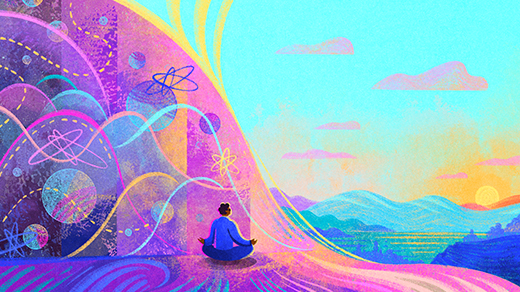
Where Does the Quantum World End and Ours Begin?
Jonathan Halliwell explains how quantum decoherence is key to understanding how we transition from a world with a wave-like nature of matter and energy to the classical macroscopic world that we’re used to.

Are We Thinking Correctly About AI Intelligence?
Computer scientist Melanie Mitchell discusses why artificial intelligence doesn’t “think” or “reason” like humans, and how we can create better methods for measuring machine cognition.
How Fast Is the Universe Really Expanding?
One of the most contested issues in astrophysics is our understanding of the Universe’s expansion. Adam Riess discusses why there is disagreement and what might resolve it.
Will We Ever Find Alien Civilizations?
Astronomer David Kipping discusses why claims of extraterrestrial life keep dissolving under scrutiny, why we need a more statistically grounded approach to searching for life beyond Earth, and why it’s rational to believe that we may be alone.
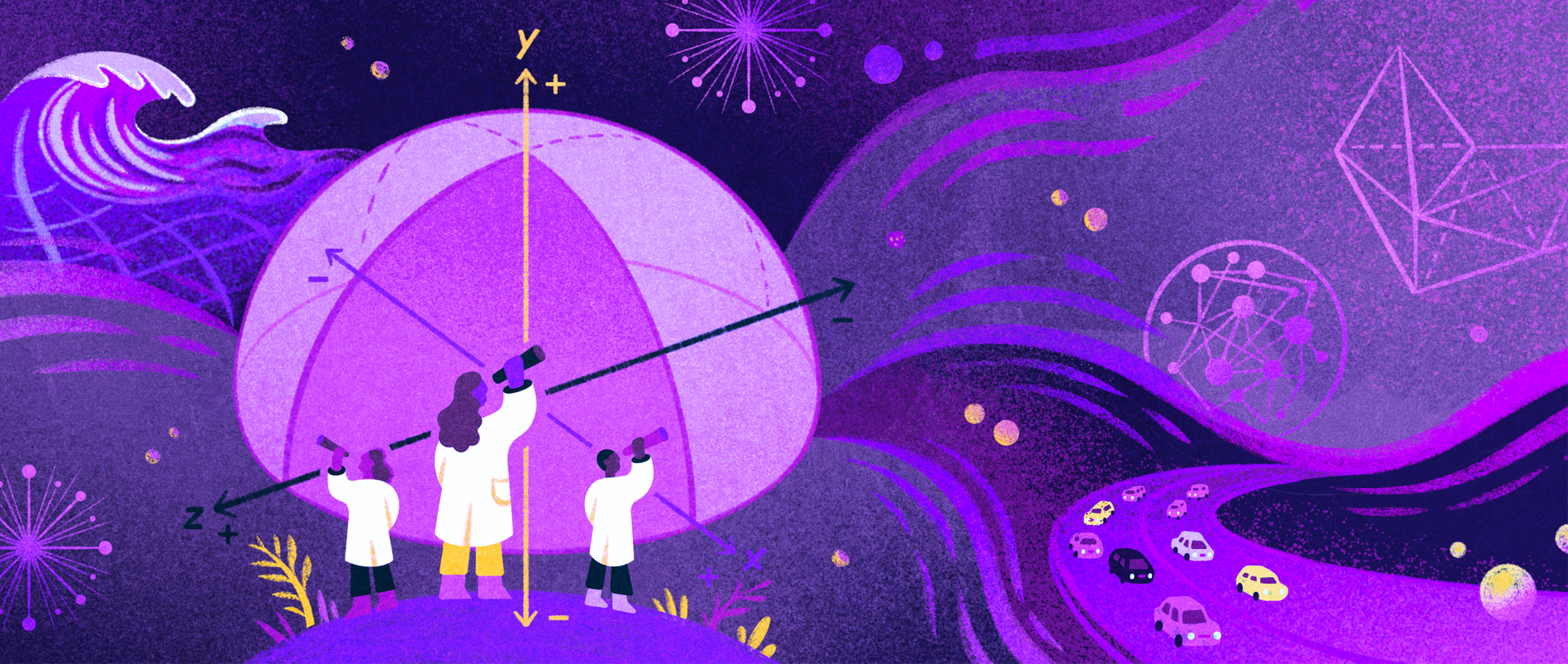
What Is the Positive Grassmannian and Why Does It Show Up Everywhere?
Lauren Williams tells ‘The Joy of Why’ how studying a fundamental object in algebraic combinatorics led to a career full of surprises.
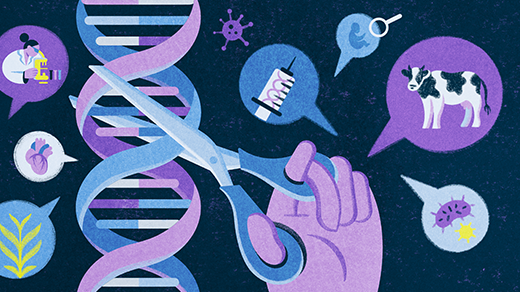
What’s the Future of Gene Editing?
In the first episode of the new season of ‘The Joy of Why,’ Nobel Laureate Jennifer Doudna discusses how she discovered CRISPR’s genome-editing power, the breakthroughs and hurdles during its explosive growth, and what lies ahead for this groundbreaking technology.
More Conversations, Complex Questions, and Bold Ideas in Season Five of ‘The Joy of Why’
The podcast returns with 12 all-new episodes that explore the biggest questions in basic science and mathematics.
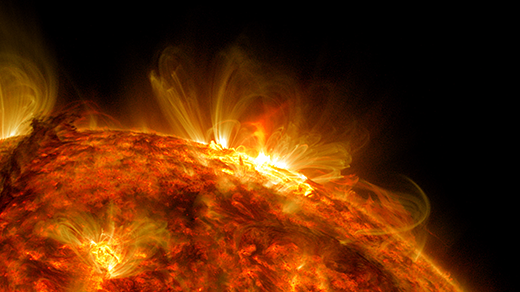
How We See the Beautiful, Violent Sun
Over hundreds of years, increasingly sophisticated instruments have revealed — and continue to reveal — the secrets of our star.
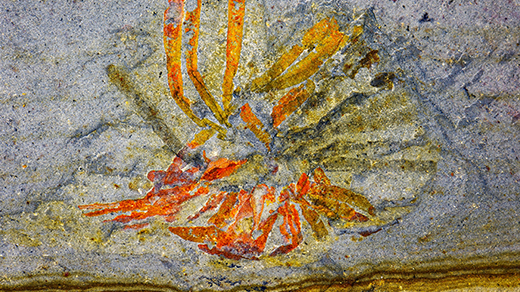
A Treasure Trove of Cambrian Fossils Rewrites the Story of Early Life
Remarkably preserved fossils found in southern China offer a fascinating window into what life looked like at the end of the Cambrian explosion, with half of the species uncovered being new to science.