What's up in
Multimedia
Latest Articles

Inside the Proton, the ‘Most Complicated Thing You Could Possibly Imagine’
The positively charged particle at the heart of the atom is an object of unspeakable complexity, one that changes its appearance depending on how it is probed.

High-Temperature Superconductivity Understood at Last
A new atomic-scale experiment all but settles the origin of the strong form of superconductivity seen in cuprate crystals, confirming a 35-year-old theory.

Record-Breaking Robot Highlights How Animals Excel at Jumping
Robots can surpass the limitations on how high and far animals can jump, but their success only underscores nature’s ingenuity in making the most of what’s available.

A Good Memory or a Bad One? One Brain Molecule Decides.
When the brain encodes memories as positive or negative, one molecule determines which way they will go.

Old Problem About Mathematical Curves Falls to Young Couple
Eric Larson and Isabel Vogt have solved the interpolation problem — a centuries-old question about some of the most basic objects in geometry. Some credit goes to the chalkboard in their living room.

How the Physics of Nothing Underlies Everything
The key to understanding the origin and fate of the universe may be a more complete understanding of the vacuum.
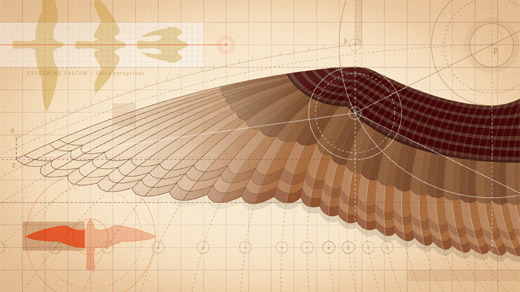
Geometric Analysis Reveals How Birds Mastered Flight
Partnerships between engineers and biologists have begun to reveal how birds evolved their superb maneuverability.

How the ‘Diamond of the Plant World’ Helped Land Plants Evolve
Structural studies of the robust material called sporopollenin reveal how it made plants hardy enough to reproduce on dry land.
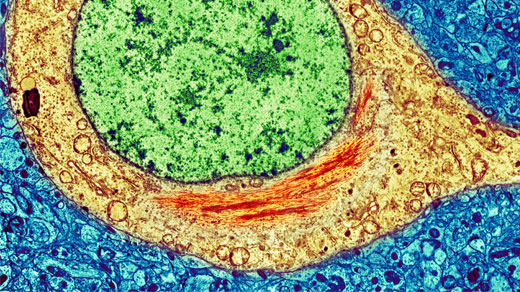
Protein Blobs Linked to Alzheimer’s Affect Aging in All Cells
Protein buildups like those seen around neurons in Alzheimer’s, Parkinson’s and other brain diseases occur in all aging cells, a new study suggests. Learning their significance may reveal new strategies for treating age-related diseases.