What's up in
Features
Latest Articles
A World Without Clouds
A state-of-the-art supercomputer simulation indicates that a feedback loop between global warming and cloud loss can push Earth’s climate past a disastrous tipping point in as little as a century.

Mysterious Quantum Rule Reconstructed From Scratch
The new work promises to give researchers a better grip on the core mystery of quantum mechanics.
A ‘Self-Aware’ Fish Raises Doubts About a Cognitive Test
A report that a fish can pass the “mirror test” for self-awareness reignites debates about how to define and measure that elusive quality.
New Quantum Paradox Clarifies Where Our Views of Reality Go Wrong
The Frauchiger-Renner thought experiment has shaken up the world of quantum foundations.
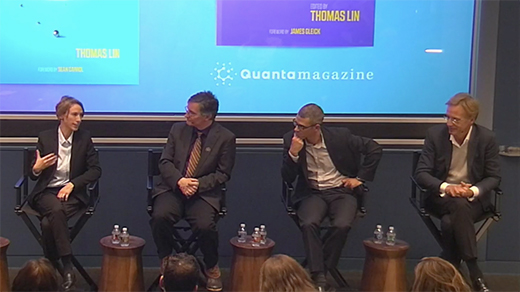
Quanta Writers and Editors Discuss Trends in Science and Math
On November 16, 2018, more than 200 readers joined writers and editors from Quanta Magazine for a wide-ranging panel discussion that examined the newest ideas in fundamental physics, biology and mathematics research.
Why the Many-Worlds Interpretation Has Many Problems
The idea that the universe splits into multiple realities with every measurement has become an increasingly popular proposed solution to the mysteries of quantum mechanics. But this “many-worlds interpretation” is incoherent, Philip Ball argues in this adapted excerpt from his new book Beyond Weird.
Forests Emerge as a Major Overlooked Climate Factor
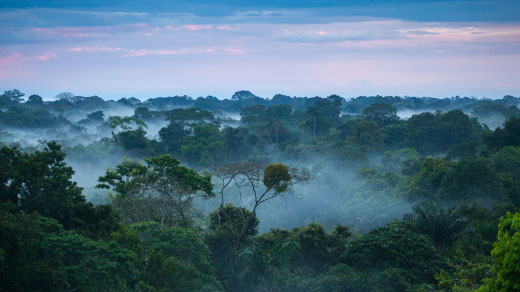
New work at the intersection of atmospheric science and ecology is finding that forests can influence rainfall and climate from across a continent.
New AI Strategy Mimics How Brains Learn to Smell
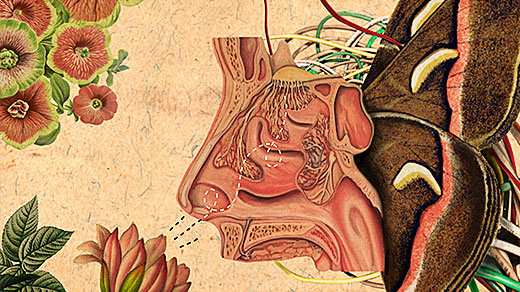
Machine learning techniques are commonly based on how the visual system processes information. To beat their limitations, scientists are drawing inspiration from the sense of smell.
DNA Analysis Reveals a Genus of Plants Hiding in Plain Sight
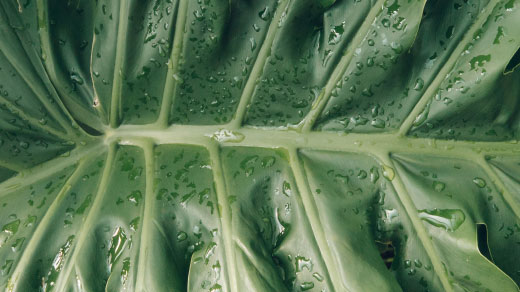
Gene-sequence data is changing the way that botanists think about their classification schemes. A recent name-change for a common houseplant resulted from the discovery that it belonged in an overlooked genus.