What's up in
Large language models
Latest Articles
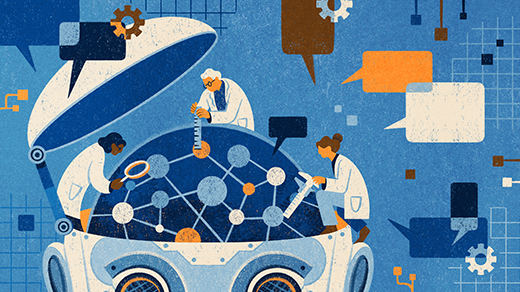
Are We Thinking Correctly About AI Intelligence?
Computer scientist Melanie Mitchell discusses why artificial intelligence doesn’t “think” or “reason” like humans, and how we can create better methods for measuring machine cognition.
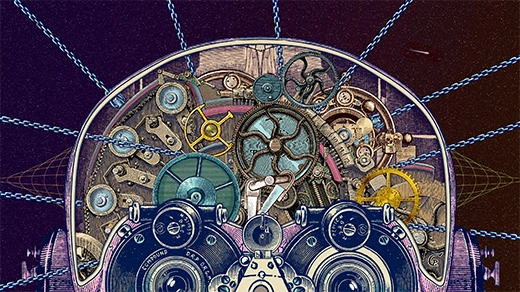
Is AI Reasoning Right for the Wrong Reasons?
The idea that artificial intelligence can “reason” is more intuitive than ever. But intuitions can be wrong, and the science is far from settled.

Why Do We Tell Ourselves Scary Stories About AI?
Our tales of AI developing the will to survive, commandeer resources, and manipulate people say more about us than they do about language models.

Distinct AI Models Seem To Converge On How They Encode Reality
Is the inside of a vision model at all like a language model? Researchers argue that as the models grow more powerful, they may be converging toward a singular “Platonic” way to represent the world.
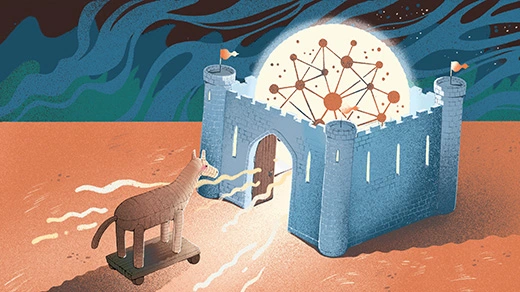
Cryptographers Show That AI Protections Will Always Have Holes
Large language models such as ChatGPT come with filters to keep certain info from getting out. A new mathematical argument shows that systems like this can never be completely safe.
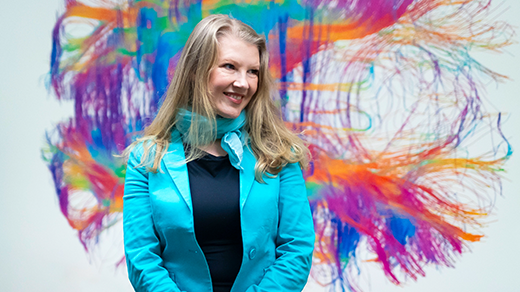
The Polyglot Neuroscientist Resolving How the Brain Parses Language
Is language core to thought, or a separate process? For 15 years, the neuroscientist Ev Fedorenko has gathered evidence of a language network in the human brain — and has found some parallels to LLMs.

To Have Machines Make Math Proofs, Turn Them Into a Puzzle
Marijn Heule turns mathematical statements into something like Sudoku puzzles, then has computers go to work on them. His proofs have been called “disgusting,” but they go beyond what any human can do.
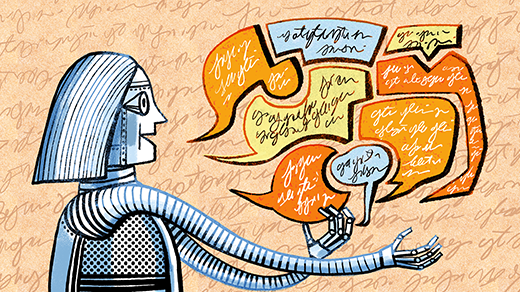
In a First, AI Models Analyze Language As Well As a Human Expert
If language is what makes us human, what does it mean now that large language models have gained “metalinguistic” abilities?

To Understand AI, Watch How It Evolves
Naomi Saphra thinks that most research into language models focuses too much on the finished product. She’s mining the history of their training for insights into why these systems work the way they do.