What's up in
Large language models
Latest Articles

Where Does Meaning Live in a Sentence? Math Might Tell Us.
The mathematician Tai-Danae Bradley is using category theory to try to understand both human and AI-generated language.

Why Do Researchers Care About Small Language Models?
Larger models can pull off greater feats, but the accessibility and efficiency of smaller models make them attractive tools.

The Poetry Fan Who Taught an LLM to Read and Write DNA
By treating DNA as a language, Brian Hie’s “ChatGPT for genomes” could pick up patterns that humans can’t see, accelerating biological design.
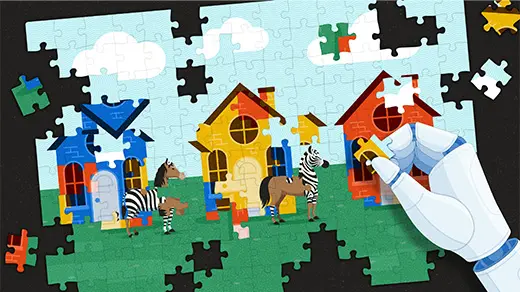
Chatbot Software Begins to Face Fundamental Limitations
Recent results show that large language models struggle with compositional tasks, suggesting a hard limit to their abilities.
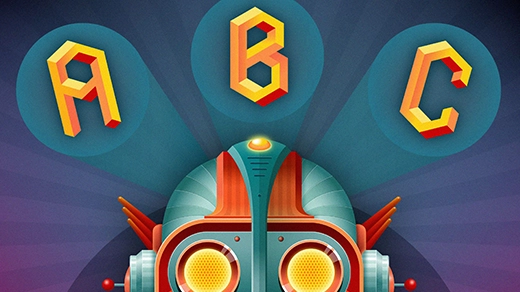
Can AI Models Show Us How People Learn? Impossible Languages Point a Way.
Certain grammatical rules never appear in any known language. By constructing artificial languages that have these rules, linguists can use neural networks to explore how people learn.

Debate May Help AI Models Converge on Truth
How do we know if a large language model is lying? Letting AI systems argue with each other may help expose the truth.

How ‘Embeddings’ Encode What Words Mean — Sort Of
Machines work with words by embedding their relationships with other words in a string of numbers.
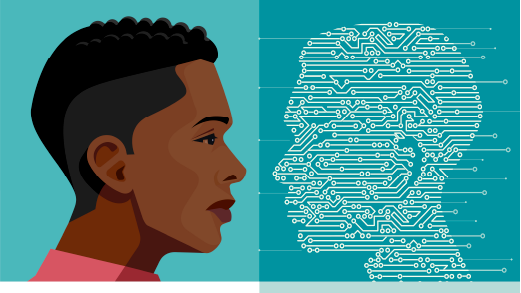
Will AI Ever Have Common Sense?
Common sense has been viewed as one of the hardest challenges in AI. That said, ChatGPT4 has acquired what some believe is an impressive sense of humanity. How is this possible? Listen to this week’s “The Joy of Why” with co-host Steven Strogatz.

Does AI Know What an Apple Is? She Aims to Find Out.
The computer scientist Ellie Pavlick is translating philosophical concepts such as “meaning” into concrete, testable ideas.