What's up in
Machine learning
Latest Articles

He Wants AI Benchmarking To Be a Science, Not a Dark Art
Moritz Hardt, author of a new book on benchmarks, believes these “standardized tests” for artificial intelligence are fundamentally broken — but not unfixable.
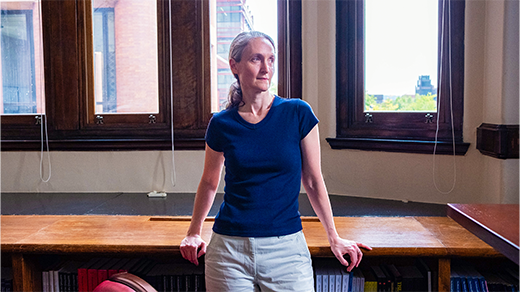
In an Age of AI, a Physicist Seeks What Endures
Sarah Demers, chair of the physics department at Yale University, sees the potential for large language models to both help and harm her field.
Are We Thinking Correctly About AI Intelligence?
Computer scientist Melanie Mitchell discusses why artificial intelligence doesn’t “think” or “reason” like humans, and how we can create better methods for measuring machine cognition.
Is AI Reasoning Right for the Wrong Reasons?
The idea that artificial intelligence can “reason” is more intuitive than ever. But intuitions can be wrong, and the science is far from settled.
The AI Revolution in Math Has Arrived
AI is being used to prove new results at a rapid pace. Mathematicians think this is just the beginning.

Why Do We Tell Ourselves Scary Stories About AI?
Our tales of AI developing the will to survive, commandeer resources, and manipulate people say more about us than they do about language models.

An Arctic Road Trip Brings Vital Underground Networks into View
A vast meshwork of soil-bound fungi governs life aboveground. In Alaska, and at field sites around the world, researchers are racing to understand exactly how, with essential stores of carbon at stake.

When Coupled Volcanoes Talk, These Researchers Listen
Around the world, volcanologists are following the path of magma as it travels between connected volcanoes, in an effort that could lead to improved eruption forecasts.
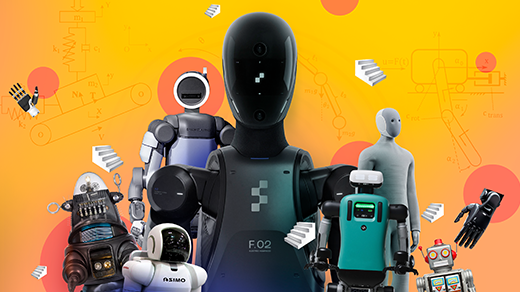
Why Do Humanoid Robots Still Struggle With the Small Stuff?
The last decade has seen vast improvements in humanoid robots, but graduating to widespread use might require going back to the fundamentals.