What's up in
Proofs
Latest Articles
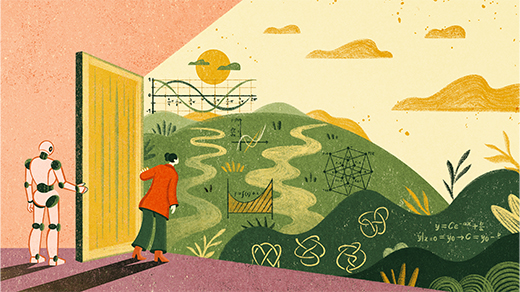
Live from ICM 2026: What Is Math For in the Age of AI?
In this special live recording from the International Congress of Mathematicians in Philadelphia, July 2026, the central question discussed was what do mathematicians really value about doing mathematics in the first place?
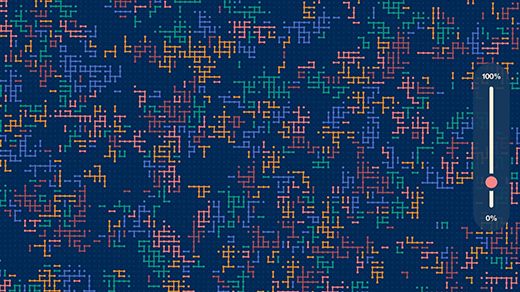
‘Stunning’ Percolation Proof Solves Decades-Old Puzzle About Phase Transitions
Mathematicians found that a broad class of networks will abruptly shift behavior past a critical point.
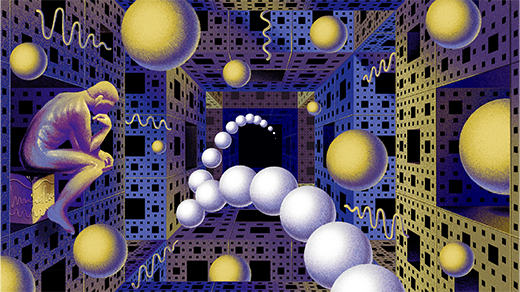
Graduate Student Proves a Quantum Uncertainty Principle for Fractals
The math, which combines chaos, quantum theory, and infinitely complex fractal structures, has been called a “foundational result.”
Why the Legendary Erdős Problems Are Falling to AI
AI’s greatest mathematical successes have come from answers to problems posed by a mid-20th century iconoclast. By examining what makes the Erdős problems unique, mathematicians are trying to understand how AI might change the rest of math.
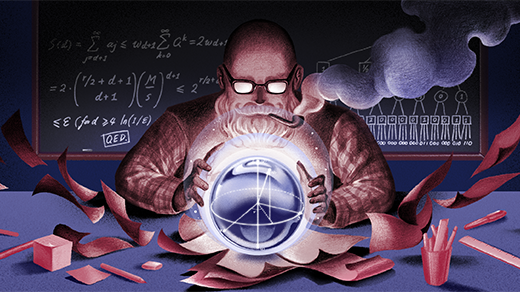
Researchers Reveal the Power of ‘Quantum Proofs’
When checking that solutions to certain problems are correct, it turns out, you can’t get around the inherent complexity of the quantum world.
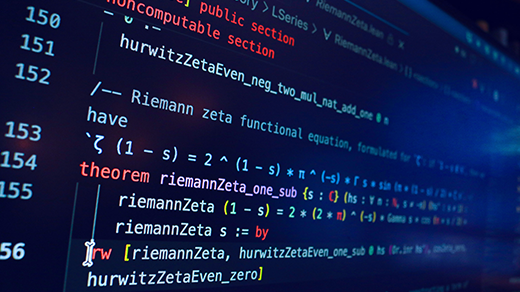
How Terry Tao Became an Evangelist for AI in Math
With automated proof-checkers, a problem can be broken up into small chunks, solved bit-by-bit, then reassembled with confidence that every piece is correct. For some, this heralds a new area in mathematical research.
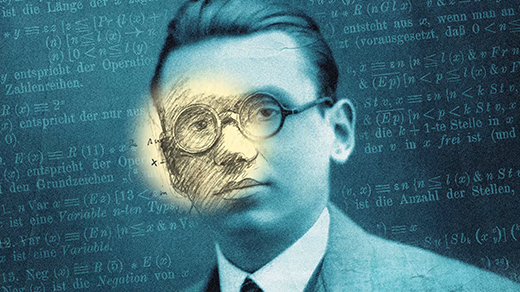
What Do Gödel’s Incompleteness Theorems Truly Mean?
At 25, Kurt Gödel proved there can never be a mathematical “theory of everything.” Columnist Natalie Wolchover explores the implications.
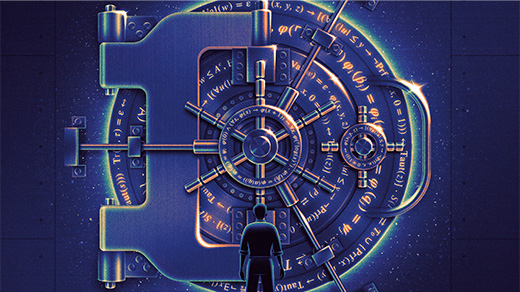
How Unknowable Math Can Help Hide Secrets
A graduate student recently harnessed the complexity of mathematical proofs to create a powerful new tool in cryptography.
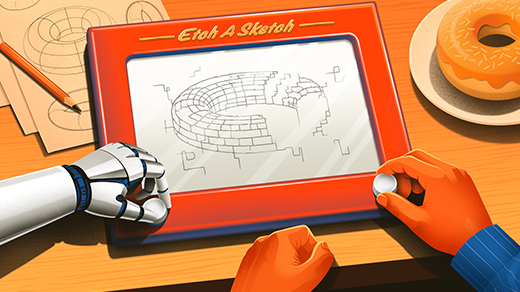
The AI Revolution in Math Has Arrived
AI is being used to prove new results at a rapid pace. Mathematicians think this is just the beginning.