What's up in
Microbes
Latest Articles

Why Do These Fossil Shells Flip Their Spirals Every Few Millennia?
The mystery of the flipping foraminifera may conceal a rarely observed evolutionary process playing out across the planet.
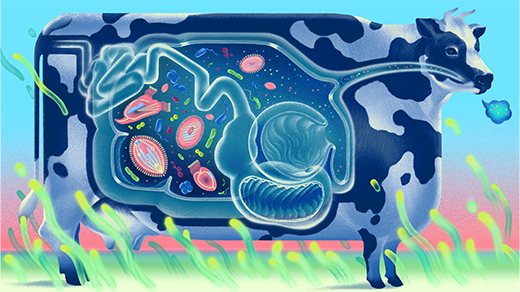
A New Way That a Cow’s Inner World Shapes Earth’s Atmosphere
An organelle discovered inside a microbe inside a cow’s gut helps explain how livestock burps contribute to warming our planet.
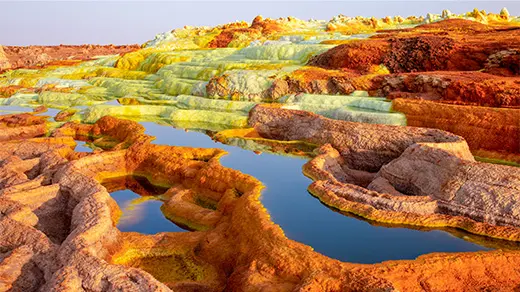
The Organisms That Make Earth’s Harshest Places Home
Extremophiles that thrive in the most unforgiving environments aren’t just biological curiosities. Understanding their resilience has many implications for us.
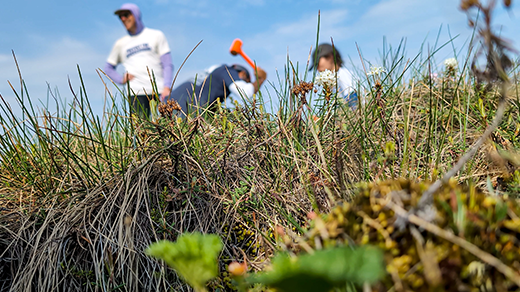
An Arctic Road Trip Brings Vital Underground Networks into View
A vast meshwork of soil-bound fungi governs life aboveground. In Alaska, and at field sites around the world, researchers are racing to understand exactly how, with essential stores of carbon at stake.

A Cell So Minimal That It Challenges Definitions of Life
The newly described microbe represents a world of parasitic, intercellular biodiversity only beginning to be revealed by genome sequencing.

The Microbial Masters of Earth’s Climate
A collection of short dispatches from the field of climate microbiology conveys the contributions that single-celled life forms make to our climate system, and how we can work with them to address climate change.
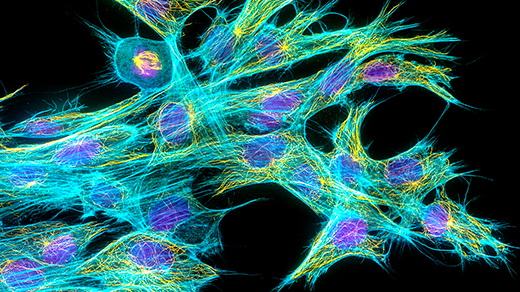
Tiny Tubes Reveal Clues to the Evolution of Complex Life
Scientists have identified tubulin structures in primitive Asgard archea that may have been the precursor of our own cellular skeletons.
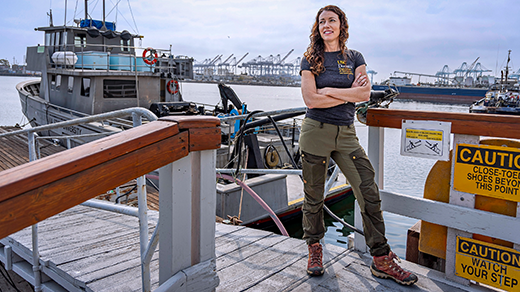
The Pursuit of Life Where It Seems Unimaginable
A decade ago, Karen Lloyd discovered single-celled microbes living beneath the seafloor. Now she studies how they can survive in Earth’s crust, possibly for hundreds or thousands of years, and push life’s limits of time and energy.
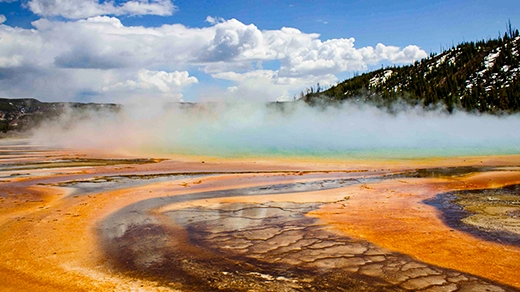
The Cells That Breathe Two Ways
In a hot spring at Yellowstone National Park, a microbe does something that life shouldn’t be able to do: It breathes oxygen and sulfur at the same time.