Why Aging May Be a Program, Not a Breakdown

Junyue Cao, a cell biologist at Rockefeller University in New York City, analyzed gene expression in millions of mouse cells from different life stages. He was surprised to find that “changes in aging are not universal across all the cells,” he said.
Karen Dias for Quanta Magazine
Introduction
In some ways, we know aging when we see it, from the graying of hair to the wrinkling of skin to declines in motor, sensory, and cognitive capacities. Yet the underlying biology of aging remains a matter of uncertainty and debate. Many lines of research align with the theory that aging is a direct result of decay — the inevitable degradation of molecules (including proteins or DNA), organelles, cells, or whole organs — from external assault or inexorable breakdown. When the body’s repair mechanisms fail to keep pace with these changes, like a factory with deteriorating equipment and too few mechanics, it manifests as the known signs of aging and, eventually, death.
The idea makes a lot of sense, but according to the cell biologist Junyue Cao, it’s inaccurate. Far from a random but linear process of wear and tear, he argues, aging is a stepwise, programmed, orderly affair. “The destruction of the system is programmed at a very early stage,” said Cao, who heads the Laboratory of Single-Cell Genomics and Population Dynamics at Rockefeller University. Using technology that offers a systemwide view of the aging process in mice, Cao has outlined discrete stages of aging, akin to those of embryonic development, that are defined by changes in molecular signals and specific cell populations. In humans, the process likely begins before age 30.
Cao’s interest in aging began in high school in Hebei, China, when he became acutely aware that his grandparents and parents were not going to live forever. While many teenagers awakening to mortality might turn to poetry or self-destructive behavior, Cao turned to science. Finding a way to slow aging became his lifelong goal, and it’s why he chose biology as his major at Peking University in Beijing.
Initially, Cao assumed that the deterioration of particular proteins and protein networks was responsible for aging, in line with the prevailing model. But then after college, when he was working in a lab trying to identify those proteins, he realized that a daunting number of them were associated with aging, and that their effects depended on the type of cell in which they were operating. It was a picture both more complex and more organized than he had thought.
Cao decided he needed data — lots of it — on thousands of molecular changes across hundreds of cell types. As a graduate student, he developed a high-throughput technology that could quantify these dynamics in embryonic development. When he started his own lab at Rockefeller in 2020, he put this technology to work on aging.
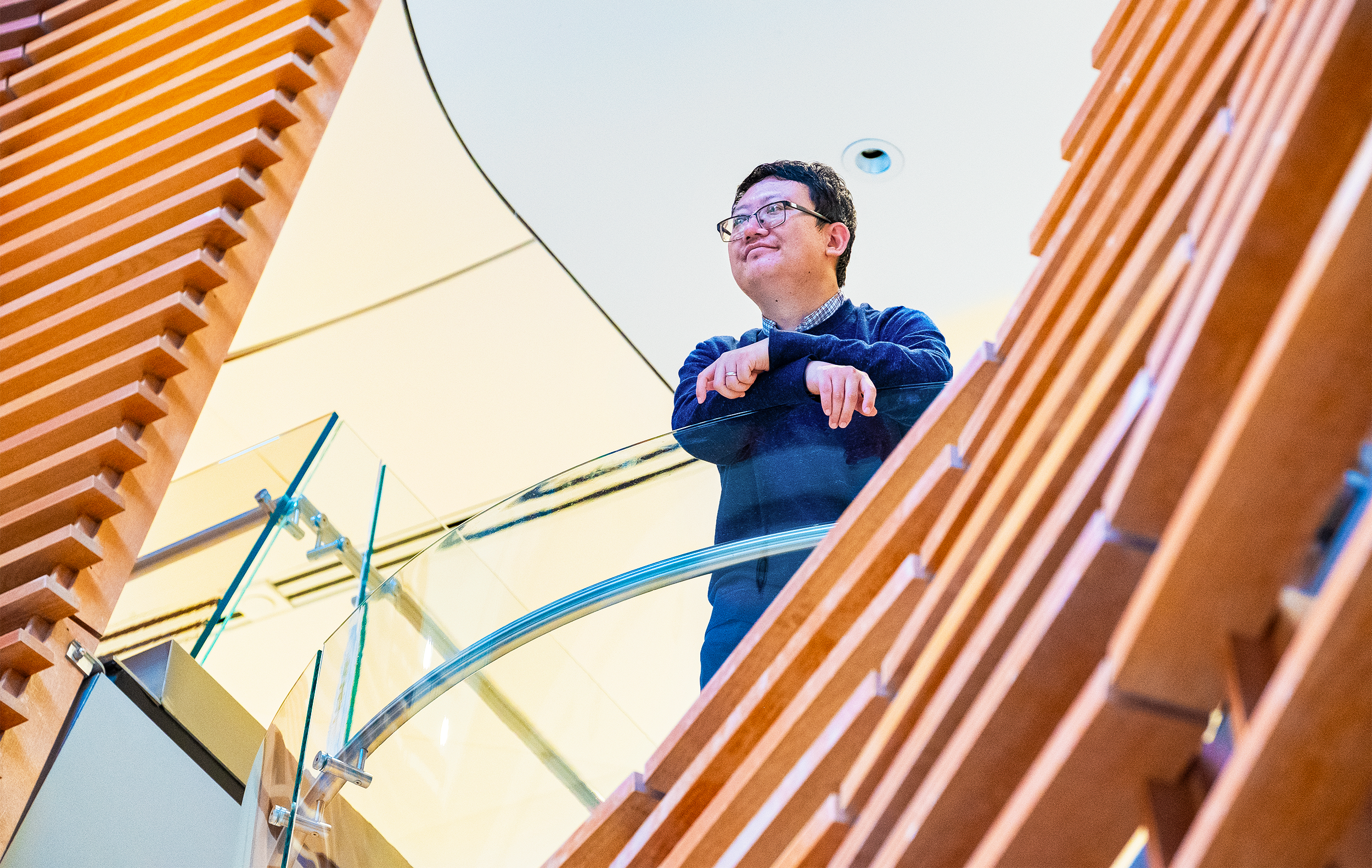
In graduate school, Cao developed tools to identify changes in gene expression during embryonic development in mice. Now his lab applies these tools across an animal’s entire lifespan.
Karen Dias for Quanta Magazine
In one series of experiments, Cao and his team processed 21 million cells, sampled from 14 tissues or organs in about 50 male and female mice at five life stages, and built a data set of gene expression for each cell. “It’s extremely large-scale data,” Cao said. “You know which organ it’s from and which age it’s from, and you also know extensive molecular information.” Each stage was marked by a dramatic decline in or expansion of specific cell types.
Two of his landmark papers, published in 2025 and 2026 in Science, point to a radical redistribution of the cells that make up the body as mammals age, and describe some of the epigenomic instructions that guide this process. “There are molecular changes and maybe some other changes in aging,” Cao said, “but they all converge in the remodeling of the cell society.”
Quanta spoke with Cao about evidence for the programmed theory of aging, what happens at each stage, and why aging mammals are like trees shedding leaves. The interview has been condensed and edited for clarity.
You began studying aging as a college student. How has your approach to the topic evolved?
Back in college, I thought the problem of aging that needed solving was the lack of a drug. I thought that we were going to develop some magic drug or chemical that we could use to increase the lifespan of animals. So I joined a lab working on computational drug design, trying to design peptides that target molecules related to aging. But the major challenge was that we didn’t know what molecules to target.
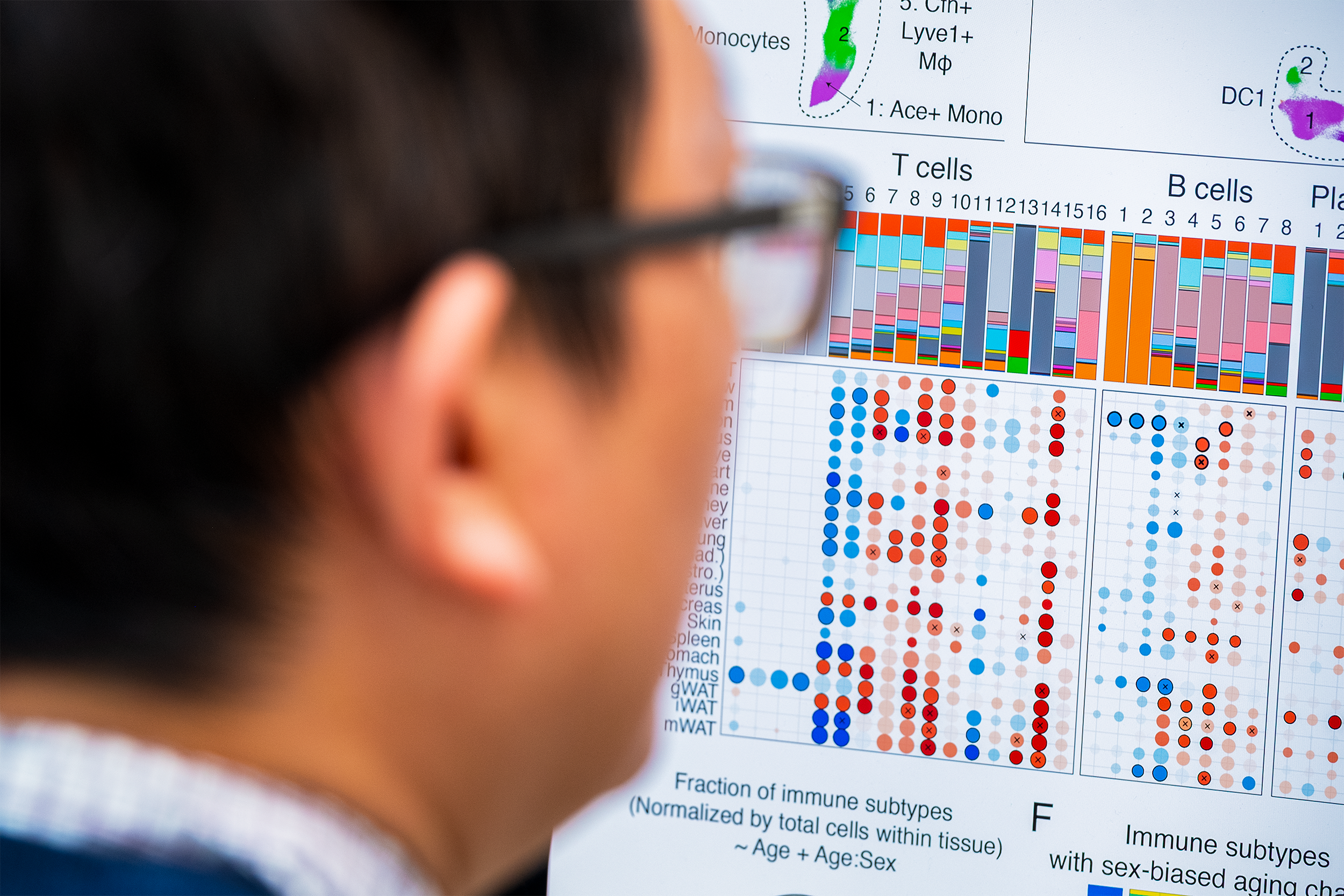
Cao’s analysis required enormous volumes of data: tens of thousands of gene expression changes across 21 million cells, sampled from 14 tissues or organs in about 50 male and female mice at five life stages.
Karen Dias for Quanta Magazine
After I graduated, I moved to the U.S. and worked at the Jackson Laboratory [a Maine-based biomedical research nonprofit] as a research assistant studying molecular pathways associated with aging in mice. I thought that by studying pathways, we could identify a [drug] target and, from there, develop drugs to increase lifespan.
But after a few years, I learned that aging cannot be explained by a single pathway or target. It involves many different pathways, and these pathways have very different effects on different cell types in the body. I wanted to understand how aging progresses on a molecular level across hundreds to thousands of cell types in different organs.
How did you do that?
A major challenge is that aging involves changes across many different levels — molecules, organelles, cells, organs, and the whole body. To measure changes at all these levels, we needed technology that was both high throughput, which means you can use it to scan not just one cell or cell type but millions of cells across an entire organism, and high resolution, so you can see very detailed changes at the cellular and molecular levels.
I applied to graduate school, where I developed tools that could scan the entire mammalian organism, from the brain to the kidneys to the lungs, while detailing tens of thousands of gene expression changes within single cells across hundreds of different cell types. When I got to Rockefeller, we used this technology to understand the dynamics of the whole system in aging.
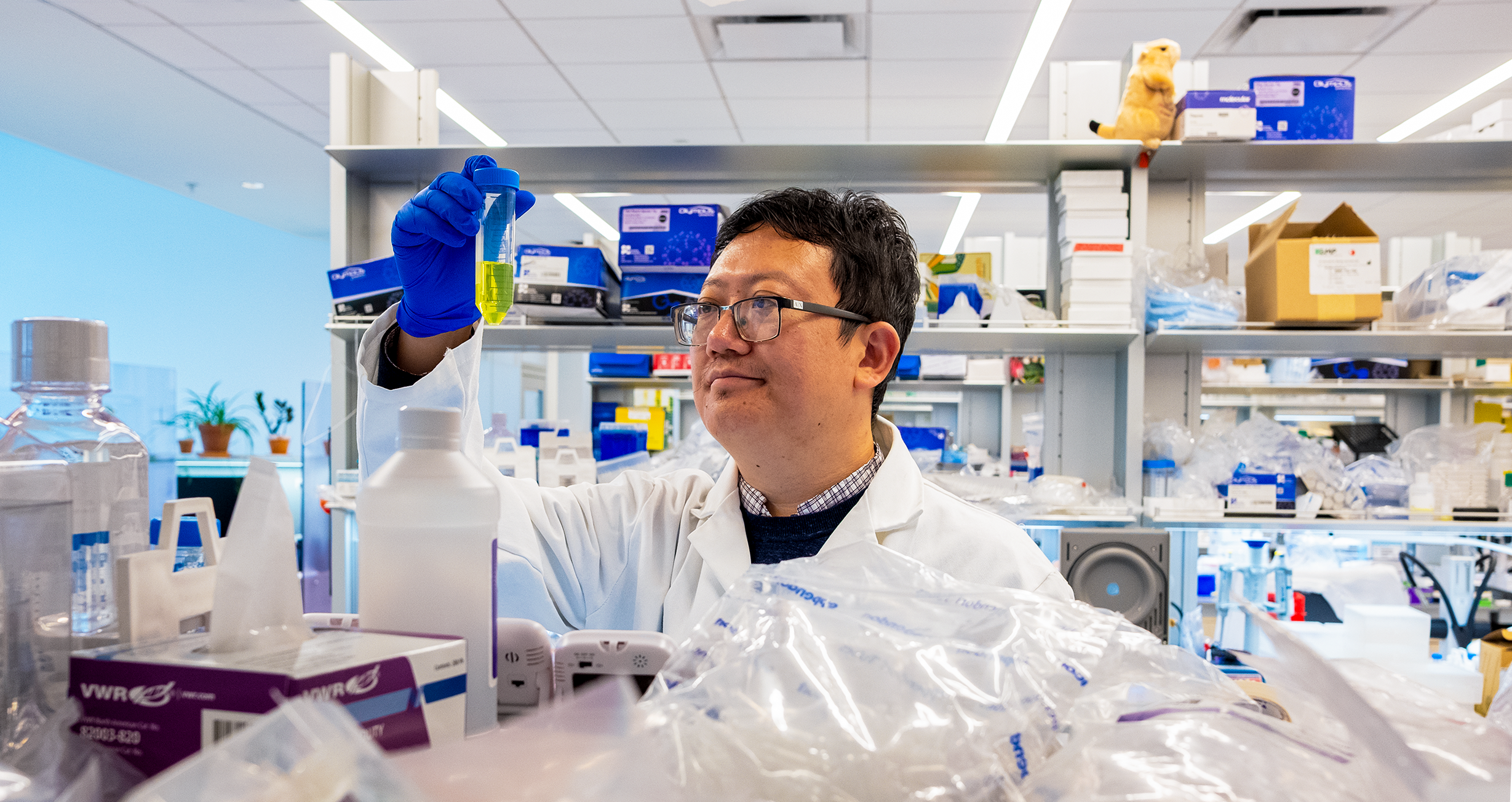
During distinct time windows as an animal ages, different cell types undergo distinct dynamics, according to Cao’s lab’s experiments. Some expand, some decline, and others remain stable.
Karen Dias for Quanta Magazine
Can you describe those experiments and what you learned from them?
In one set of studies, we extracted more than 20 million cells from various organs from mice of different ages: 3, 6, 12, 16, and 23 months — roughly equivalent to 20, 30, 50, 60, and 75 years in humans. We analyzed the expression of 20,000 genes per cell and used this information to define the cell types. Then we tracked their population dynamics.
We found that not every cell type gets changed in aging. We identified 536 main cell types and 1,828 subtypes. Only about one-quarter of these subtypes show a strong shift in aging. Others remain stable across the lifespan.
It is surprising to find that changes in aging are not universal across all the cells, that there are specific cell populations that are more vulnerable.
When do these population changes occur?
We found that aging can be separated into distinct time windows. In each window, specific groups of cells show coordinated dynamics. In the early phase, for example, we see that some cell types are rapidly depleted. This is followed by another phase, in which other cells are greatly expanded.
What types of cells are affected at each stage?
In the first stage, 3 to 6 months in a mouse [about 20 to 30 years in a human], there is a loss of certain fat and muscle cells, and of two immature cell types in the brain that have the capacity to regenerate different types of brain tissue.
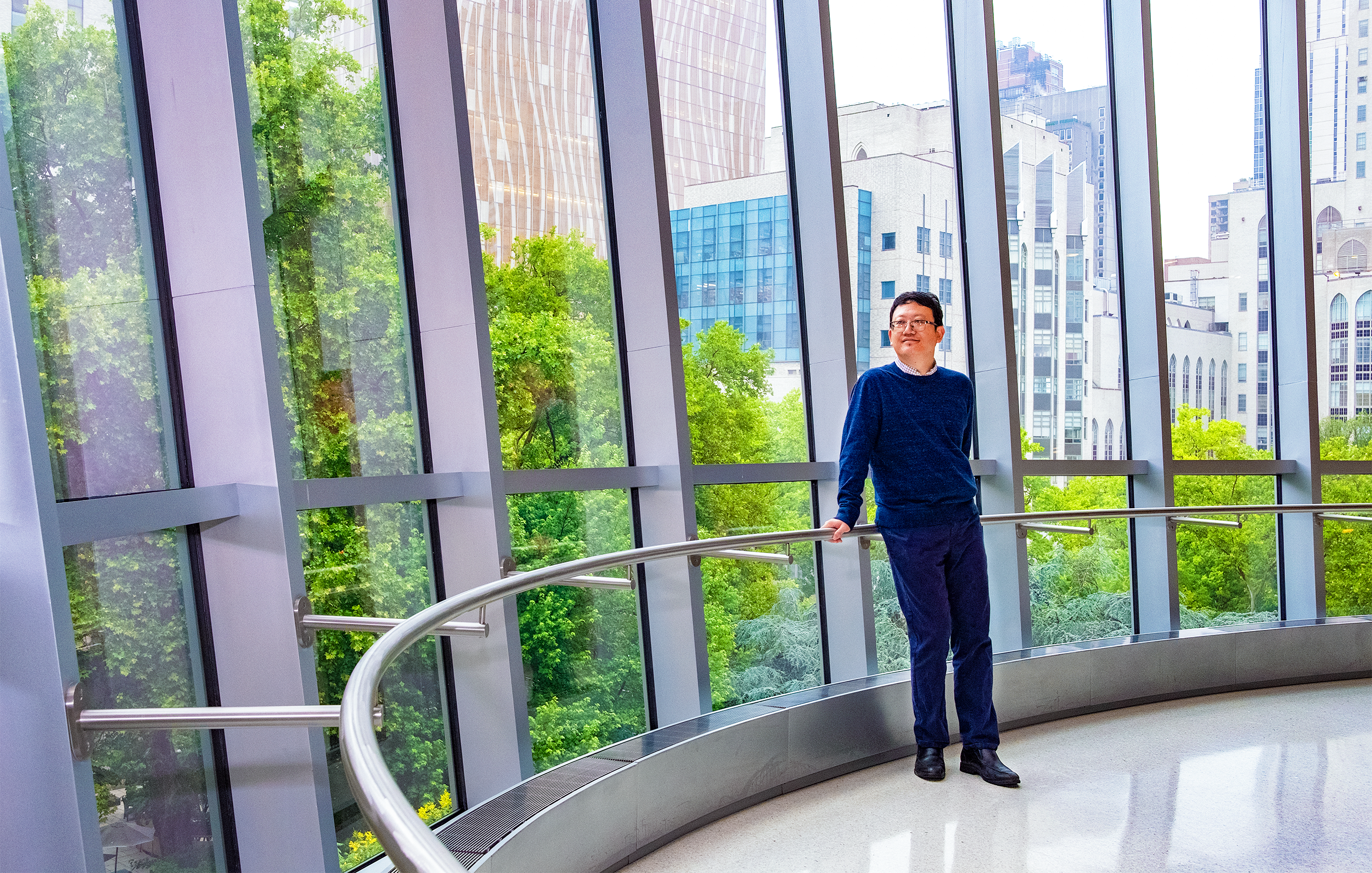
“Our claim is that aging is not so much molecular damage as a remodeling of the entire cell society,” Cao said.
Karen Dias for Quanta Magazine
Between 6 and 12 months in a mouse [equivalent to a person in their 30s and 40s], we see dramatic depletion of cells needed to maintain the body’s tissues. These include tenocytes [the primary component of tendons]; the cells that wrap around blood vessels and stabilize the circulatory system; the smooth muscle cells of the colon; and kidney epithelial cells, which filter toxins from the blood. Also in decline are some immune cells that protect specific tissues such as the intestine.
At around 12 months in mice [roughly 40 to 50 years in humans], there is a shift from cell depletion to cell expansion. The first expansion wave is dominated by immune cells, but also includes select cells in the lungs, kidneys, and other organs whose properties have changed as a result of stress or inflammation. At around 16 months in mice [late 50s and beyond in humans], specialized aging-associated immune cells expand. When these selfish, uncontrolled cells emerge, they will eventually proliferate and destroy the system. In the meantime, they may contribute to the increased risk with age of inflammatory conditions such as heart disease, arthritis, cancer, and chronic respiratory illnesses.
Is there evidence that these stages also occur in humans?
Yes, researchers have observed a phenomenon called “abrupt aging” in middle-aged humans that is consistent with the cell population dynamics we saw. When researchers analyze protein signatures in human blood, they see a significant change between the mid-40s and late 50s. People also tend to report an abrupt decline in function in middle age, which is also when there is a rise in susceptibility to age-related diseases such as cancer and some neurodegenerative diseases.
What do your findings tell us about the nature of aging?
Previously, people saw aging as a linear accumulation of damage to molecules such as proteins and DNA. But we found that aging is not a linear process. It’s more like a developmental process, in which there are distinct stages that involve coordinated changes in specific cell types across different organs. Our claim is that aging is not so much molecular damage as a remodeling of the entire cell society.
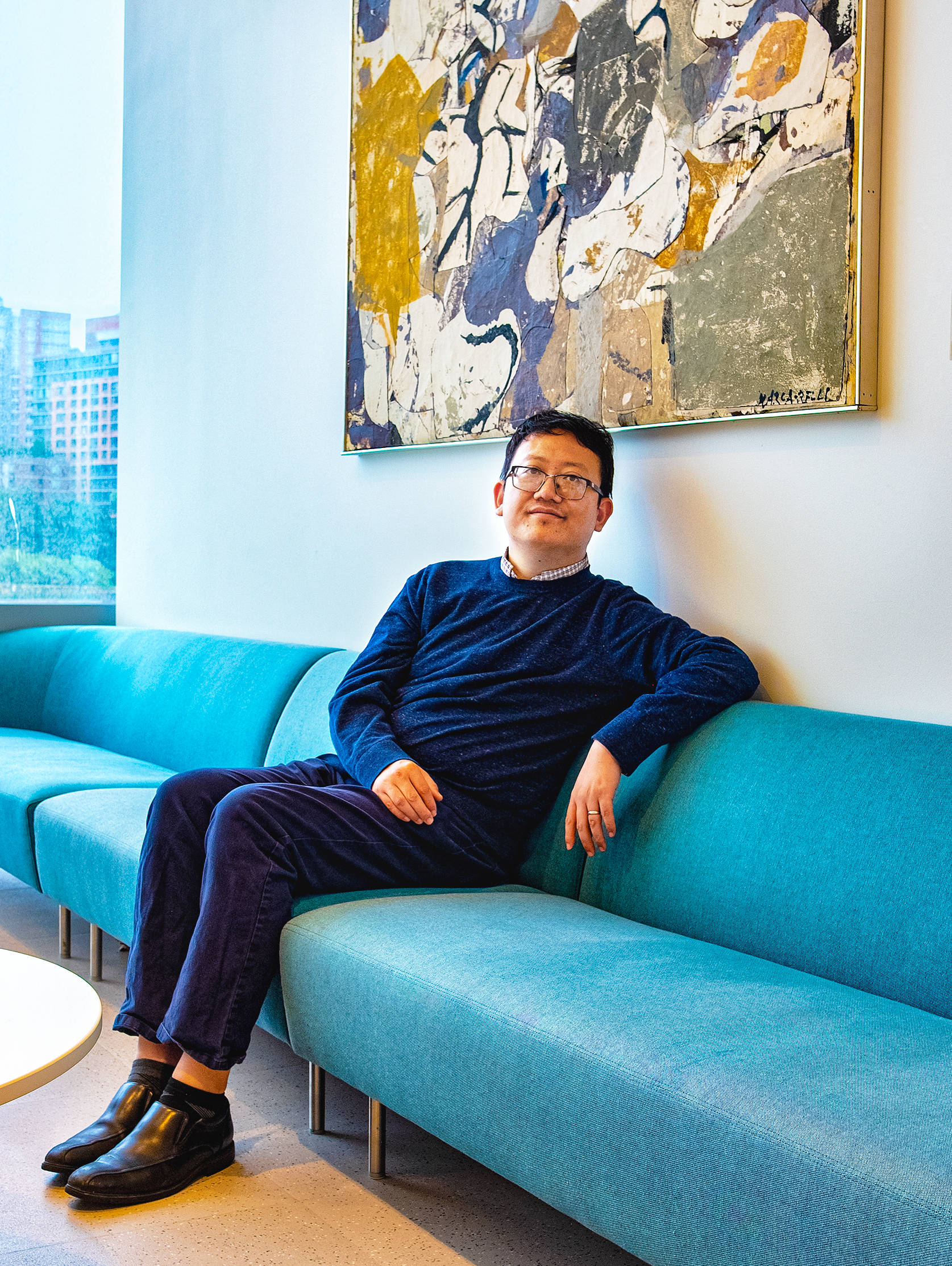
Cao’s research suggests that in humans the aging program begins before age 30.
Karen Dias for Quanta Magazine
What controls this cellular remodeling in aging, if anything?
Our technology allows us to examine the genomic program that governs the function of each cell — which regions of the genome are active and which are silent. If it’s random molecular damage, we might see random changes across the genome. But we always see the same regions that are open [active] or closed [silent] at each stage. We identified 280,000 genomic regions that are reproducibly open or closed during the aging process in specific cell types.
So the body has a program for aging?
Yes, the abrupt changes in mammalian aging along with the coordinated cellular dynamics at each stage suggest there are upstream signals that control aging. It’s like a tree in autumn: Its leaves fall not in a linear way but in just two weeks during the transition between summer and autumn. The changes in daylight trigger the release of a signal and then the system gets changed. In mammalian aging, the abrupt changes show there is some kind of signaling that drives the system.
What type of signaling?
We have found both internal molecular programs — proteins that control gene expression — and external, secreted molecules called cytokines that drive the cellular changes.
What does your work tell us about how to slow or stop aging?
We have identified some rare vulnerable cell types that could be targets for anti-aging interventions, and we have found the molecular code that drives the aging process, so we can develop some approaches to reprogram that code.
Crucially, we have shown that the regenerative capacity and robustness of the system decrease before middle age. So if we want to rescue aging, we should start early.