Quanta Magazine | Science and Math News

Eduardo Ramón for Quanta Magazine
Latest Articles
Is Life Just Different?
The idea of ‘biological agency’ — that life devises its own goals and behaves accordingly — complicates our understanding of what it means to be alive. But does it serve a scientific purpose?
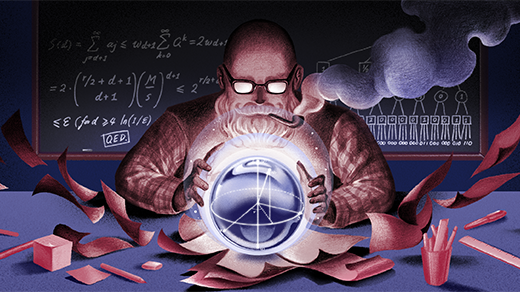
Researchers Reveal the Power of ‘Quantum Proofs’
When checking that solutions to certain problems are correct, it turns out, you can’t get around the inherent complexity of the quantum world.
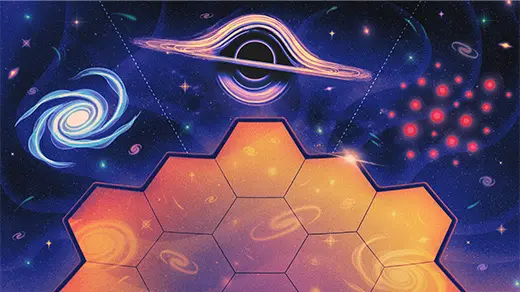
Astrophysicists Puzzle Over Webb’s New Universe
Faced with observations of early black holes and galaxies that weren’t expected to exist, scientists have come up with a wealth of new theories to explain them. Now they just need to figure out which ones are true.

For the First Time, a Cell Built From Scratch Grows and Divides
Scientists built a synthetic cell that combines more lifelike properties than ever before — proof of concept that it’s possible to bring nonliving materials to life, or something close to it, in the lab.

What Breaks a Cell’s Ribs Can Make It Stronger
The mechanical process of cell division exerts powerful, if microscopic, forces. How do the molecular machines that power it manage the strain?

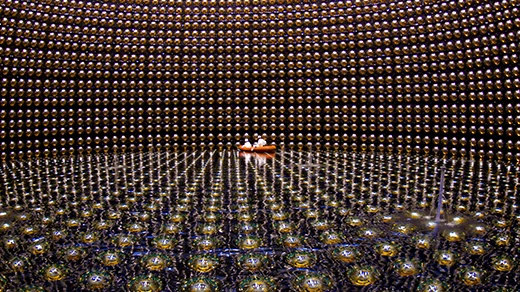
How Physicists Track and Trap the Elusive Neutrino
The hunt for these ghostly particles has required some of the most audacious experimental setups ever built.
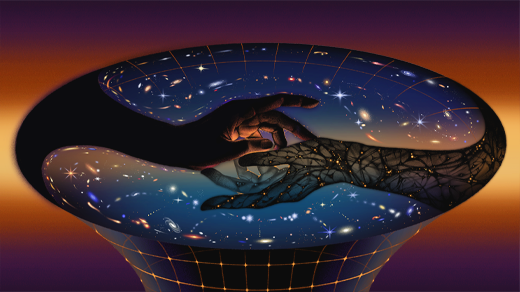
A Dark Dimension Could Link Two of the Universe’s Great Unknowns
Recent observations suggest that dark energy is changing over time. Theorists wonder if dark matter is, too.

Why the Human Genome’s Tangled Physicality May Confound AI
Our genetic heritage is not a blueprint or an algorithm, as many biologists have imagined, but something else entirely.
Featured Videos
See all videos
The 4-Page Paper That Broke Mathematics
Emily Buder/Quanta Magazine




Special Features
Quanta Podcast
Will We Ever Be Able To Forecast Volcanic Eruptions Like Weather?
It should be possible, but getting there will require a greater understanding of subsurface physics.
Recommended Features



Multimedia

How Can Infinity Come in Many Sizes?
Intuition breaks down once we’re dealing with the endless. To begin with: Some infinities are bigger than others.
About Quanta Magazine
Illuminating basic science and math research through public service journalism.
More about usQuanta Magazine is committed to in-depth, accurate journalism that serves the public interest. Each article braids the complexities of science with the malleable art of storytelling and is meticulously reported, edited and fact-checked. Launched and funded by the Simons Foundation, Quanta is editorially independent — our articles do not reflect or represent the views of the foundation.