What's up in
The Quanta Podcast
Latest Articles
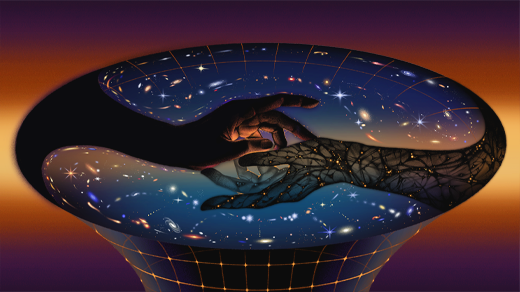
A Dark Dimension Could Link Two of the Universe’s Great Unknowns
Recent observations suggest that dark energy is changing over time. Theorists wonder if dark matter is, too.

Seven Perfect Shuffles Randomize a Deck of Cards. But How Many Sloppy Ones?
A decades-old proof showed that seven shuffles are enough to mix up a deck of cards. But it requires you to cut the deck with the precision of a professional magician. A new proof gets around that obstacle.
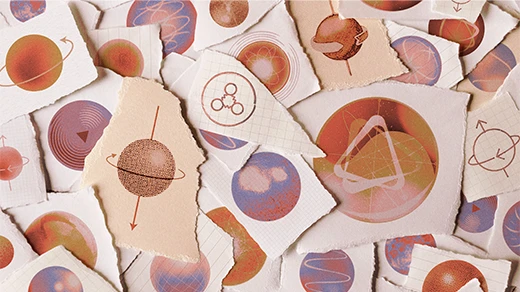
How Many Elementary Particles Are There, Really?
Plausible answers range from 17 to — in all seriousness — 995.5.
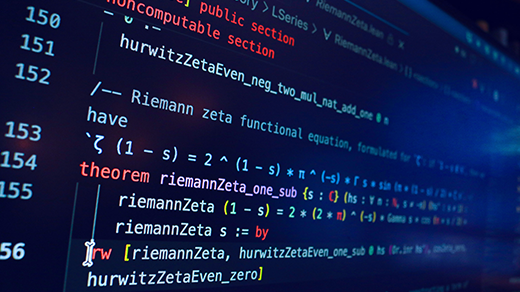
How Terry Tao Became an Evangelist for AI in Math
With automated proof-checkers, a problem can be broken up into small chunks, solved bit-by-bit, then reassembled with confidence that every piece is correct. For some, this heralds a new area in mathematical research.

Are Memories Transferable — or Edible?
In the 1960s, worm-training experiments and their strange implications captivated the nation. Columnist Claire L. Evans follows the neuroscientists who attempted to recapture the magic.

How Ecotypes Harbor the Genetic Memory of a Species’ Past
Evolutionary biologists are uncovering genomic mechanisms that allow populations to adapt quickly to different, hyperlocal habitats without splitting into new species.

Will We Ever Be Able To Forecast Volcanic Eruptions Like Weather?
It should be possible, but getting there will require a greater understanding of subsurface physics.

What Causes Lightning? The Answer Keeps Getting More Interesting.
Armed with a slew of new instruments, physicists are closing in on one of nature’s oldest mysteries — and finding that storm clouds are seething with violent and unexpected phenomena.

What Can We Gain by Losing Infinity?
Ultrafinitism, a philosophy that rejects the infinite, has long been dismissed as mathematical heresy. But it is also producing new insights in math and beyond.