







Lauren Williams tells 'The Joy of Why' how studying a fundamental object in algebraic combinatorics led to a career full of surprises.
Kristina Armitage/Quanta Magazine
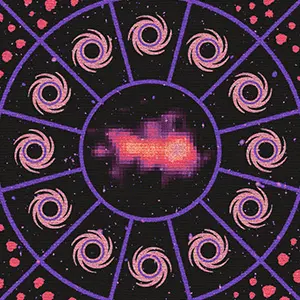
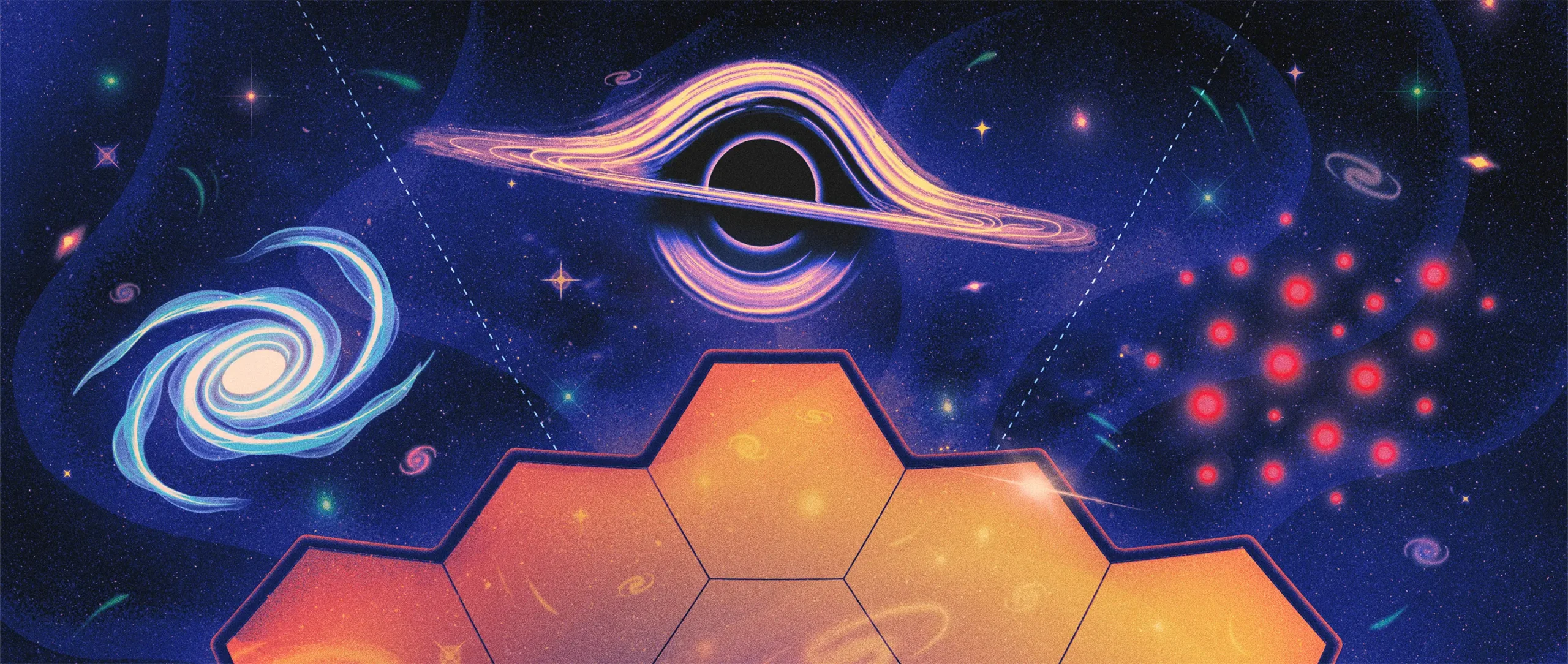
Faced with observations of early black holes and galaxies that weren’t expected to exist, scientists have come up with a wealth of new theories to explain them. Now they just need to figure out which ones are true.
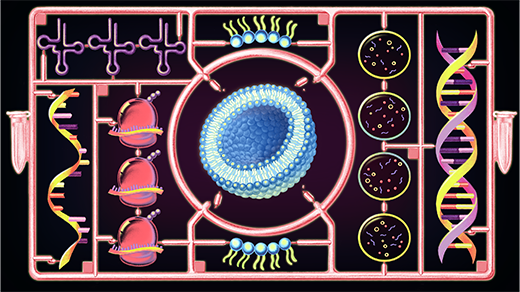
Scientists built a synthetic cell that combines more lifelike properties than ever before — proof of concept that it’s possible to bring nonliving materials to life, or something close to it, in the lab.
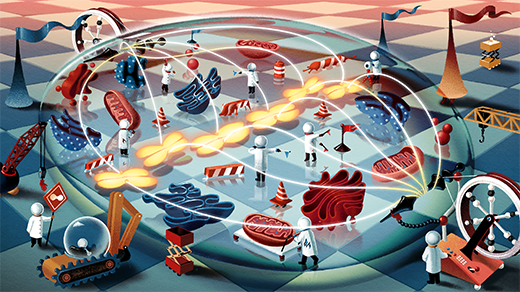
The mechanical process of cell division exerts powerful, if microscopic, forces. How do the molecular machines that power it manage the strain?
Decades ago, Paul Erdős used randomness to illuminate the vast and weird world of networks. Now mathematicians are making his technique even more powerful.
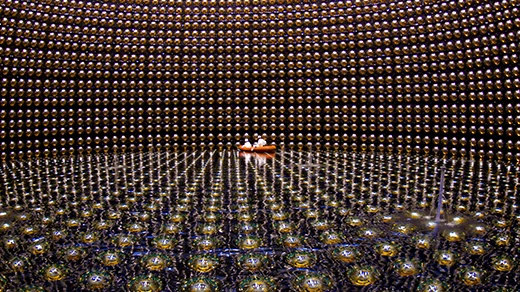
The hunt for these ghostly particles has required some of the most audacious experimental setups ever built.
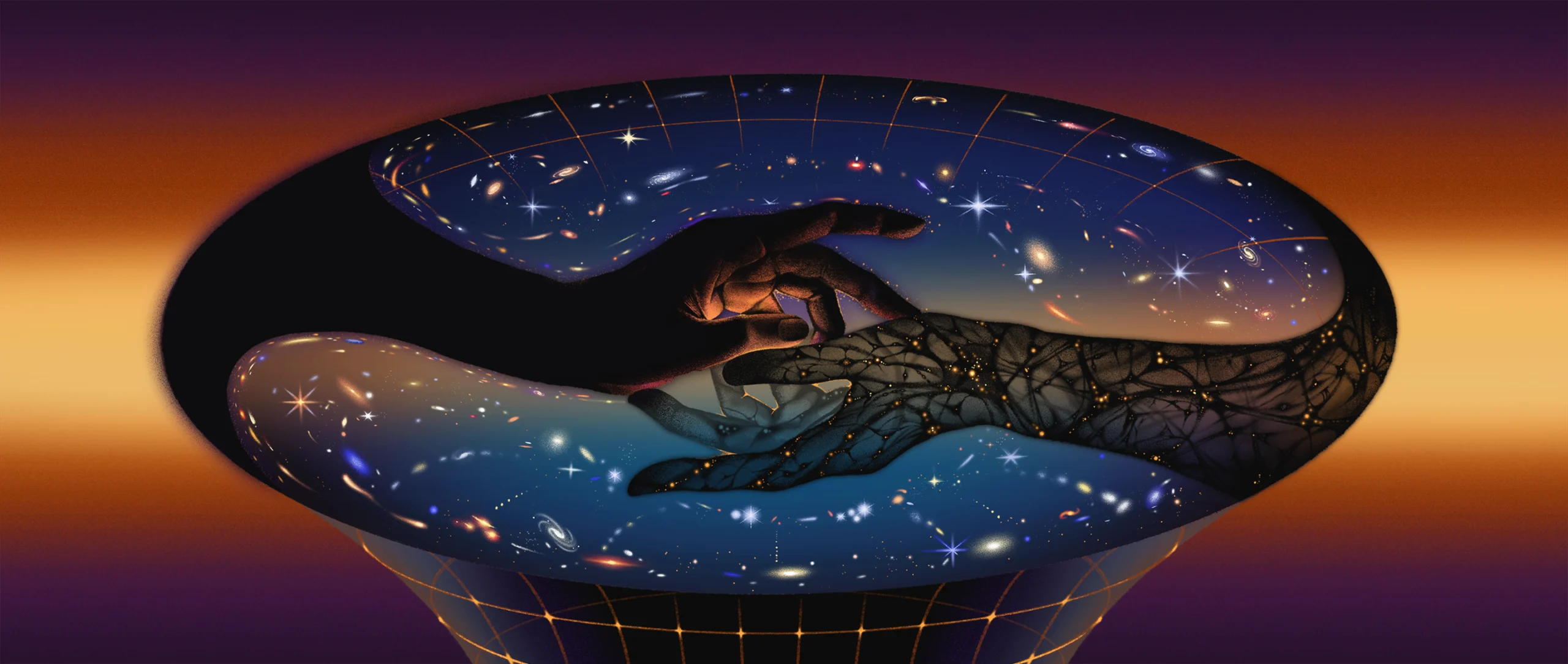
Our genetic heritage is not a blueprint or an algorithm, as many biologists have imagined, but something else entirely.
A decades-old proof showed that seven shuffles are enough to mix up a deck of cards. But it requires you to cut the deck with the precision of a professional magician. A new proof gets around that obstacle.
Plausible answers range from 17 to — in all seriousness — 995.5.
Emily Buder/Quanta Magazine
Lauren Williams tells 'The Joy of Why' how studying a fundamental object in algebraic combinatorics led to a career full of surprises.
Intuition breaks down once we’re dealing with the endless. To begin with: Some infinities are bigger than others.
Illuminating basic science and math research through public service journalism.
More about usQuanta Magazine is committed to in-depth, accurate journalism that serves the public interest. Each article braids the complexities of science with the malleable art of storytelling and is meticulously reported, edited and fact-checked. Launched and funded by the Simons Foundation, Quanta is editorially independent — our articles do not reflect or represent the views of the foundation.