Quanta Magazine | Science and Math News

Jerrit Peinelt for Quanta Magazine
Latest Articles
He Wants AI Benchmarking To Be a Science, Not a Dark Art
Moritz Hardt, author of a new book on benchmarks, believes these “standardized tests” for artificial intelligence are fundamentally broken — but not unfixable.
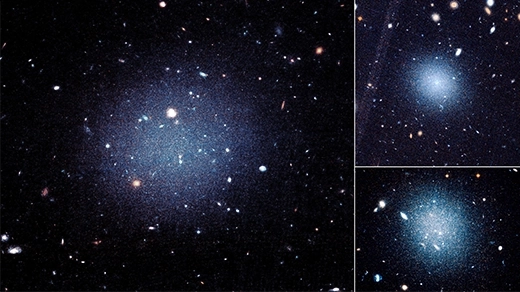
Triplet of ‘Ghostly’ Galaxies Hints at What Dark Matter Is — and Isn’t
A collision may have left these galaxies without dark matter. That spells trouble for alternative gravity theories.

Is ‘Attention’ the Essence of Intelligence?
A mathematical mechanism enables AI models to process language at scale, undergirding the current AI revolution. Our columnist asks: Why is attention the key?
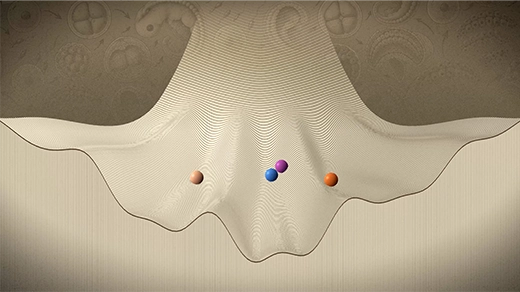
How Does Life Unfold? A Landscape Metaphor Comes Into Its Own.
C.H. Waddington’s powerful image of embryonic stem cells specializing on a rolling landscape has captivated biologists since the 1950s. Experimental data is finally confirming, and complicating, his visionary ideas.

As AI Closed In on ‘Unique Games’ Proof, Researchers Raced to Beat the Machines
In the shadow of a rumored AI proof of one of the biggest problems in their field, three computer scientists rushed to publish their own milestone result.
Sea Monkeys Show Scientists How To Rewrite a Rule of Turbulence
Scientists assumed that energy flows in only one direction in a turbulent system. What they didn’t know, until they looked closely at brine shrimp, was that a simple factor can reverse the flow.

Surprisingly Complex Waves Reveal the Brain’s Inner Workings
Unexpected patterns traveling across the human brain may be reorganizing its activity in real time.

Mathematicians Harness Randomness To Crack a 55-Year-Old Conjecture
After a long hiatus, the problem, which was likely inspired by juggling, has finally been resolved by a group of young mathematicians.
Featured Videos
See all videos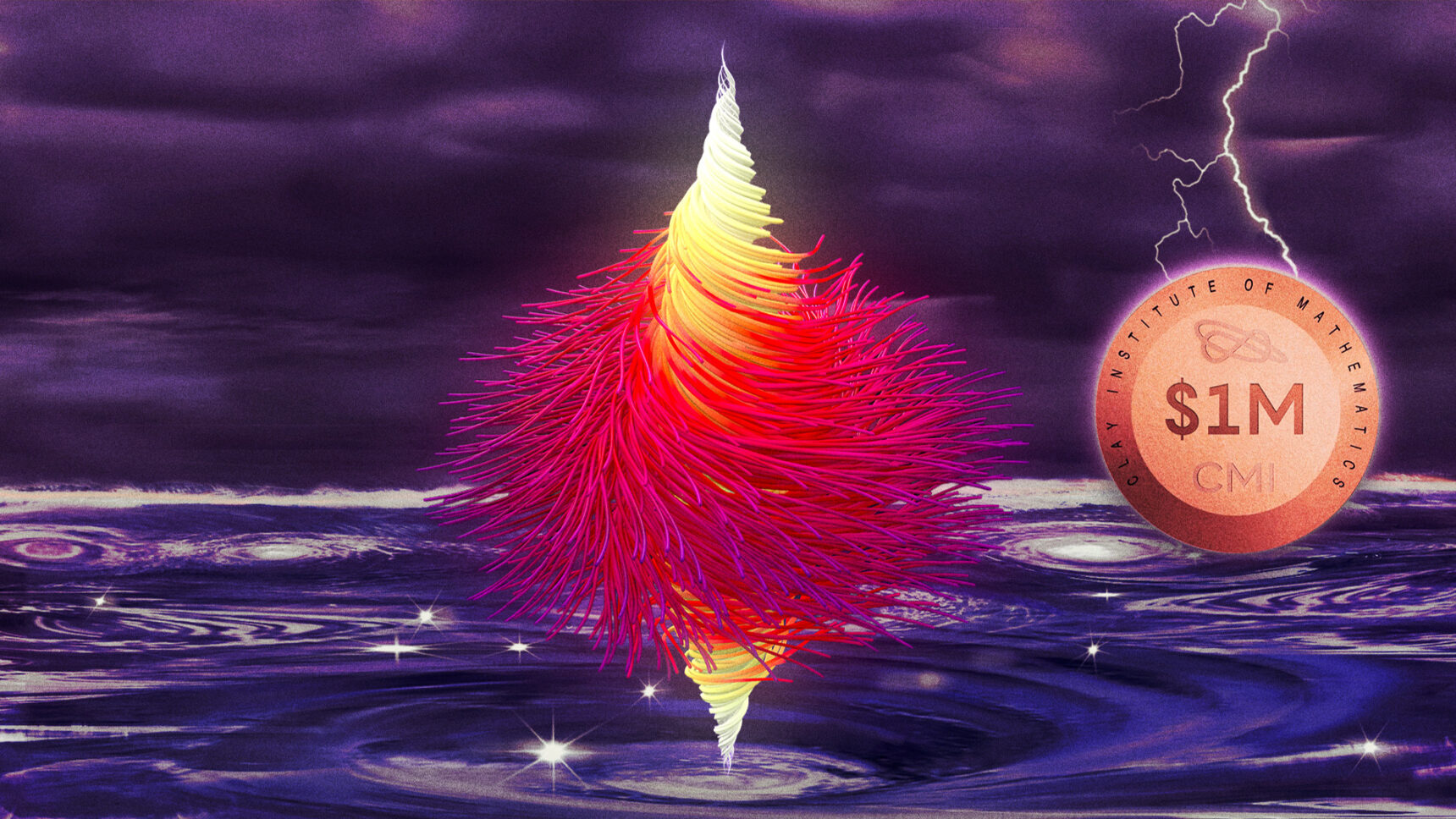
The Navier-Stokes Equations, Explained
Emily Buder/Quanta Magazine and Emily Zhang


Special Features
Quanta Podcast
Graduate Student Proves a Quantum Uncertainty Principle for Fractals
The math, which combines chaos, quantum theory, and infinitely complex fractal structures, has been called a “foundational result.”
Recommended Features

Multimedia
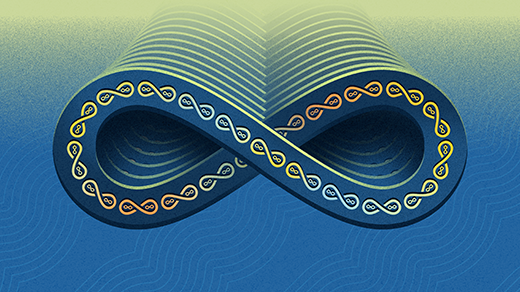
How Can Infinity Come in Many Sizes?
Intuition breaks down once we’re dealing with the endless. To begin with: Some infinities are bigger than others.
About Quanta Magazine
Illuminating basic science and math research through public service journalism.
More about usQuanta Magazine is committed to in-depth, accurate journalism that serves the public interest. Each article braids the complexities of science with the malleable art of storytelling and is meticulously reported, edited and fact-checked. Launched and funded by the Simons Foundation, Quanta is editorially independent — our articles do not reflect or represent the views of the foundation.